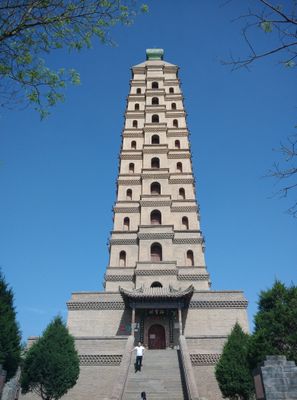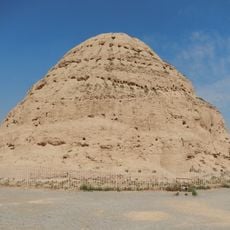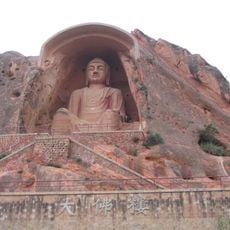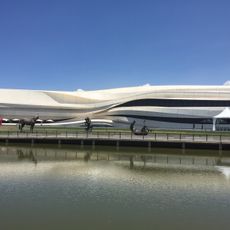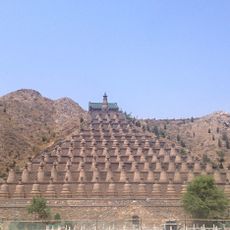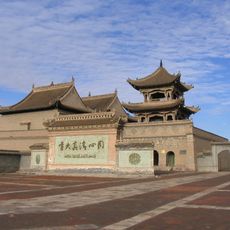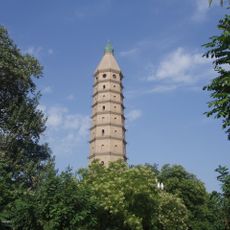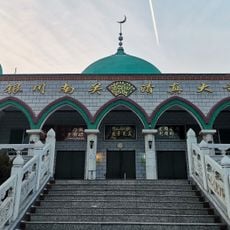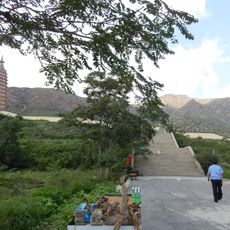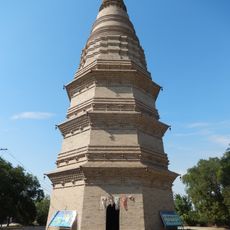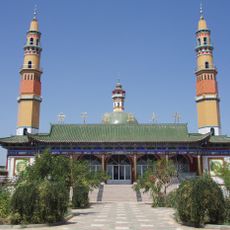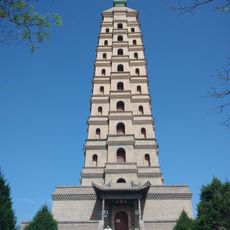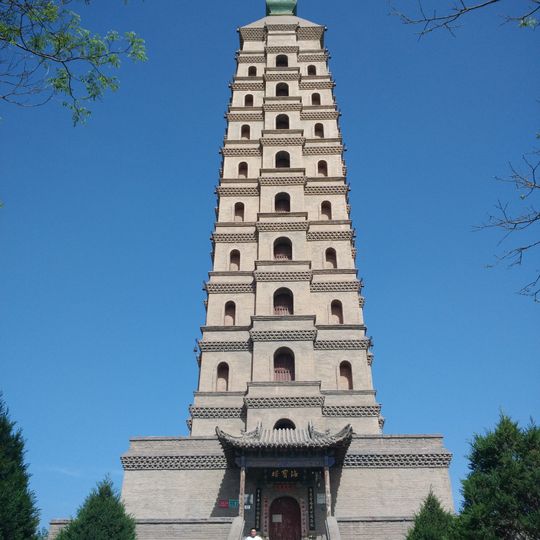
Haibao Pagoda, Buddhist pagoda in Xingqing District, China.
Haibao Pagoda is a nine-story brick structure with a square base measuring approximately 20 meters on each side and stands about 54 meters tall. The structure features a distinctive tapering design where each floor becomes progressively narrower as it rises.
The pagoda originates from the 5th century during the Northern and Southern Dynasties period. It underwent significant restoration and rebuilding during Emperor Qianlong's reign in the 18th century.
The pagoda serves as the headquarters of the Buddhist Association of Ningxia and houses an important jade statue of Shakyamuni in Burmese style. It remains a meaningful destination for followers and visitors interested in experiencing Buddhist spiritual life in the region.
Visitors can climb through nine levels using internal wooden staircases, with each floor containing a central square chamber and cross-shaped structural elements. The ascent requires some physical effort as the stairs are narrow and steep.
Each floor of the pagoda narrows by approximately 15 to 20 centimeters as you move upward, creating a gradual contraction of the structure. This design was carefully maintained during the 18th century reconstruction.
The community of curious travelers
AroundUs brings together thousands of curated places, local tips, and hidden gems, enriched daily by 91,316 contributors worldwide.