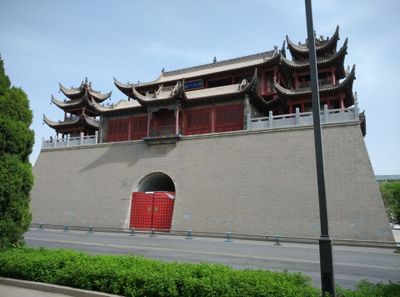
银川玉皇阁, Historical temple in Xingqing District, China.
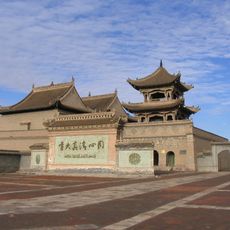
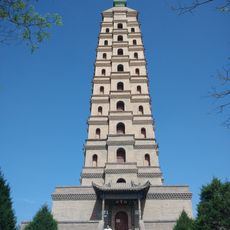
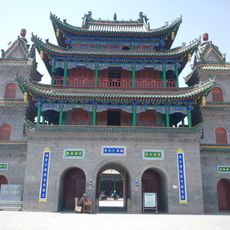
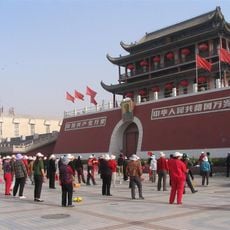
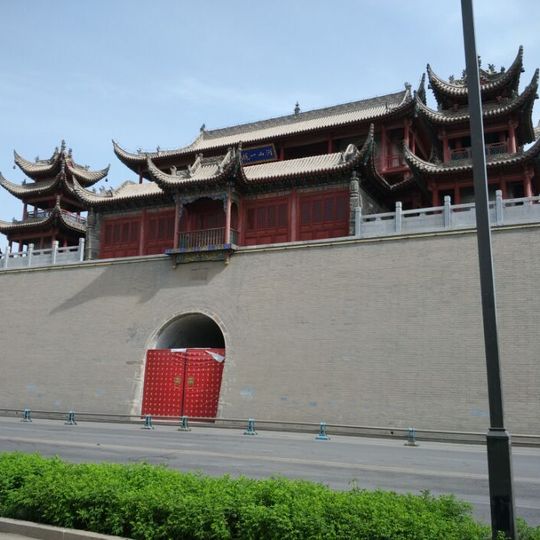
The Jade Emperor Pavilion is a wooden structure in Yinchuan with curved roofs and ornamental upturned eaves characteristic of traditional Chinese architecture. The building combines the functions of a pavilion with elements of bell and drum towers integrated into its design.
The structure was built during the Ming Dynasty and originally served as the city's bell tower. Following an earthquake in the Qing period, it was rebuilt and transformed into a Taoist temple.
The pavilion honors the Jade Emperor, a significant figure in Chinese mythology and folk religion widely revered in East Asia. Visitors can observe today how this religious devotion is expressed through the building's symbolic decorative elements and overall design.
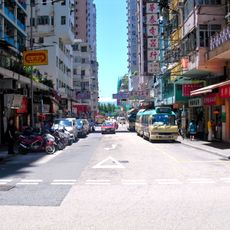
The pavilion sits at a central intersection in Yinchuan and is easy to locate. The site is open to visitors daily but closes on Mondays, so plan your visit accordingly.
The building was not originally designed as a pavilion but emerged from an unusual blend of a bell tower, drum tower, and temple structure. This fusion of multiple functions under one roof is rare in Chinese architecture and makes the structure architecturally distinctive.
The community of curious travelers
AroundUs brings together thousands of curated places, local tips, and hidden gems, enriched daily by 91,382 contributors worldwide.