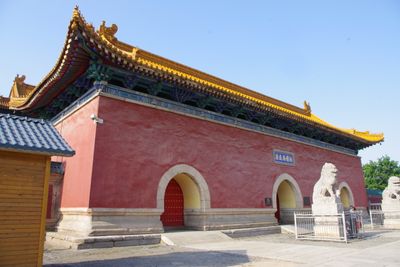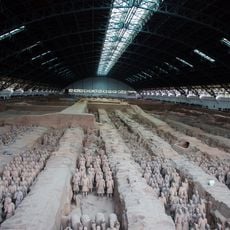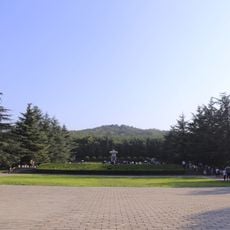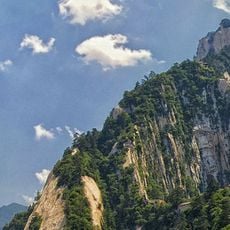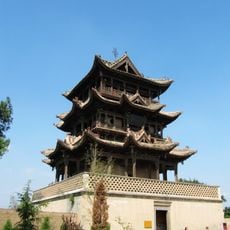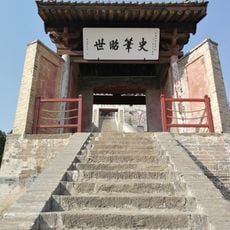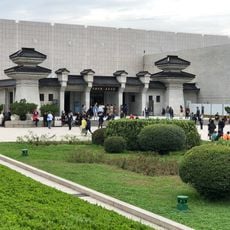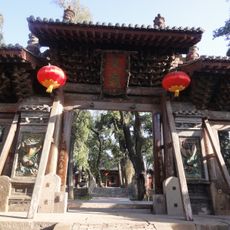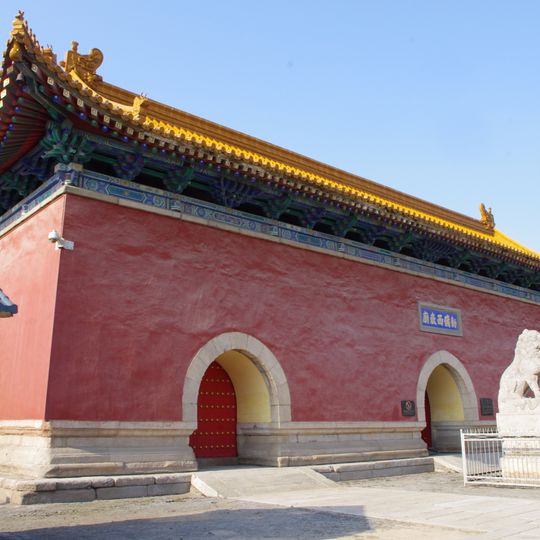
Xiyue Temple, Taoist temple in Huayin, China.
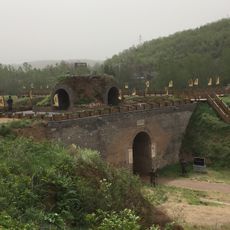
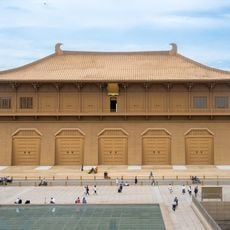
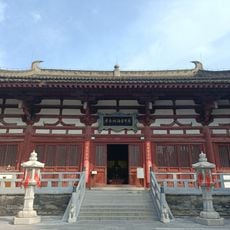
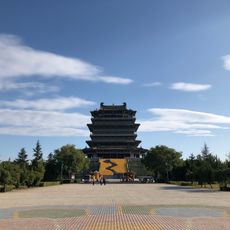
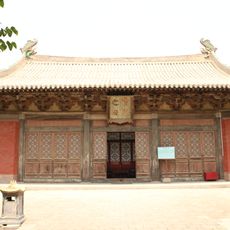
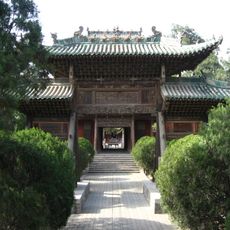
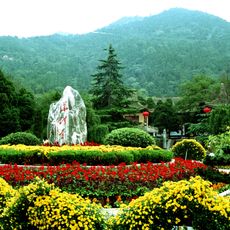
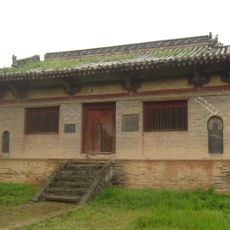
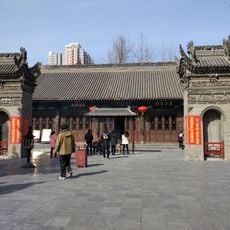
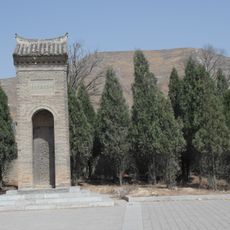
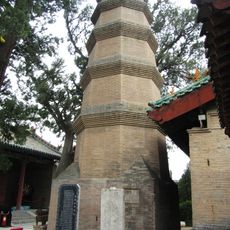
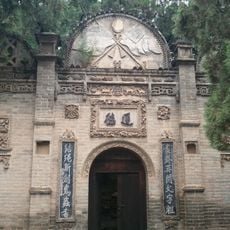
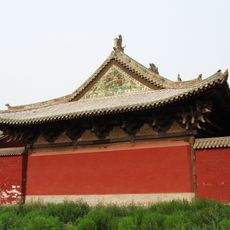
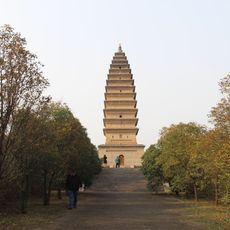
Xiyue Temple is a Taoist temple complex at the base of Mount Hua built with traditional Chinese architecture consisting of many connected buildings and open courtyards. The complex includes various halls for different purposes, with stairs and pathways guiding visitors through the entire grounds.
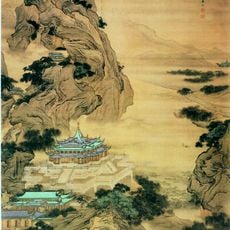
The complex was founded around 134 BC under Emperor Wu of the Western Han Dynasty to formalize mountain worship in the region. Over many centuries, the temple was expanded and maintained multiple times while preserving its role as an important religious center to the present day.
The temple draws visitors who want to observe Taoist practitioners during daily rituals, and the spatial arrangement of buildings reflects the hierarchical structure of Taoist belief. The various halls are organized by religious function, showing how followers structure their spiritual practice.
The grounds are accessible on most days and can be explored independently, with pathways and stairs clearly marked for visitors. Sturdy footwear is recommended since the terrain is hilly with frequent stone steps.
The complex earned the nickname 'Forbidden City of Shaanxi' due to its architectural similarities with the Imperial Palace in Beijing. This comparison reflects how carefully the architects applied imperial design principles when creating the temple.
The community of curious travelers
AroundUs brings together thousands of curated places, local tips, and hidden gems, enriched daily by 91,300 contributors worldwide.