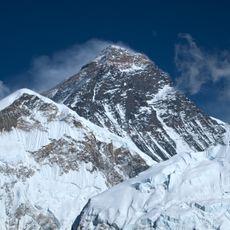
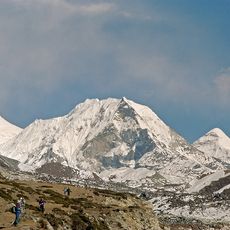
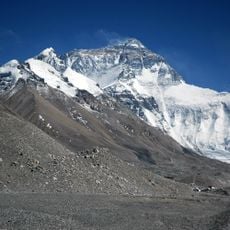
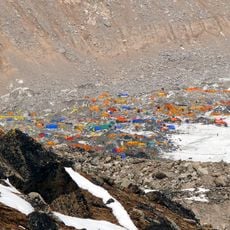
North Col, Mountain pass between Mount Everest and Changtse in Tibet, China
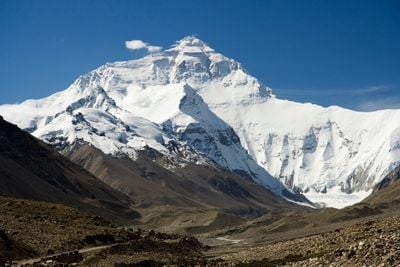
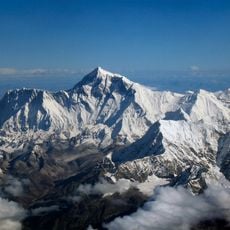
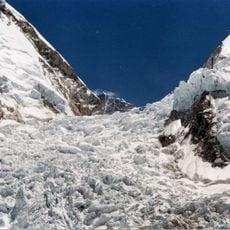
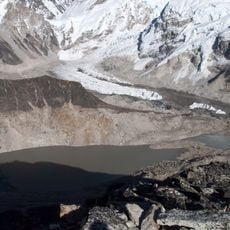
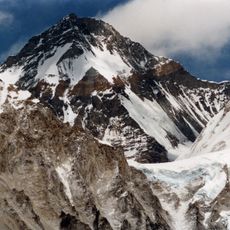
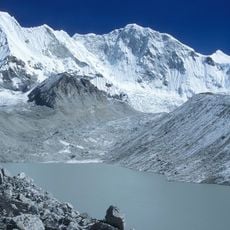
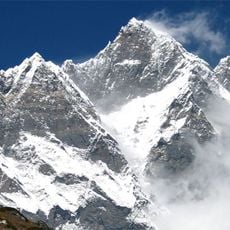
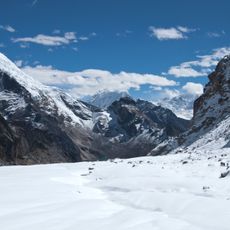
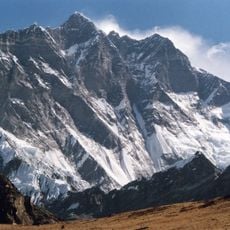
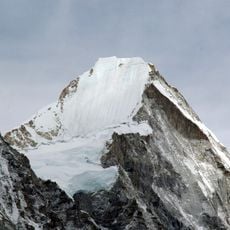
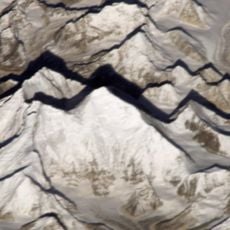
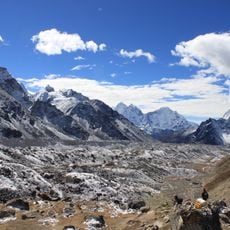
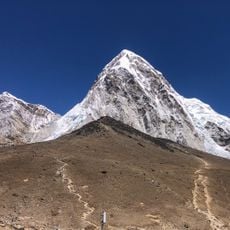
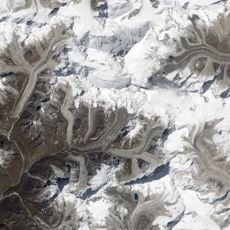
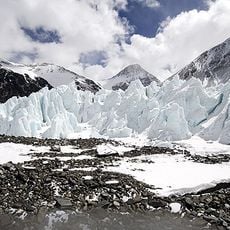
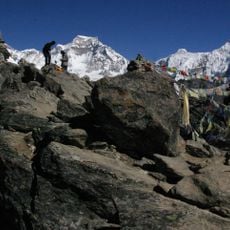
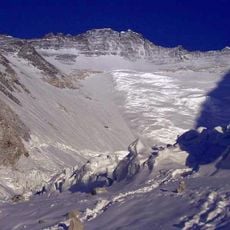
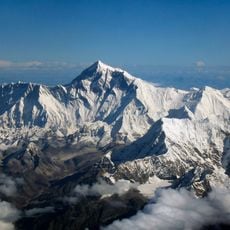
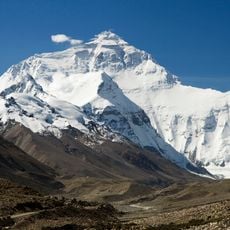
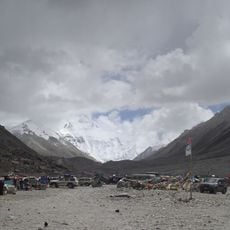
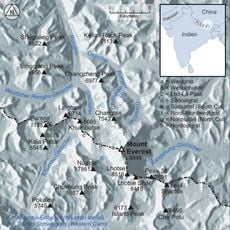
The North Col is a sharp-edged, ice-covered col carved by glaciers in the ridge linking Mount Everest and Changtse in Tibet, and it forms the head of the East Rongbuk Glacier. The pass sits at about 7,020 metres, with a broad saddle of snow and broken glacier cut by pale blue crevasses and jagged ice formations. Below the glacier, the terrain turns to loose dark grey rock and scree where climbers pitch tents.
Edward Oliver Wheeler found the North Col about a week before George Mallory confirmed its existence during the 1921 British reconnaissance expedition. On 24 September 1921 Mallory, Wheeler and Guy Bullock made the first ascent, the first time a Westerner set foot on Everest. Every expedition of the 1920s and 1930s tried the summit by this route.
The Tibetan name Chang La means "northern pass", and the Chinese form is Beiao La. Since 1921 the col has been the gateway to the North Ridge, and all British expeditions of the 1920s and 1930s tried the summit through it. In summer 1980 Reinhold Messner climbed alone from Tibet via the col without oxygen, a feat he described in his book The Crystal Horizon.
Climbers on the North Ridge establish their first camp on the mountain itself on the North Col, at about 7,020 metres. From there they ascend the ridge through progressively higher camps, making the final push to the summit from Camp VI at 8,230 metres. The col is reached by crossing the East Rongbuk Glacier, whose broken ice and crevasses require roped travel.
The col is lower than the South Col and farther from the Everest summit, and its name means "north pass" in Tibetan (Chang La). In summer 1980 Reinhold Messner climbed Everest solo from Tibet through the North Col and the Northeast Ridge, without oxygen and during the monsoon; he wrote the book Crystal Horizon about it.
The community of curious travelers
AroundUs brings together thousands of curated places, local tips, and hidden gems, enriched daily by 94,020 contributors worldwide.