Tsinghua School, Historical campus in Haidian District, Beijing, China.
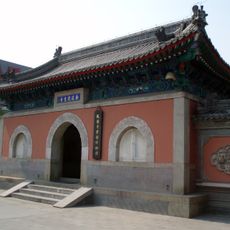
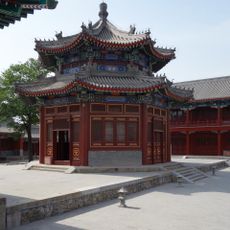
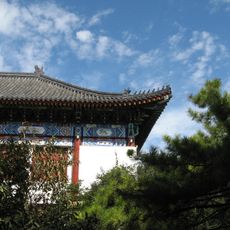
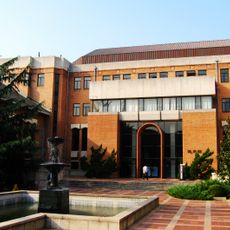
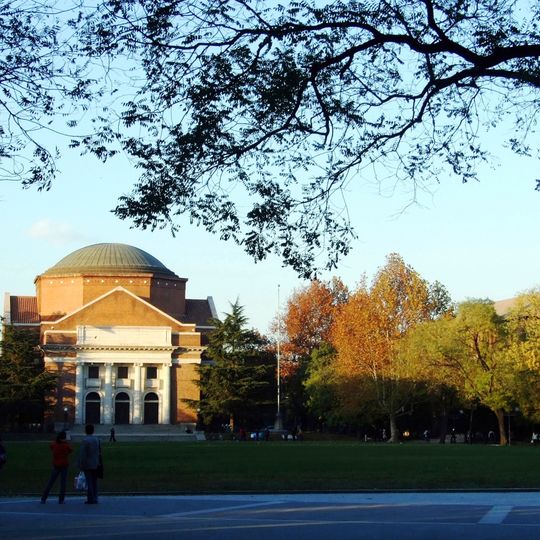
Tsinghua School is a two-storey brick-and-timber teaching building completed in 1911, the oldest at Tsinghua University in Beijing's Haidian District. Its grey brick walls and red-tiled roof contrast with a white facade, and mansard roofs cap the southwest and southeast corner towers. Built in two phases, the west wing (1909–1911) and east wing (1916–1918) form a U-shaped plan.
The school opened in 1911, funded by money the United States returned to China from the Boxer Indemnity payments. Over time it grew from a preparatory program into what would eventually become one of China's most known universities.
The building's name is written on the main door in four characters by Na Tong, a late-Qing grand secretary and military minister, in 1911; he had earlier approved the Qinghua Garden site for the school. From 1925 the building housed the Institute of Chinese Studies, where Liang Qichao, Wang Guowei, Chen Yinke and Zhao Yuanren taught.
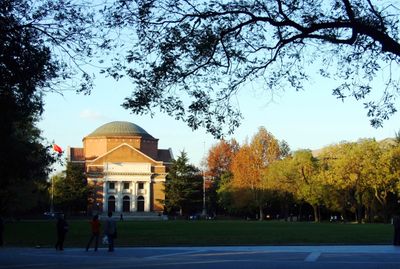
The building stands southeast of the grand lawn in front of the Tsinghua Auditorium; its two wings meet in a U around a central wooden staircase, with the 1911 west wing on one side and the 1916–1918 east wing on the other. The entrance is on the south side, and the "清华学堂" plaque by Na Tong hangs above the main door. The upper floor is reached by the original wooden stair; the ground-floor corridors are the easiest part to see.
The four characters above the main door, "Qinghua Xuetang", were written in 1911 by Na Tong, a Qing grand secretary and military minister who, as a foreign ministry official, had approved the choice of Tsinghua Garden as the school site. A fire on 13 November 2010 damaged about 800 square metres of the building during restoration; it reopened on 14 April 2011.
The community of curious travelers
AroundUs brings together thousands of curated places, local tips, and hidden gems, enriched daily by 93,086 contributors worldwide.