Chengzeyuan, Cultural heritage site in Haidian District, China.
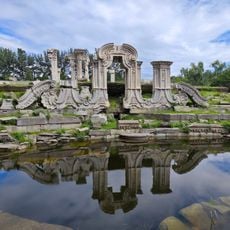
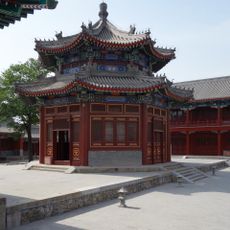
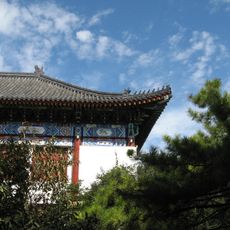
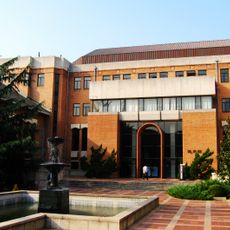
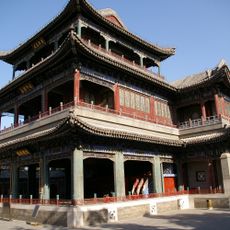
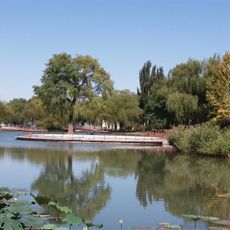
Chengzeyuan is a garden featuring traditional Chinese architecture with pavilions, courtyards, and planted areas arranged according to classical design principles. The layout connects pathways, water features, and greenery with stonework and structures in a composed arrangement.
Chengzeyuan's construction date is unknown. Before the mid-Qing, it was called Chenghui Yuan. In 1845 Emperor Daoguang gave it to his sixth daughter, Princess Shou'en Gulong, on her marriage to Jing Shou, and it was renamed Chengzeyuan. In 1894 it was granted to Prince Qing, Yikuang. Zhang Boju sold it to Peking University in 1953.
The name changed from Chenghui yuan to Chengye yuan in 1845, when Emperor Daoguang gave the garden to his sixth daughter, Princess Shou'en Gulong; locals called it the Six Princess Garden. The western section, restored in 1998 with a donation from Liao Zongming, now carries a stone inscribed with the garden's name and serves Peking University's Center for Science and Society.
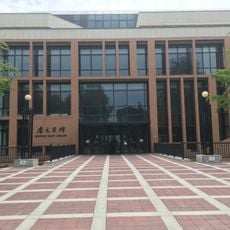
The garden lies in Guajiatun village, south of Wanquan River and east of Weixiu Garden; from the east entrance of Yiheyuan Road, walk south along the river and look for it on the west side. The southern part is now built over, while the northern part and the western compound (Xisuo) retain old buildings; Xisuo is behind a metal fence and holds a large lake. The garden is used by Peking University and is not a public tourist site, so access is limited.
In the garden's western section stands a tassel tree (Chionanthus retusus), a national second-class protected ancient tree and the only one of its kind remaining in the Beijing area. A large rock there is inscribed with the garden's name.
The community of curious travelers
AroundUs brings together thousands of curated places, local tips, and hidden gems, enriched daily by 94,004 contributors worldwide.