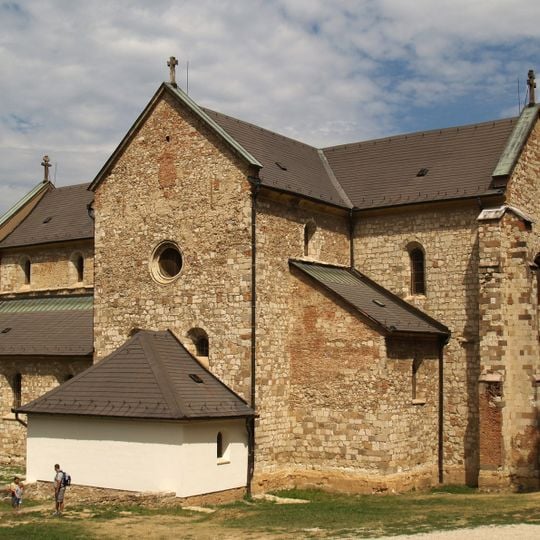
Cistercian Abbey of Bélapátfalva, Gothic monastery and abbey in Bélapátfalva, Hungary
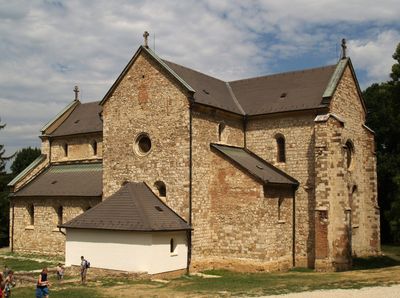
The Cistercian Abbey of Bélapátfalva is a church ruin and monastery complex in this Hungarian village featuring a three-nave sanctuary with pointed arches and ribbed vaults. The structure displays a cross shape with a large rose window on its western side and uses alternating colored stones in its architectural details.
Founded in 1232, the monastery was disrupted by the Mongol invasion of 1241 but reconstruction continued under different builders. This recovery period brought architectural changes that shaped the building we see today.
The abbey was founded on 16 May 1232 by Bishop Kilit II of Eger, who came from the Bél family, and it was probably intended as a family monastery. Its mother house was the Cistercian monastery of Pilis, founded by King Béla III in 1184. The abbey was dedicated to the Virgin Mary, and the medieval name Bélháromkút refers to the Háromkút (Three Springs) by the Bélkő hill.
The site sits roughly two kilometers from the train station and just over a kilometer from the bus stop, with parking available for around 15 cars nearby. Wear comfortable shoes and check the weather before visiting, as the ruins are outdoors and wind or rain can affect your experience.
The west facade is banded with alternating red and grey ashlar, a pattern visible in the photograph. The main portal's tympanum was replaced by a brick wall, and the original porches before the main and south portals survive only as foundations uncovered by excavation.
The community of curious travelers
AroundUs brings together thousands of curated places, local tips, and hidden gems, enriched daily by 92,627 contributors worldwide.