Cserpes-kő Rock Shelter, Natural rock shelter in Szilvásvárad, Hungary.
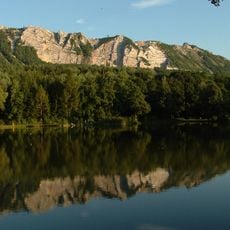
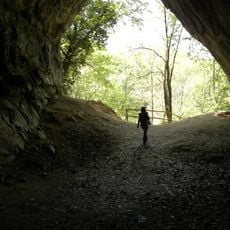
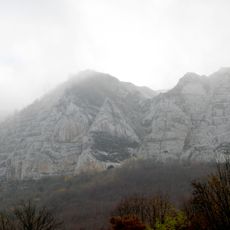
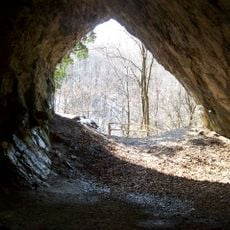
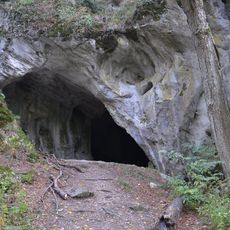
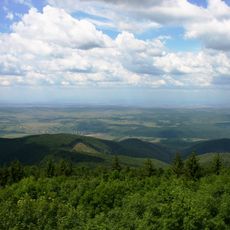
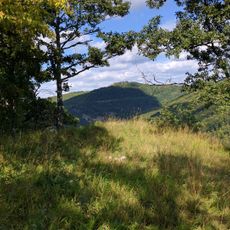
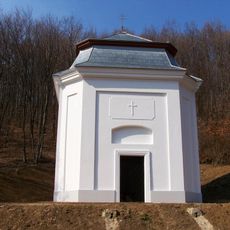
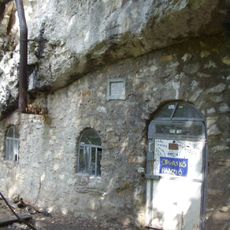
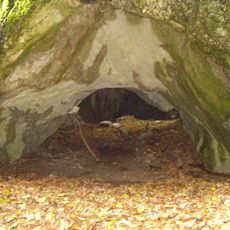
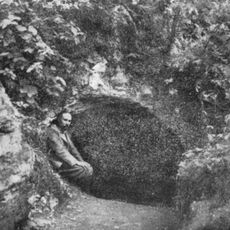
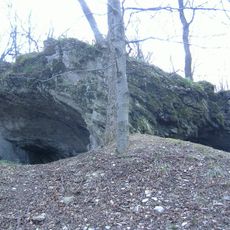
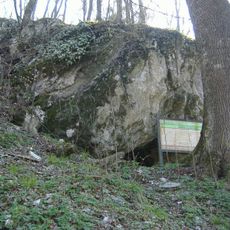
Cserpes-kő Rock Shelter is a single-chamber cave in Upper Ladinian limestone on the Cserepes-kő ridge, a southeastern spur of the Kálmán-hegy about 6 km from Bélapátfalva, beside the county border. Its regular semicircular entrance holds a wooden door; the chamber measures 6 m long, 7 m wide and 2.5 m high, with two wooden sleeping platforms and a wood-burning stove whose flue runs out through a chimney-like fissure.
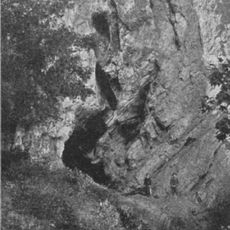
The cave was first mentioned in print by Gyula Bartalos in 1909, who noted that highway robbers sometimes sheltered there. Ottokár Kadić investigated it in 1929 on behalf of the Ministry of Agriculture, guided by assistant forester Imre Nagy, and drew its ground plan and longitudinal section. His trial dig uncovered cave bear bone fragments, potsherds, a smoothed bone awl and superimposed hearth layers. The 1929 maps and the first detailed description appeared in 1944.
The shelter's name appears in print as Cserepes-kői-sziklaodú only since 1977 (Hevesi), though earlier writers called it Cserepeskő lyuka or Cserepeskői üreg. It has long served walkers and hunters as an overnight stop, and in 1909 Bartalos Gyula noted that fugitive betyárs sometimes lodged there. Bats and dormice are its permanent residents.
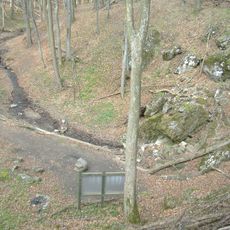
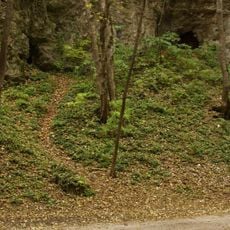
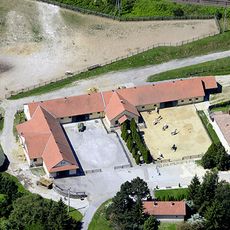
Marked hiking trails lead from Szilvásvárad up to the shelter, with parking available at the mountain base. Visitors should wear sturdy shoes and prepare for changing weather conditions depending on the season.
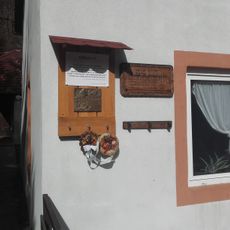
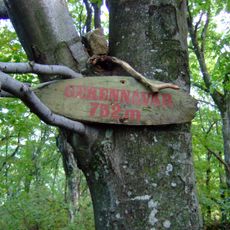
The shelter's entrance is a stamping point on section 23 of the Országos Kéktúra long-distance trail, with the stamp box placed right at the doorway. A blue-marked path already led here in 1929, when Ottokár Kadić surveyed the cave for the Ministry of Agriculture, guided by the assistant forester Nagy Imre.
The community of curious travelers
AroundUs brings together thousands of curated places, local tips, and hidden gems, enriched daily by 94,143 contributors worldwide.