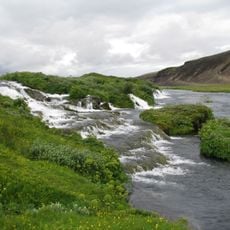
Búrfell, Mountain summit and volcano in Þjórsárdalur, Iceland
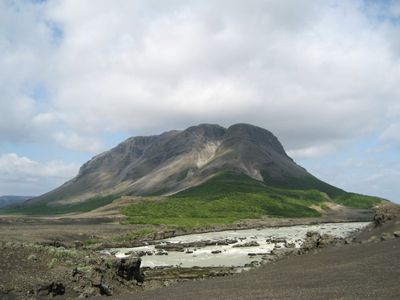
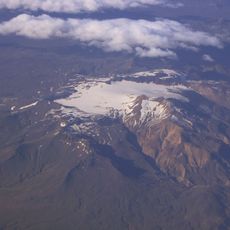
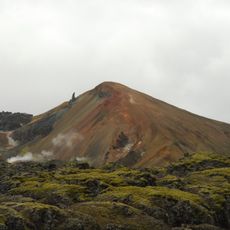
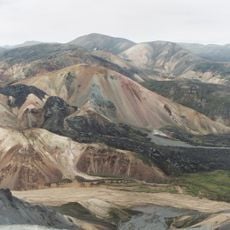
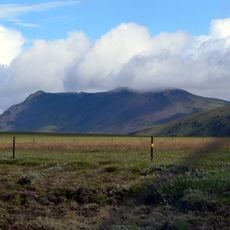
Búrfell is a basalt tuya, a mountain with a flat summit and steep sides that rises 669 meters along the western edge of Þjórsárdalur valley. Its distinctive shape was formed through volcanic activity beneath glacial ice, making it a notable landmark in the landscape.
A 1918 proposal to build a large hydroelectric plant at the site remained unrealized until the Búrfellsvirkjun power station began operating in 1972. The power station uses the mountain's natural elevation and position for electricity generation.
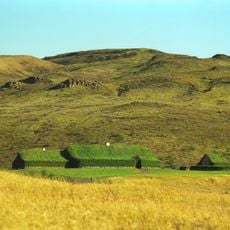
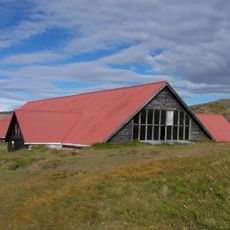
The Viking farm museum Þjóðveldisbær at the mountain's base displays a traditional longhouse showing how people lived and farmed in this region centuries ago. It offers visitors a glimpse into daily agricultural life from earlier times.
Visitors must park their vehicles at the power station and proceed on foot, as private cars are not permitted on the mountain road. The climb requires reasonable physical fitness and sturdy footwear for steep sections.
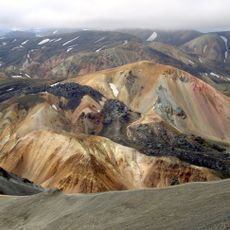
The mountain formed when lava erupted through glacial ice, a geological formation that occurs only where active volcanism and glacial coverage meet. This rare combination of geological forces makes the site particularly worth studying for those interested in how landscapes form.
The community of curious travelers
AroundUs brings together thousands of curated places, local tips, and hidden gems, enriched daily by 92,784 contributors worldwide.