Hekla, Stratovolcano in Rangárþing ytra, Iceland
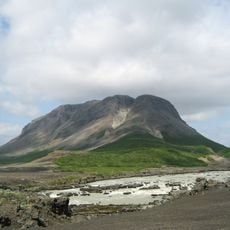
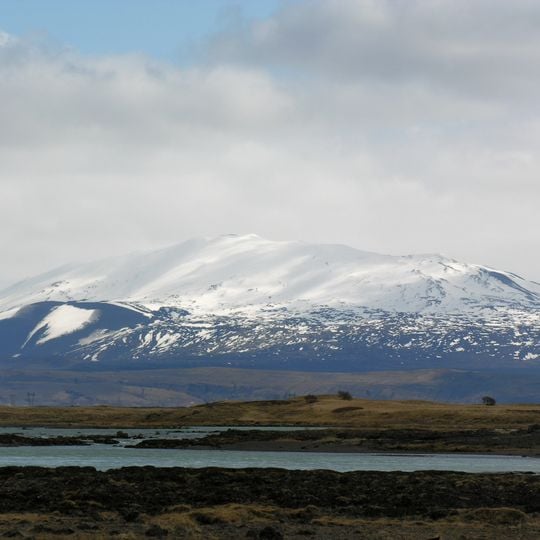
Hekla is an active stratovolcano in southern Iceland rising 1,491 m, its upper slopes and rounded summit snow-covered when dormant. Its form lies between a fissure vent and a stratovolcano, likened to an overturned boat whose keel is a row of craters along the 5.5 km Heklugjá fissure, part of a 40 km ridge.
The first recorded eruption took place in 1104 and covered large parts of Iceland with ash. Since then the volcano has erupted more than twenty times, with intervals between eruptions varying over the centuries.
Hekla means "short hooded cloak" in Icelandic, referring to the clouds that often hide the summit; an early Latin source called the mountain Mons Casule. After the 1104 eruption, Cistercian monks spread the story that Hekla was the gateway to Hell, and the belief lasted into the 19th century. A legend still holds that witches gather on the mountain at Easter.
Visitors can find information about geological conditions and hiking routes at the Hekla Center at Leirubakki farm. Due to unpredictable activity, no one should attempt a visit without current safety information and proper equipment.
On clear days the slopes of the mountain reveal layers of differently colored lava and ash. The color shifts from reddish through gray to black tones depending on the chemical composition of the deposits.
The community of curious travelers
AroundUs brings together thousands of curated places, local tips, and hidden gems, enriched daily by 93,183 contributors worldwide.