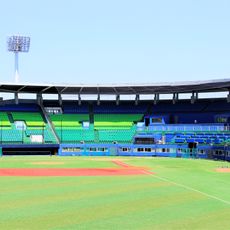
Jeju World Cup Stadium, Football stadium in Seogwipo, South Korea
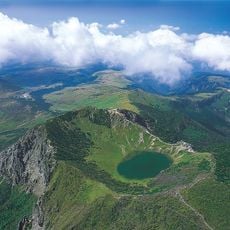
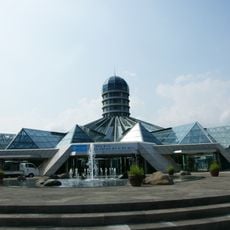
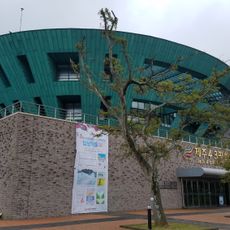
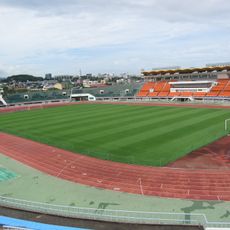
Jeju World Cup Stadium is a football stadium in Seogwipo, on Jeju Island. Its design takes the shape of a volcanic crater, the roof resembles the nets of traditional Jeju fishing boats, and the entrance plaza imitates the alleys of traditional houses. The pitch lies 14 metres below ground to shelter it from the wind. Built for the 2002 FIFA World Cup with 42,000 seats, it now holds 29,346 after temporary seating was removed.
The stadium was built between 1999 and 2001 and served as one of the venues for the 2002 World Cup football tournament. Its construction took advantage of the natural topography to integrate seamlessly with Jeju's landscape.
The stadium's roof is modelled on the nets of Jeju's traditional fishing boats, and the entrance plaza reproduces the alleys of traditional Jeju houses. The ground itself lies 14 metres below street level, a design that shelters it from the island's wind.
The site sits partly below ground level, which provides shelter for spectators and players from the region's strong winds. This location also allows for natural ventilation and temperature regulation during events.
The pitch lies 14 metres below ground level, a design choice that shields players and spectators from Jeju's strong winds. The entrance plaza is modelled on the alleys of traditional Jeju houses, a detail most visitors walk past without noticing.
The community of curious travelers
AroundUs brings together thousands of curated places, local tips, and hidden gems, enriched daily by 94,088 contributors worldwide.