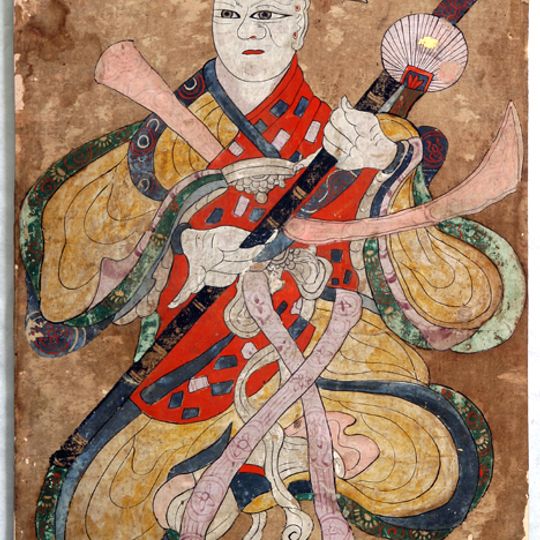
Naewat-dang shamanic paintings, Religious art collection at Naewat-dang shrine, Jeju Island, South Korea
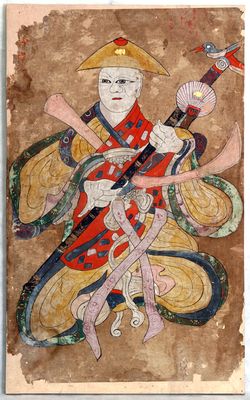
The Naewat-dang shrine holds ten portrait paintings of village deities, with six male and four female figures holding fans and wearing traditional clothing. The works are painted on Korean paper with mineral pigments and display different sizes and artistic styles.
These paintings date back to at least 1466 and survived periods of persecution, including the destruction of shrines in 1702 ordered by Confucian magistrate Yi Hyeong-sang. The works demonstrate the resilience of local religious practices against official suppression.
The portraits show local deities through mineral pigments on Korean paper, featuring Central Asian-influenced clothing and symbolic elements like snakes and birds. These images reflect the belief that these gods protect the village and its people.
The paintings are officially registered as Important Folklore Cultural Properties of South Korea and are housed in the shrine on Jeju Island. Visitors should ask locally about opening times and access rules, as the collection is kept in an active religious space.
The collection displays an uncommon grotesque style that sets it apart from other religious artworks. The paintings were also the center of fertility ceremonies where couples prayed to the deities with offerings.
The community of curious travelers
AroundUs brings together thousands of curated places, local tips, and hidden gems, enriched daily by 91,713 contributors worldwide.