Anjar

Log in to your account

AroundUs is a community-driven map of interesting places, built by curious explorers like you. It grows with every review, story, and photo you share.
Connect to save your favorite spots, contribute locations, and create personalized routes.
By continuing, you accept our Terms and Conditions and our Privacy Policy
Add to collection
Map
Suggest a change
Share

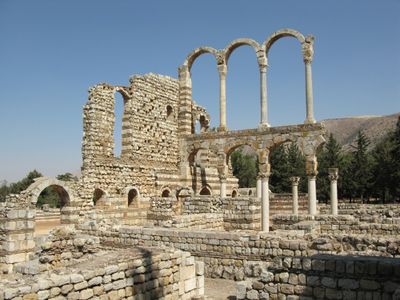
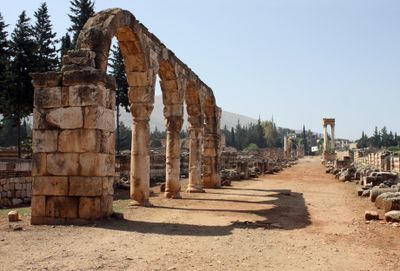
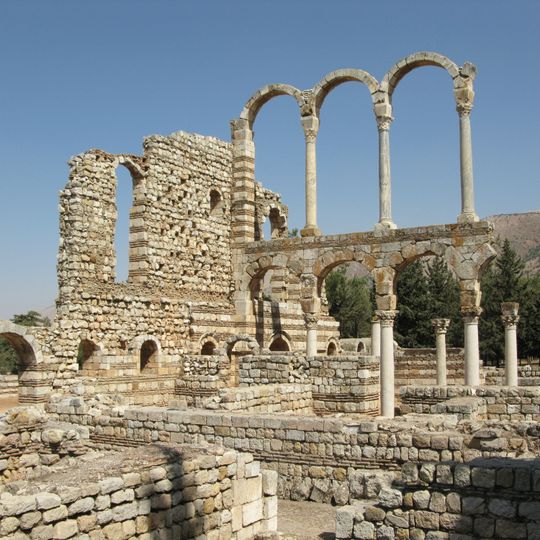
Anjar, UNESCO Heritage ruins in Bekaa Valley, Lebanon

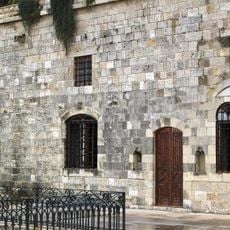
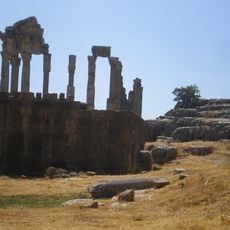
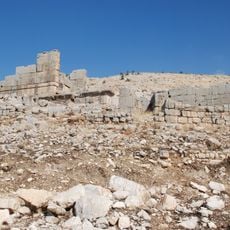
The archaeological site of Anjar extends across 114,000 square meters, surrounded by fortified stone walls and divided by two main perpendicular avenues into quadrants.

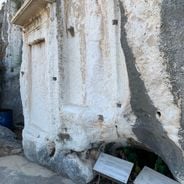
The site dates back to the early 8th century when Umayyad caliph al-Walid I established the settlement, as evidenced by Syriac inscriptions found in local quarries.

The town maintains strong Armenian heritage through its neighborhoods, named after six original villages from which Armenian refugees relocated in 1939.

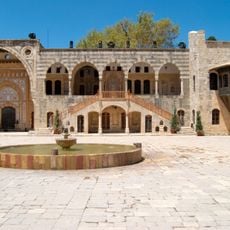
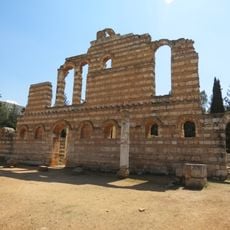
The site contains multiple excavated structures including a grand palace measuring 59 by 70 meters, featuring preserved arcades and an extensive central courtyard.

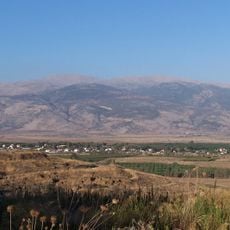
Located at 950 meters elevation near the Syrian border, Anjar combines Umayyad architectural elements with Roman urban planning principles in its layout.

Location: Zahlé District

Elevation above the sea: 950 m

Website: http://mousaleranjar.com

GPS coordinates: 33.72583,35.92972

Latest update: May 27, 2025 11:48

Archaeological sites in Lebanon: museums, ancient remnants, historical collections

Lebanon preserves thousands of years of human settlement through archaeological sites and museum collections spread across the country. Phoenician ruins are adjacent to Roman monuments, while medieval fortresses mark periods of the Crusades and Ottoman rule. In Beirut, the National Museum houses artifacts covering all the country's historical eras, and the Mim Mineral Museum displays over 2,000 specimens from around the world. Along the coast, Sidon features a 13th-century maritime fortress and the Echmoun temple, a Phoenician complex built in the 7th century BCE. Collections extend well beyond classical archaeology. The Saint-Joseph University Prehistory Museum documents prehistoric occupation in Lebanon, while the Byblos Fossil Museum showcases more than 200 petrified specimens illustrating regional geological history. These institutions provide a thorough overview of the human and natural evolution of this Mediterranean area, from early settlements to Ottoman and modern periods.

Reviews

Visited this place? Tap the stars to rate it and share your experience / photos with the community! Try now! You can cancel it anytime.

« Anjar - UNESCO Heritage ruins in Bekaa Valley, Lebanon » is provided by Around Us (aroundus.com). Images and texts are derived from Wikimedia project under a Creative Commons license. You are allowed to copy, distribute, and modify copies of this page, under the conditions set by the license, as long as this note is clearly visible.

Discover hidden gems everywhere you go!

From secret cafés to breathtaking viewpoints, skip the crowded tourist spots and find places that match your style. Our app makes it easy with voice search, smart filtering, route optimization, and insider tips from travelers worldwide. Download now for the complete mobile experience.
Around Us App Screenshot

A unique approach to discovering new places

Le Figaro

All the places worth exploring

France Info

A tailor-made excursion in just a few clicks

20 Minutes