See the monuments around you in AROpen chests in the app
Around Us is built for your phone — point your camera at the streets and discover the monuments and places around you in augmented reality.Around Us is built for your phone — chests unlock when you walk, explore and capture nearby places.
In Southeast Turkey, the remains of Upper Mesopotamia tell the story of the empires and kingdoms that succeeded one another there.
The southeast of Turkey is a journey through millennia. Thirty-five major sites dot this region, from the first Neolithic settlements to Byzantine remains. Here, in Upper Mesopotamia, civilizations followed one another for centuries, leaving behind fortresses, cities, monasteries, and landscapes shaped by time.
Some of these places are known worldwide and listed as UNESCO heritage. Göbekli Tepe, for instance, sits on a plateau and takes human traces back more than 11,000 years. Mount Nemrut crowns a mountain and hosts enormous carved heads from antiquity. Other sites are less visited but just as worth the detour. Harran, with its conical mud houses, Mardin, perched like a stone amphitheater, or Dara, with its tombs carved into the rock face, each tells a distinct story.
As you travel through these sites, you follow the routes of ancient merchants, explore the remains of vanished civilizations, and understand how these lands shaped the ancient world. From Roman mosaics to prehistoric inscriptions, from medieval mosques to Christian monasteries, every stone bears the mark of those who laid it.
In Southeast Turkey, the remains of Upper Mesopotamia tell the story of the empires and kingdoms that succeeded one another there.
The southeast of Turkey is a journey through millennia. Thirty-five major sites dot this region, from the first Neolithic settlements to Byzantine remains. Here, in Upper Mesopotamia, civilizations followed one another for centuries, leaving behind fortresses, cities, monasteries, and landscapes shaped by time.
Some of these places are known worldwide and listed as UNESCO heritage. Göbekli Tepe, for instance, sits on a plateau and takes human traces back more than 11,000 years. Mount Nemrut crowns a mountain and hosts enormous carved heads from antiquity. Other sites are less visited but just as worth the detour. Harran, with its conical mud houses, Mardin, perched like a stone amphitheater, or Dara, with its tombs carved into the rock face, each tells a distinct story.
As you travel through these sites, you follow the routes of ancient merchants, explore the remains of vanished civilizations, and understand how these lands shaped the ancient world. From Roman mosaics to prehistoric inscriptions, from medieval mosques to Christian monasteries, every stone bears the mark of those who laid it.
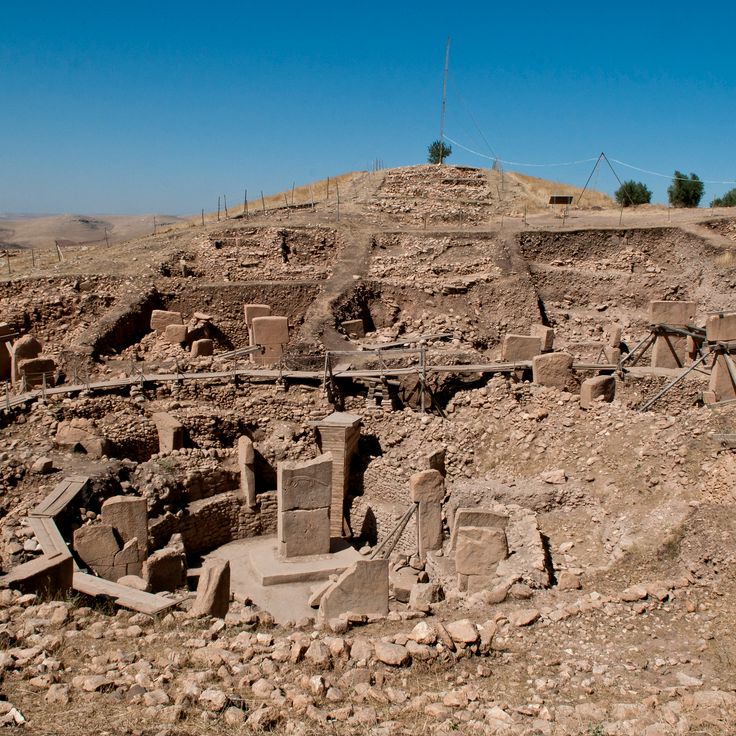
Göbekli Tepe sits on a hilltop near Şanlıurfa and is considered one of the oldest known ritual sites in the world. More than 11 000 years ago, people erected massive stone pillars carved with animals and symbols here, long before they settled into permanent villages. Excavations have uncovered only a small part of the site so far, and each new discovery reshapes what we know about early human history. The site has been a UNESCO World Heritage Site since 2018.
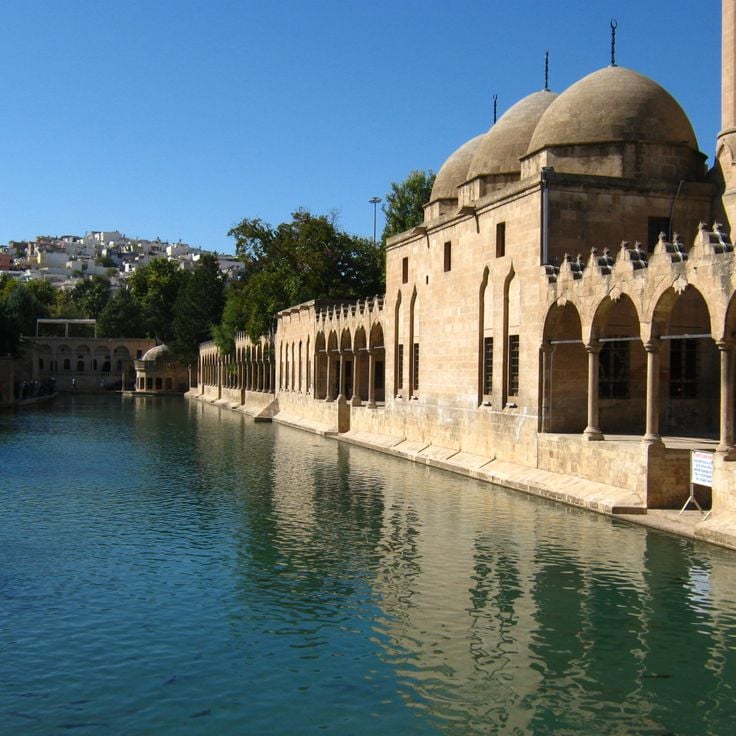
Balıklıgöl, known as the Pool of Abraham, sits at the heart of Şanlıurfa and has drawn pilgrims and visitors for centuries. A local tradition says the prophet Abraham was thrown into a fire here, which then turned into water. Today, two calm pools rest in the shade of old trees, filled with carp that are considered sacred and must never be caught. Mosques and gardens surround the water, making this spot a center of both religious life and daily gatherings in the city.
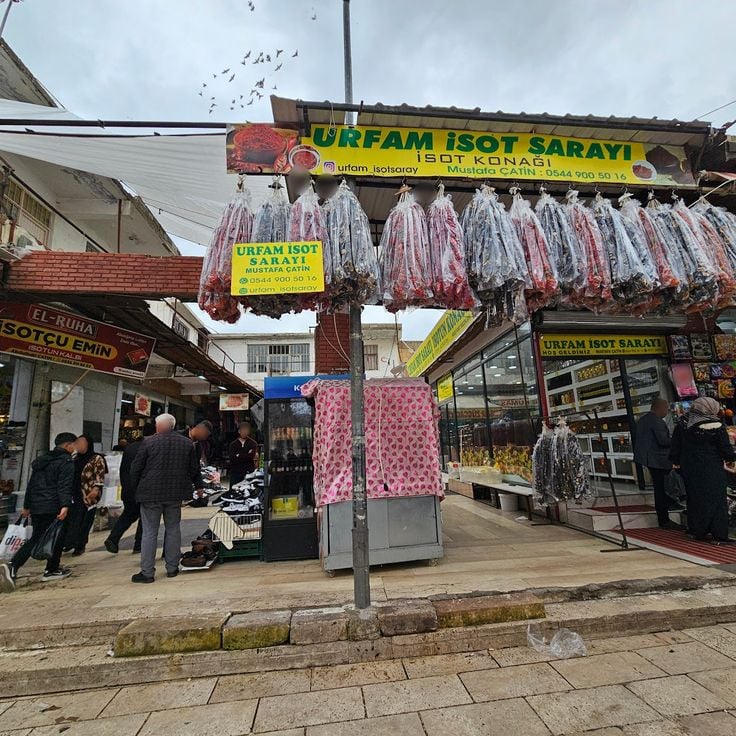
The old town of Şanlıurfa is a maze of narrow lanes, old caravanserais and covered markets. Walking through it, you discover craft workshops where copper and fabric are worked by hand. The bazaars fill up each morning with merchants and locals buying fresh goods and spices. Courtyards with fountains hide behind heavy wooden doors. This part of the city runs at a pace that has changed little over the centuries.
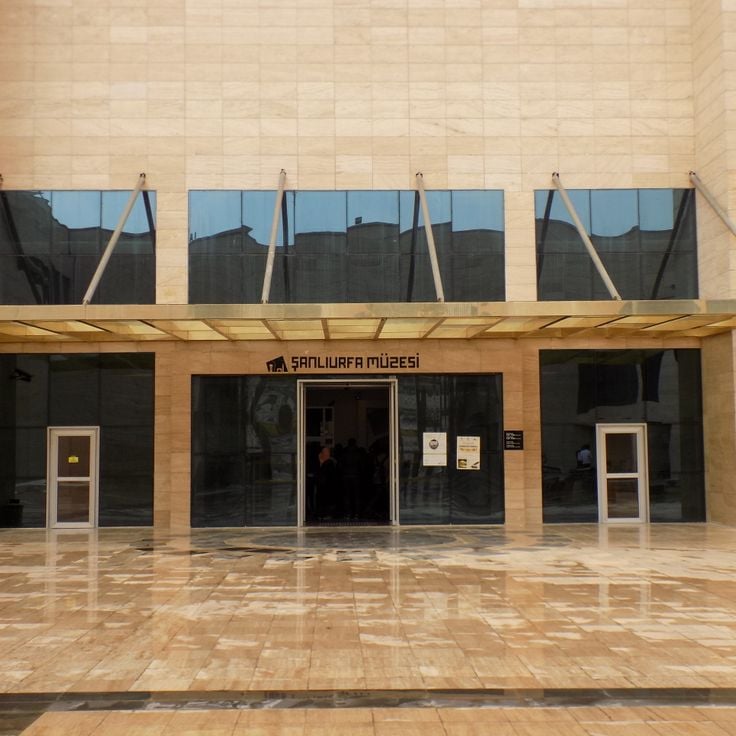
The Şanlıurfa Archaeological Museum holds some of the most important finds from the region, including objects from Göbekli Tepe, one of the oldest known sites of human activity. The displays guide visitors through thousands of years of Upper Mesopotamian history, from neolithic tools and sculptures to traces of later cultures. For anyone visiting the ancient sites of southeastern Turkey, this museum offers a solid starting point for understanding how this land was once lived in and shaped.
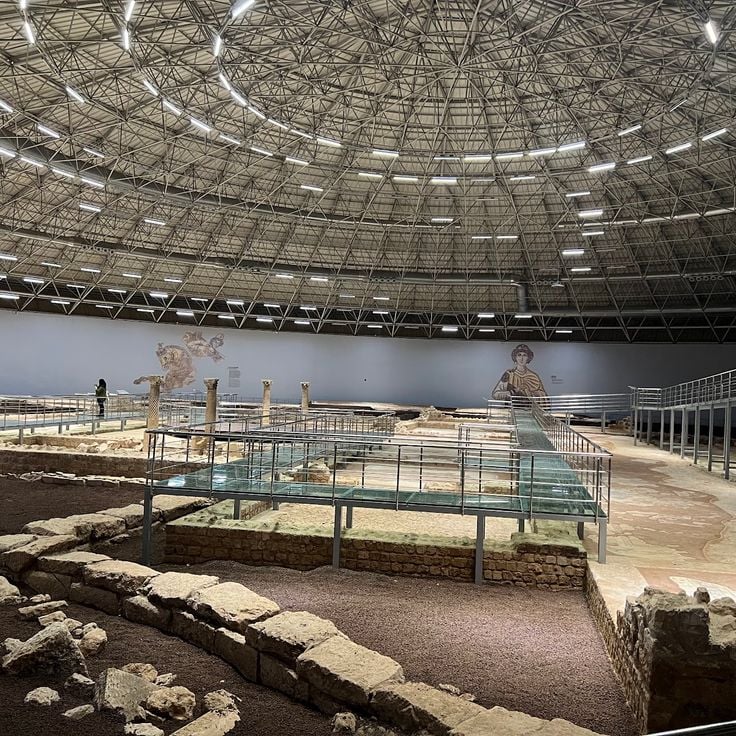
The Haleplibahçe Mosaic Museum in Şanlıurfa displays Roman mosaics uncovered during excavations near the old city walls. One of the most celebrated pieces shows Amazons on horseback and on foot, a rare subject in ancient mosaic art. The mosaics date back to the Roman period and are among the finest examples found in Anatolia. The museum was built specifically to house and display these works.
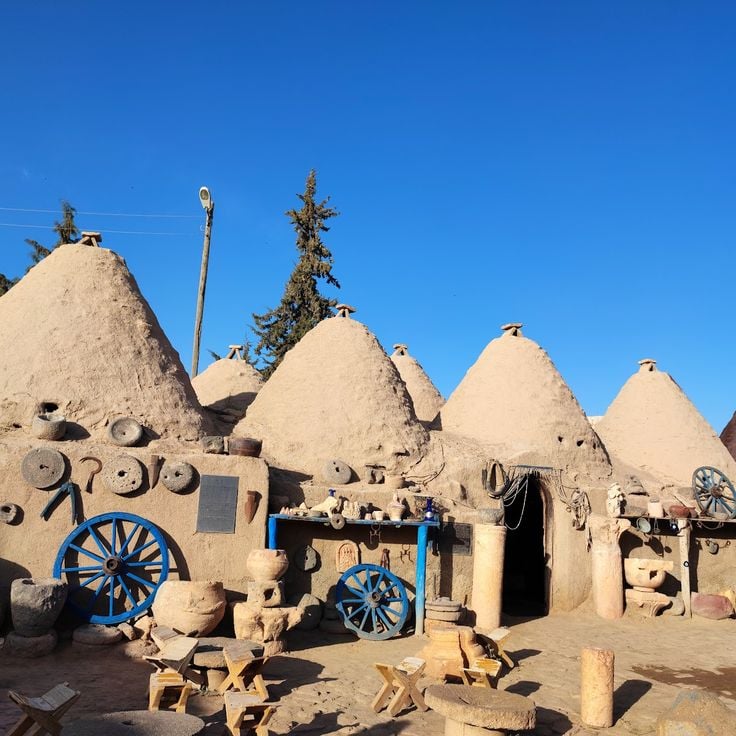
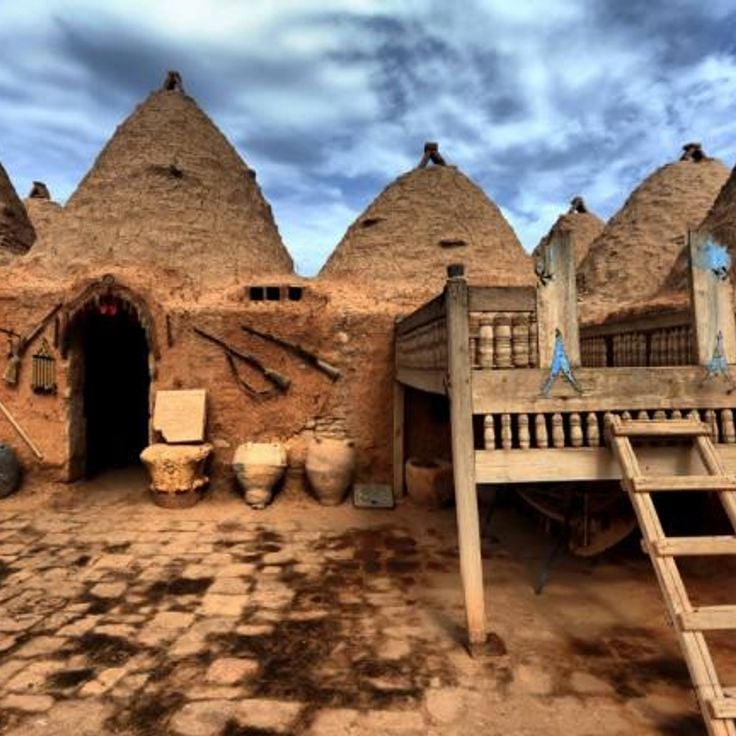
Harran, in southeastern Turkey, is known for its cone-shaped houses made of mud brick. These rounded buildings were designed to keep out the intense summer heat. The village was once an important stop along the trade routes of ancient Mesopotamia, and the remains of its walls and early mosque are still visible today. Walking through its narrow lanes feels like stepping into a very old story, where many peoples left their mark on the same ground.
The ruins of the university and the Great Mosque of Harran sit at the heart of the old town and tell the story of a time when this city was a major center of learning and faith. The Great Mosque was built in the 8th century and is one of the oldest in the country. Next to it stood one of the earliest universities in the Islamic world. Today the walls have largely fallen, but the mosque's tower still rises above the plain.
Soğmatar sits in a dry, rocky landscape east of Şanlıurfa. It was once a major place of worship where people came to honor the planets and stars. The site holds sanctuaries carved into the rock, ancient inscriptions, and reliefs dating back to a time when this region was part of the Aramaic world. Walking through the ruins, you get the sense of a place that has changed very little over the centuries.
Şuayb Şehri is an ancient site near Şanlıurfa, where dwellings carved into the rock and crumbling walls sit within a semi-desert landscape. The site takes its name from the prophet Jethro and was inhabited for many centuries. Walking through the ruins, you find caves, cut stone stairs and rooms that were once part of daily life here.
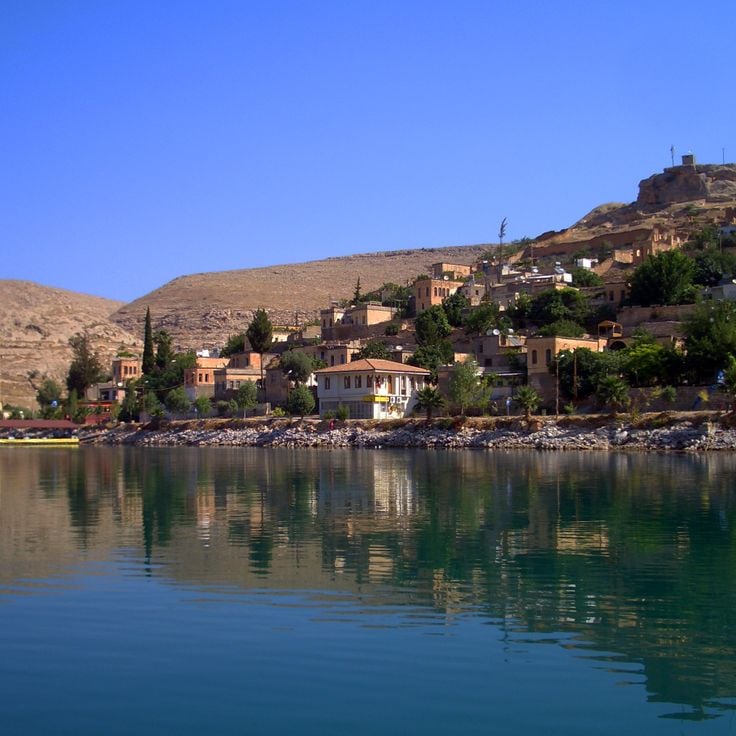
Halfeti is a village on the banks of the Euphrates river in southeastern Turkey. When the Birecik Dam was built, part of the old village slowly went underwater. The ancient stone houses now rest on the riverbed, and only a few walls and ruins still break the surface. Boat trips along these sunken remains give the place a strange, quiet feeling. Halfeti is also known for its black roses, which grow here due to the particular soil conditions along the riverbank and are found nowhere else.
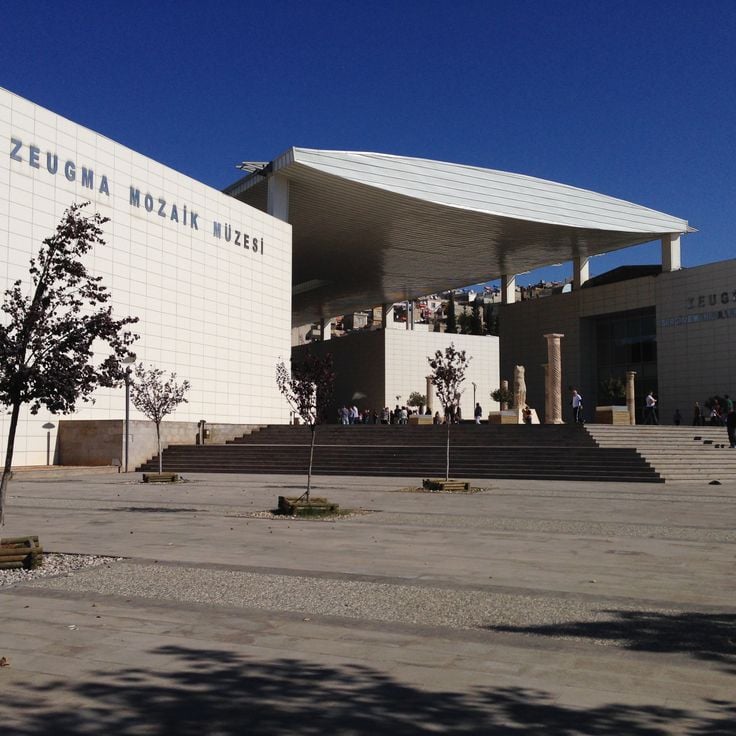
The Zeugma Mosaic Museum in Gaziantep holds one of the largest collections of Roman mosaics ever found. The works come from the ancient city of Zeugma, which once stood on the banks of the Euphrates River. The most famous piece is the portrait known as the Gypsy Girl, a young woman's face whose gaze stops visitors in their tracks. These mosaics were rescued before a dam flooded part of the ancient site.
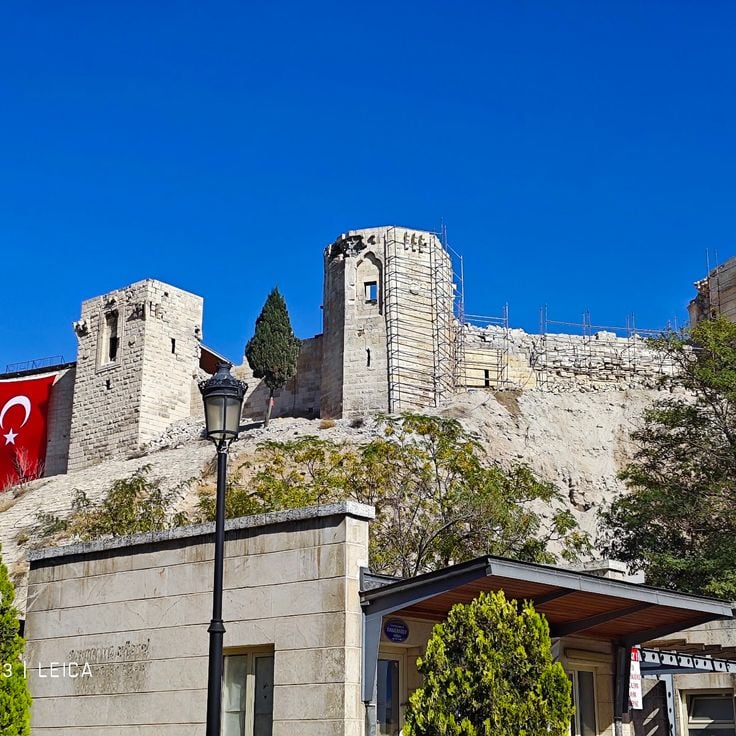
The Gaziantep Citadel stands on a hill at the center of the old city, looking out over the rooftops and streets below. Its walls and towers were built and rebuilt over many centuries, from Roman times through the Byzantine and Ottoman periods. Today it is one of the most recognizable landmarks in the city and a good place to start understanding the long history of this part of southeastern Turkey.
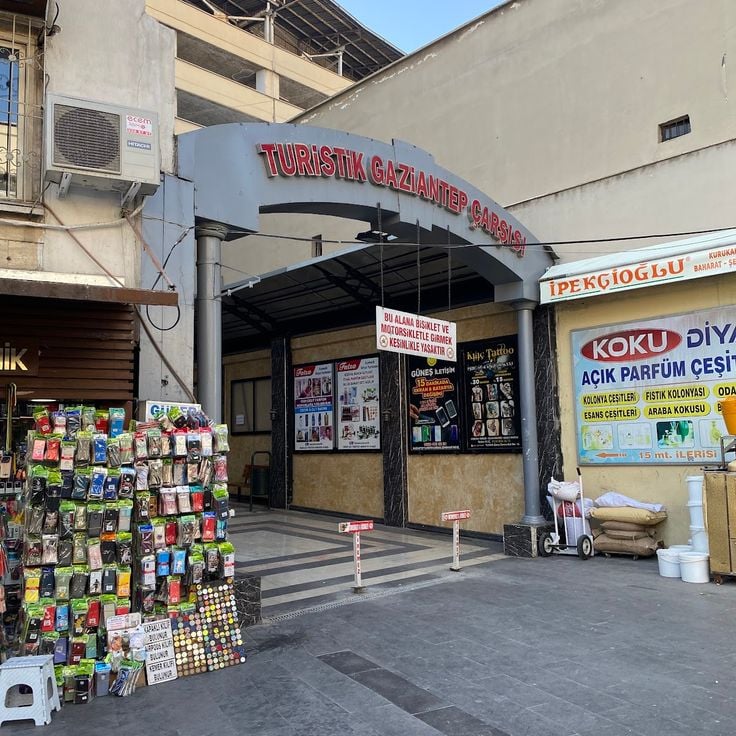
Gaziantep's old town has kept the rhythm of trade and craft for centuries. At the Bakırcılar Çarşısı, the copper market, men still shape bowls and pitchers by hand. Narrow lanes run past old caravanserais and spice stalls whose aromas fill the air. Gaziantep is one of Turkey's most celebrated food cities, and every corner of the bazaars makes that easy to believe.
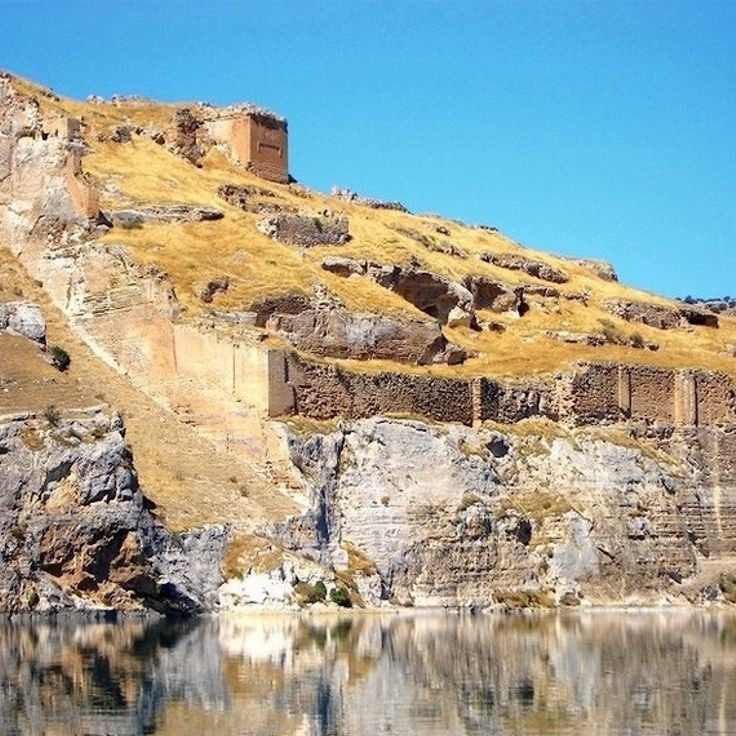
Rumkale rises on a rocky spur where the Euphrates and the Merzimen rivers meet. The fortress looks down over the canyon, and from its walls you can see the water far below. Galleries carved into the rock, towers, and old ramparts bear witness to the Byzantines, Armenians, and Arabs who passed through over the centuries. Part of the site now lies submerged under the Birecik Dam, which gives it an unusual appearance when seen from the water.
Yesemek is one of the oldest known sculpture workshops in the world. More than 3,000 years ago, Hittite craftsmen quarried basalt here and shaped it into large lions, sphinxes, and other figures. Many of these sculptures were left unfinished and still lie where the work stopped. Walking through the site, you can see tool marks in the stone and get a real sense of how an ancient workshop operated.
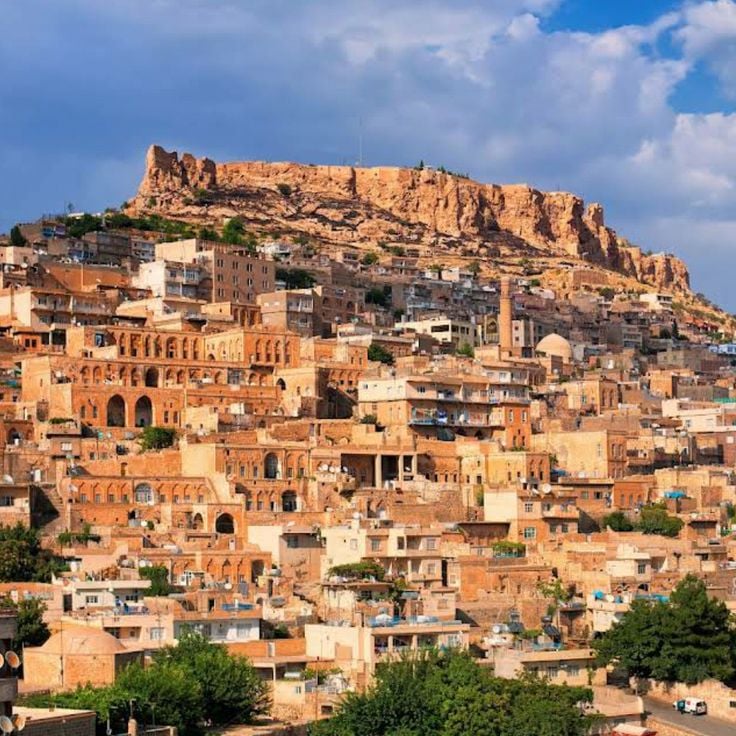
The old city of Mardin sits on a rocky spur high above the Mesopotamian plain. Its houses, churches, and mosques are all carved from the same honey-colored stone, giving the whole place a warm, golden tone. The lanes are narrow and steep, lined with sculpted facades and arched doorways. For centuries, Arameans, Kurds, Arabs, and Christians of different denominations lived here side by side.
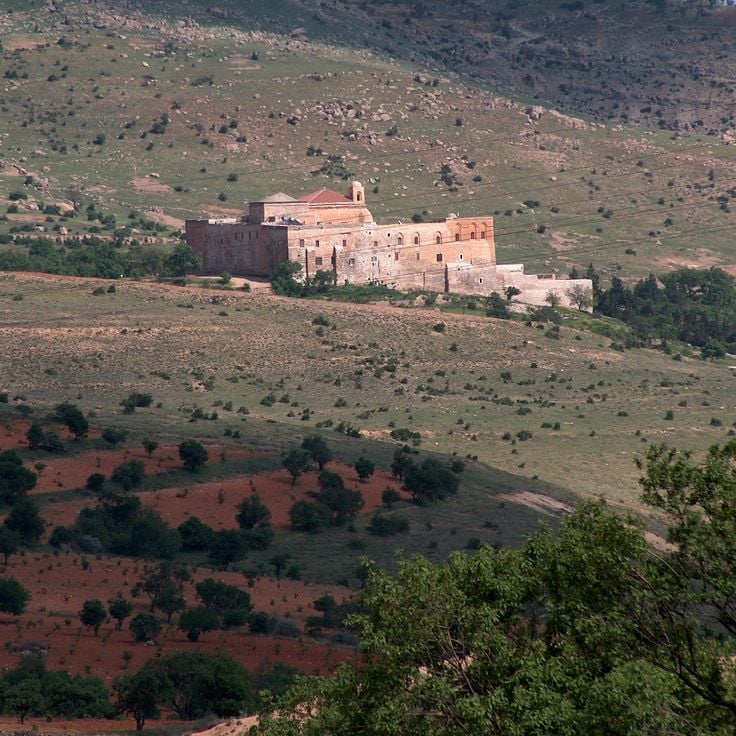
Deyrulzafaran Monastery sits on a hillside just outside Mardin and is one of the oldest continuously used monasteries of the Syriac Orthodox Church. Its walls are built from golden limestone that glows in the sun of the southeastern Anatolian plateau. Inside, you find old chapels, inscriptions in Aramaic, and the tombs of patriarchs. For many centuries, this was the seat of the Syriac Orthodox Patriarchate, and today it remains a place of active prayer and living memory.
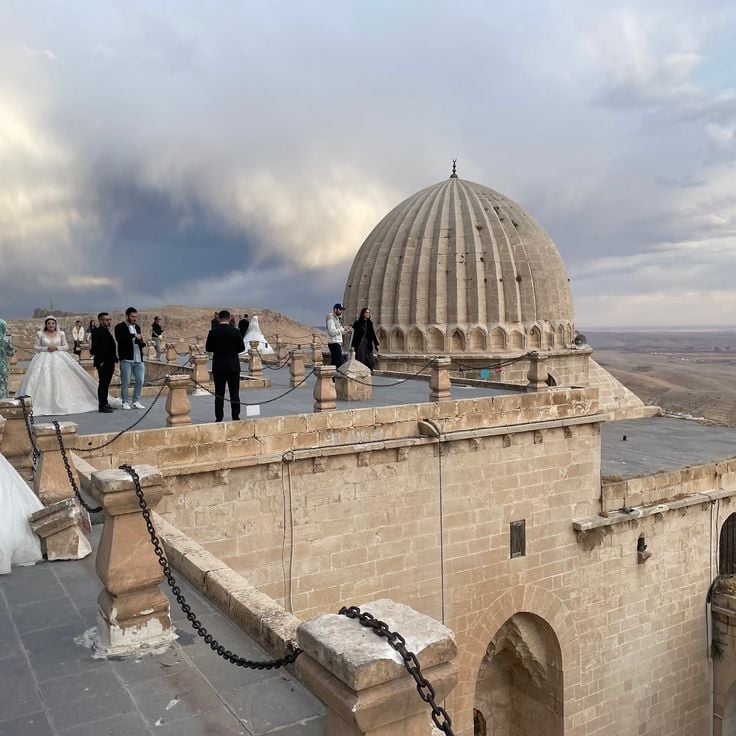
The Zinciriye Medresesi sits in the heart of Mardin, a city that rises above the Mesopotamian plain like a stone terrace. This medieval Islamic school was built from the pale local limestone, arranged around an open courtyard framed by domes and arched galleries. From its terraces, the view reaches far out over the plain below. Walking through it, you sense how learning, faith and daily life were woven together in the Middle Ages.
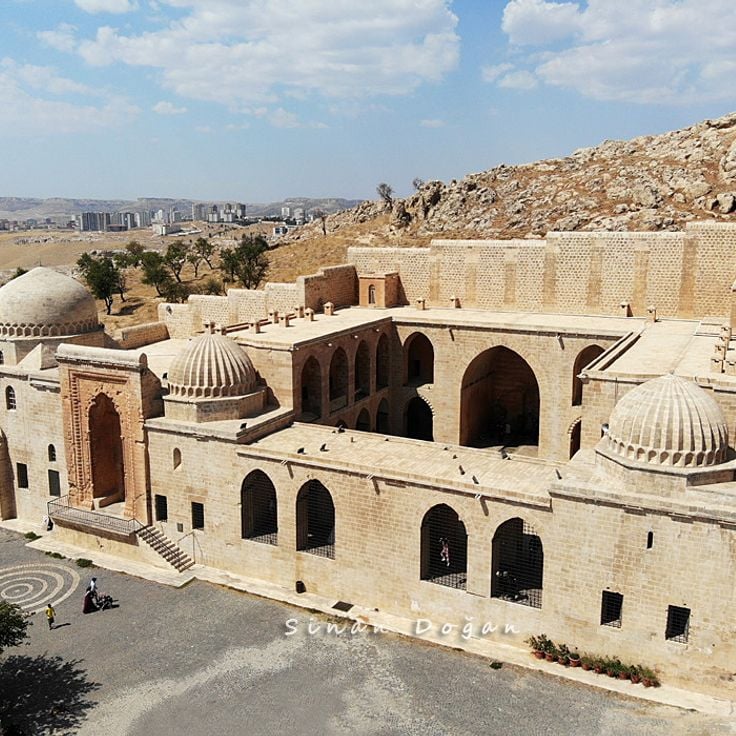
The Kasımiye Medresesi sits in the heart of Mardin, a city that rises like a stone theater above the Mesopotamian plain. Built in the 15th century, this old school of religious learning was carved from the pale local limestone. Its open courtyard invites you to slow down, and the stone arches around it show the skill of the craftsmen who shaped them. Walking through it gives a clear sense of how life and study were organized in a medieval Islamic city.
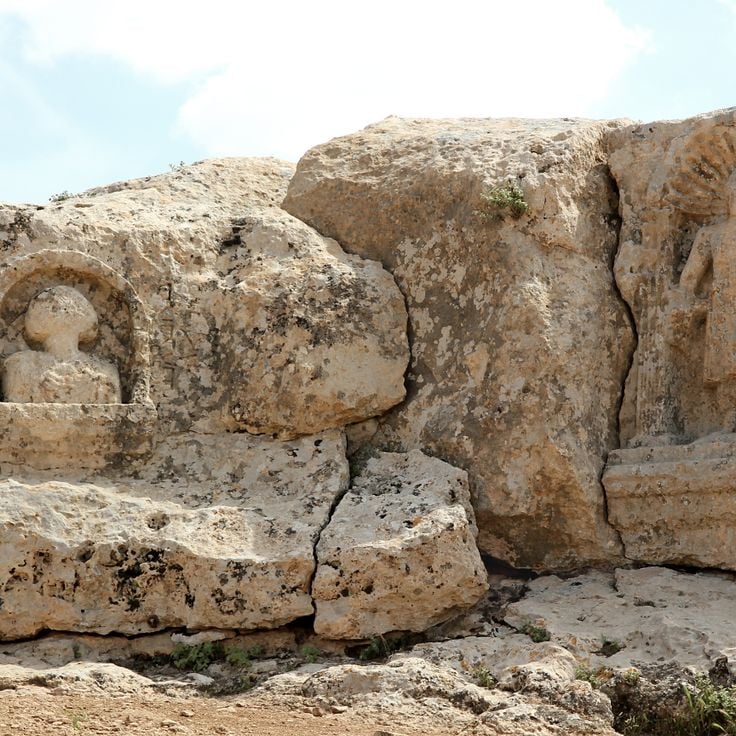
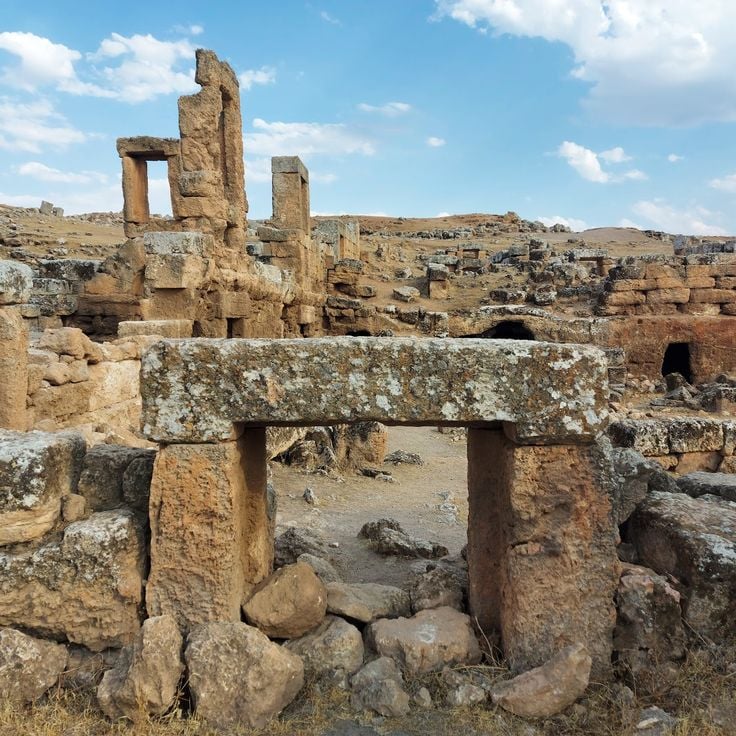
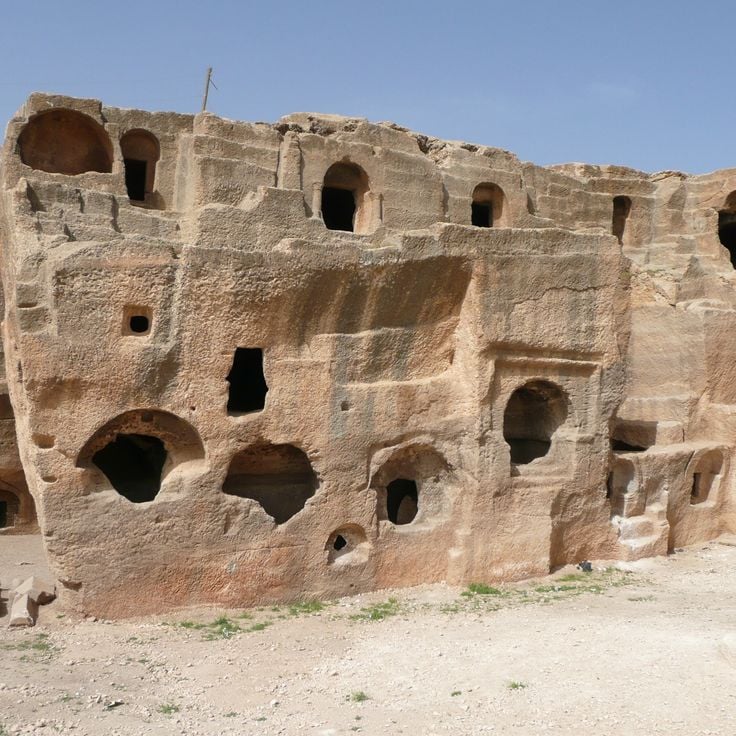
Dara, also known as Anastasiopolis, sits near Mardin and is one of the most striking ancient sites in southeastern Turkey. Founded in the 5th century as a Byzantine border fortress against the Sassanid empire, this ancient city still shows the marks of its long history. Visitors can walk among tombs carved directly into the rock, explore large underground cisterns, and follow the remains of walls that once defined a whole city. The scale of what remains gives a real sense of how important this place once was.
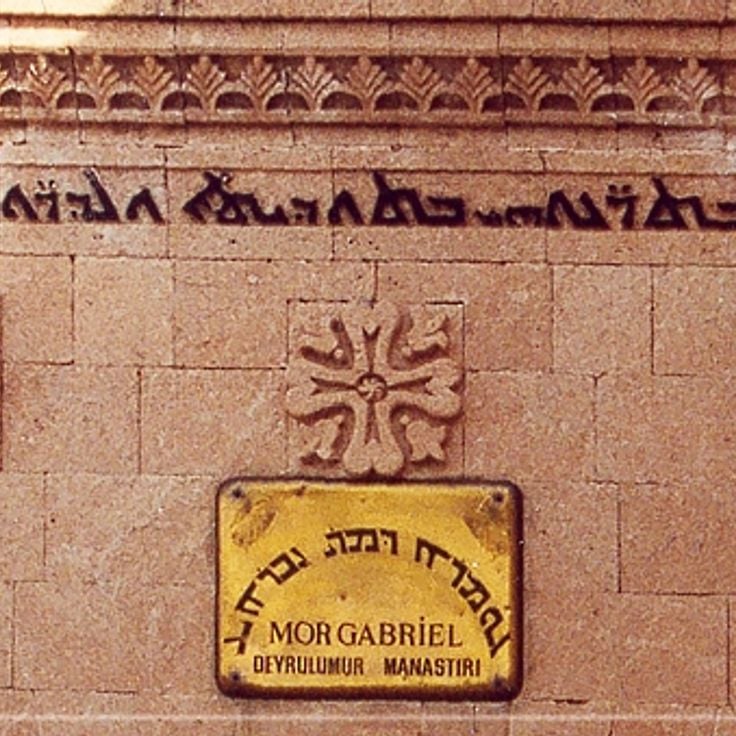
Mor Gabriel Monastery stands near Midyat and was founded at the end of the 4th century. It is one of the oldest Christian monasteries still in use anywhere in the world. Its yellow limestone walls enclose churches, courtyards, and living quarters where Syriac Orthodox monks and nuns continue to pray and work today. The liturgy is performed in Aramaic, the language Jesus is believed to have spoken. Walking through this monastery feels like stepping into a world that has barely changed in centuries.
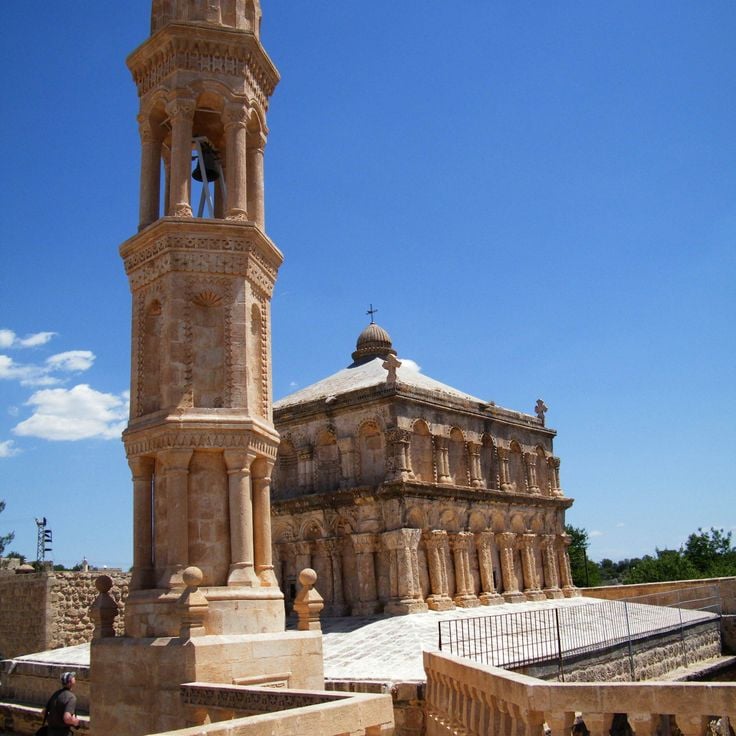
The village of Anıtlı, once called Hah, sits near Mardin and is one of the oldest Syriac Christian settlements in the region. Its church, dedicated to the Virgin Mary, dates back to early Christian centuries and is built from local stone carved with reliefs and inscriptions. The building has survived wars, migrations, and the passage of time. A small Syriac Orthodox community still lives here, keeping old rituals alive. Walking through the village feels like stepping into a world that has changed very little over the past 1,500 years.
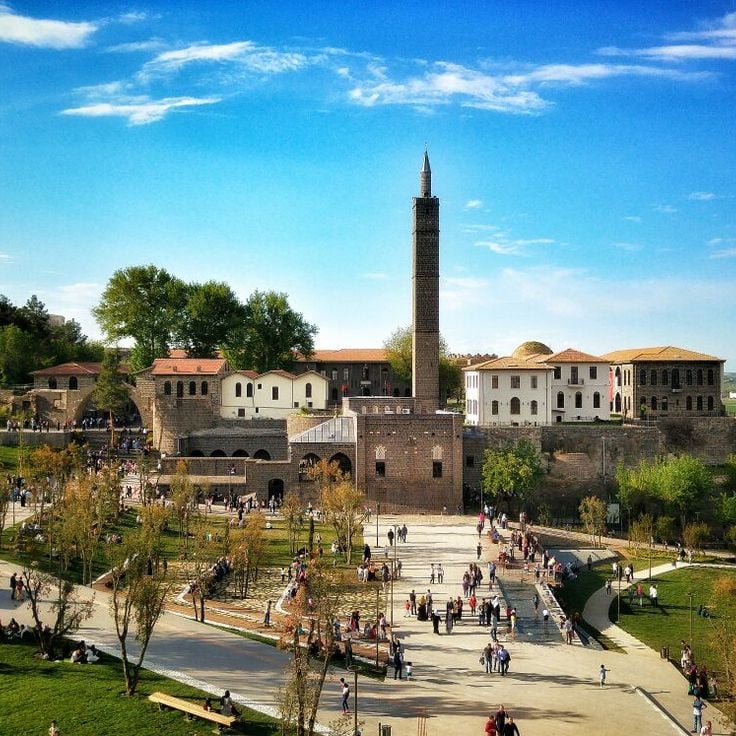
The city walls of Diyarbakır form a long black ring around the old town, built from dark volcanic basalt cut from a nearby source. Towers punctuate the wall at regular intervals, and from their tops you can look out over the rooftops toward the Tigris valley. Walking along the ramparts, you pass through layers of history that span Roman, Byzantine, and Ottoman periods. These walls have shaped the life of the city for centuries and were added to the UNESCO World Heritage List in 2015.
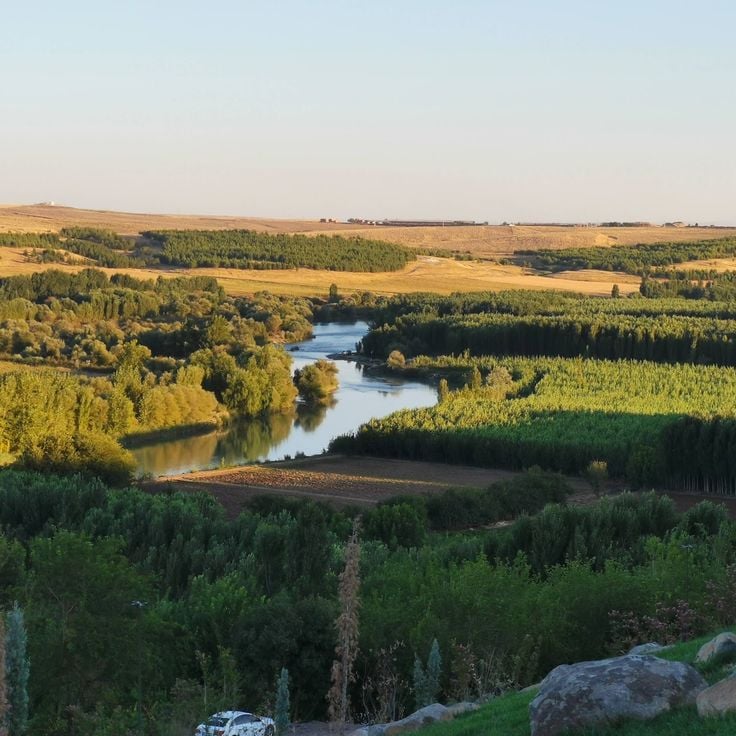
The Hevsel Gardens stretch between the old walls of Diyarbakır and the Tigris River. People have farmed this land for thousands of years, and it is now part of a UNESCO World Heritage site. Fruit trees, vegetable plots, and fields follow one another along the riverbank. Walking through the gardens, you get a clear sense of how the city and this green strip of land have always depended on each other.
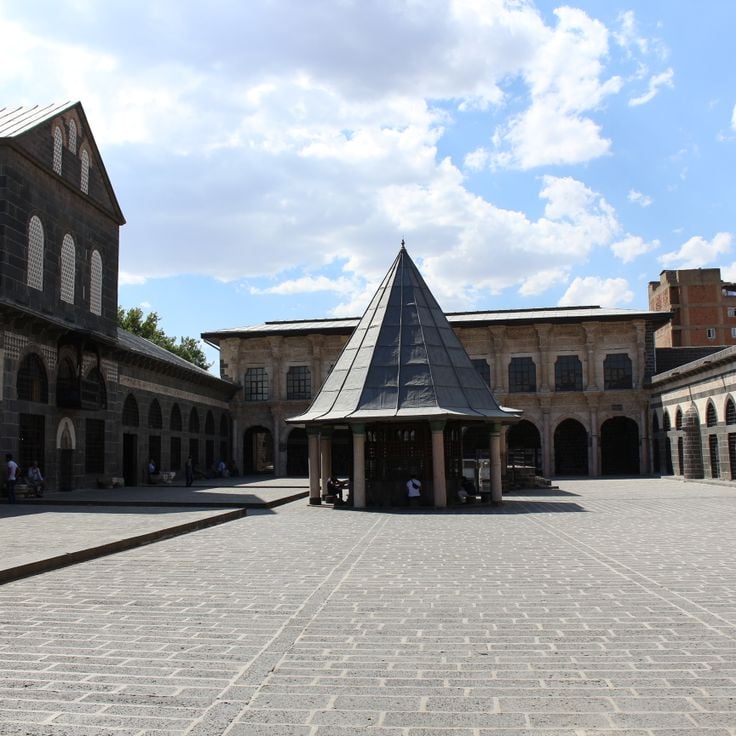
The Ulu Cami in Diyarbakır is one of the oldest mosques in Anatolia. It stands in the heart of the old city, surrounded by the black basalt walls that give Diyarbakır its strong visual character. The courtyard is wide and open, with an old fountain at its center. People come here daily to pray, and visitors can feel the weight and age of the stone all around them. The building carries traces of several periods, from Roman times through the Seljuk era and into the Islamic centuries.
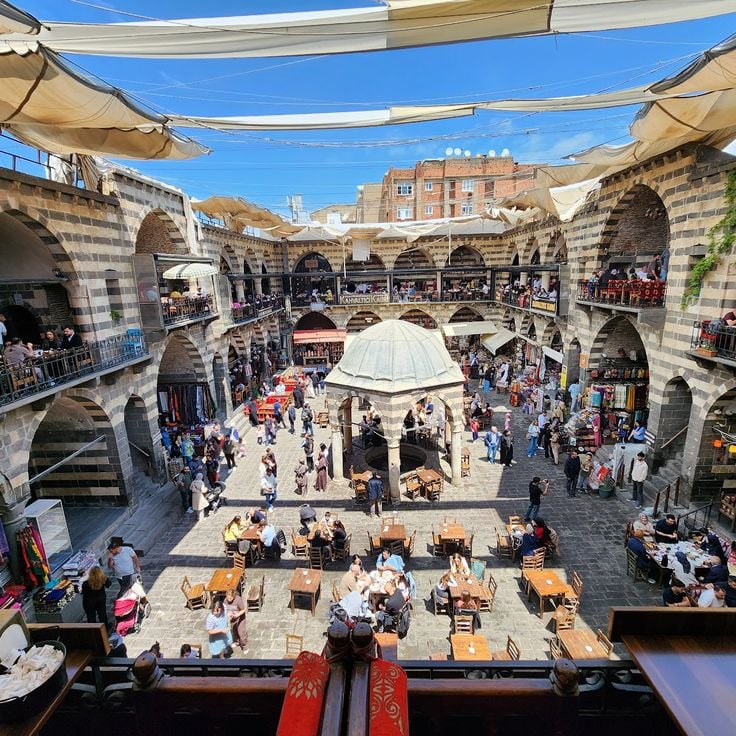
The Hasan Paşa Hanı is an old caravanserai in the heart of Diyarbakır, built from the dark basalt stone that defines much of the city. It once served as a resting place for merchants and travelers passing through the region. Today it remains a gathering spot where people sit over tea while the old city moves around them. From this courtyard, the Sur neighborhood unfolds on foot, with its narrow lanes, bazaars, and stone monuments telling the story of this ancient city.
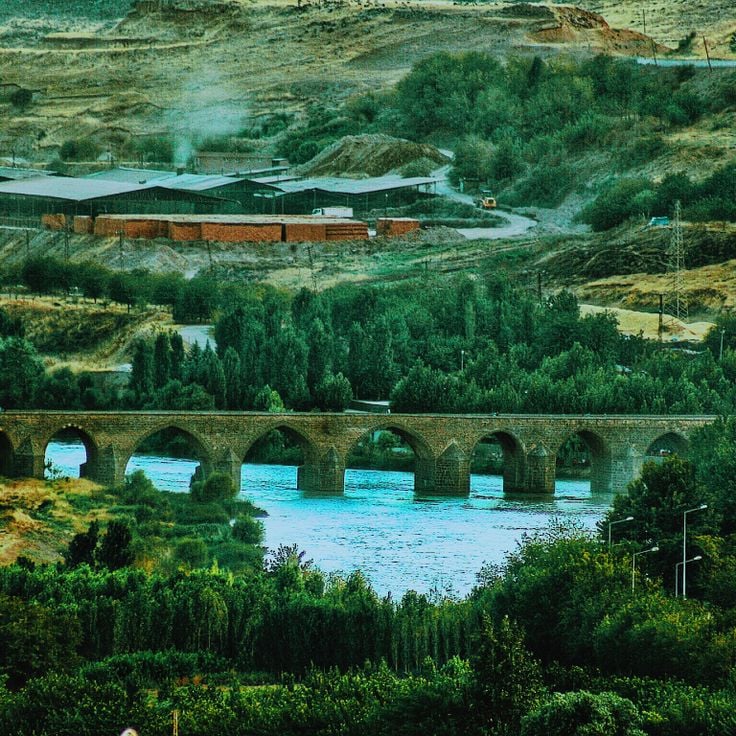
The On Gözlü Köprü, or Bridge of Ten Eyes, crosses the Tigris River just outside the old city of Diyarbakır. Its ten stone arches have carried people and goods across the river for centuries. Standing on the bridge, you see the dark basalt city walls on one side and the Hevsel Gardens on the other, both part of the same UNESCO World Heritage site. The river runs slowly below, and the surrounding landscape feels open and raw.
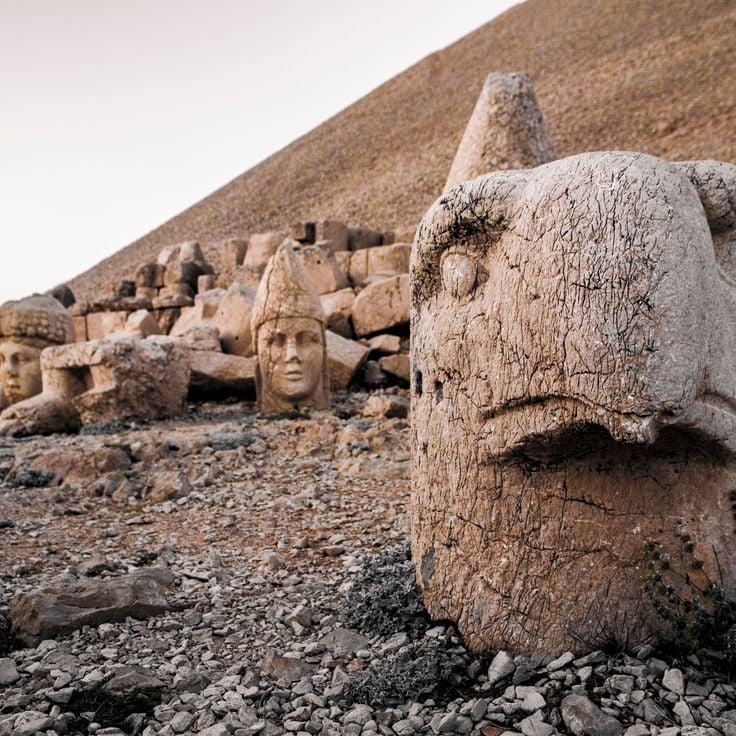
Mount Nemrut is a peak in the Adıyaman province where King Antiochus I of Commagene built his funerary sanctuary in the 1st century BC. At around 7,050 feet (2,150 m) above sea level, colossal stone heads of gods and kings rest on the ground, having fallen from their thrones over the centuries. Walking among them feels like stepping into a forgotten world. The site has been a UNESCO World Heritage Site since 1987.
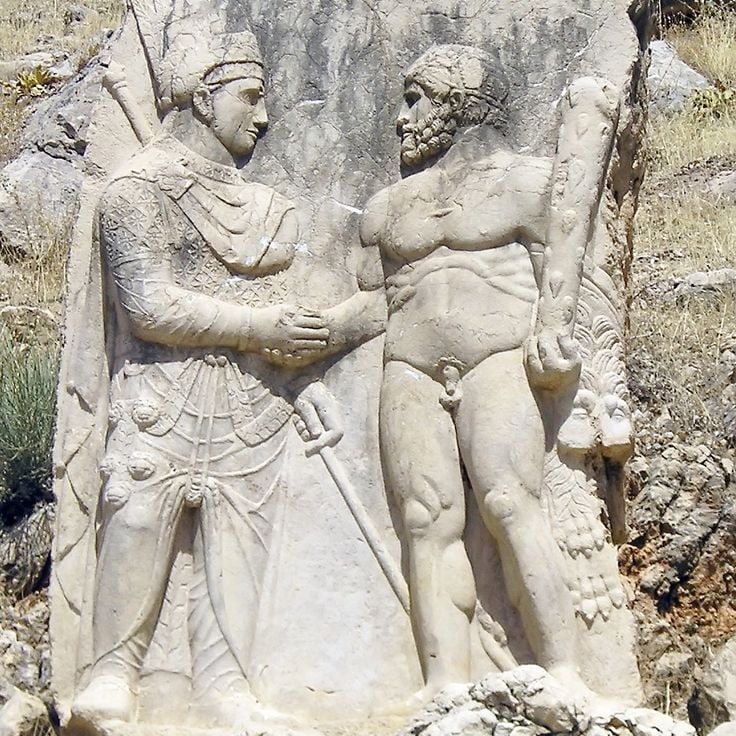
Arsameia was the summer capital of the Commagene Kingdom, a small realm that flourished around 2,000 years ago in what is now southeastern Turkey. Walking through the site, you pass rock reliefs carved into the cliff face, showing kings shaking hands with gods. A long staircase cut into the rock leads down to an underground chamber. From the hillside, you get a wide view over the valley of the Nymphaios River and the surrounding mountains.
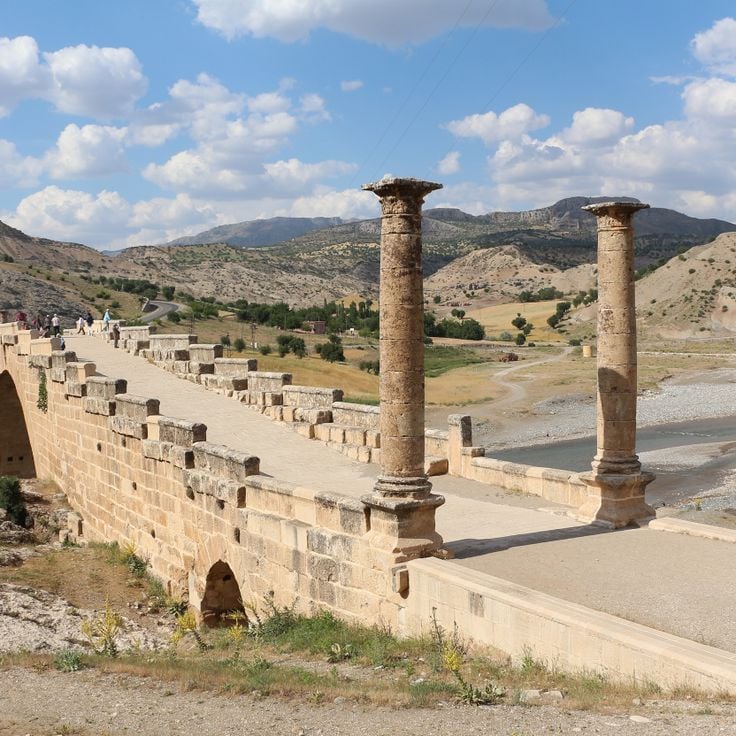
The Cendere Bridge, known as the Bridge of Septimius Severus, crosses a river at the bottom of a narrow gorge near Adıyaman. Built in the 2nd century AD, it is one of the best-preserved Roman bridges in Turkey. Walking across it, you get a direct sense of Roman engineering: the stone arch spans roughly 115 ft (35 m) and still carries the weight of centuries without a crack. Four Corinthian columns once marked the two ends of the bridge. Three of them still stand.
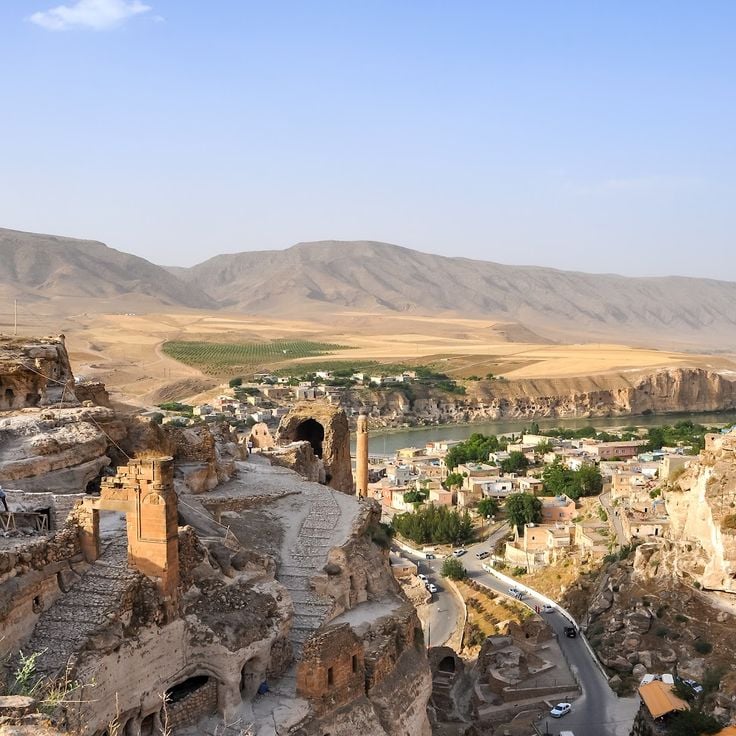
Hasankeyf sits on the banks of the Tigris River and is one of the oldest continuously inhabited places in the world. For thousands of years, it served as a crossing point between Mesopotamia and Anatolia. After the Ilısu Dam was built, some of its monuments were moved to higher ground, while others were submerged. Walking through Hasankeyf today, you can see cave dwellings carved into the cliffs, a medieval minaret, and the remains of an old bridge that once spanned the river.
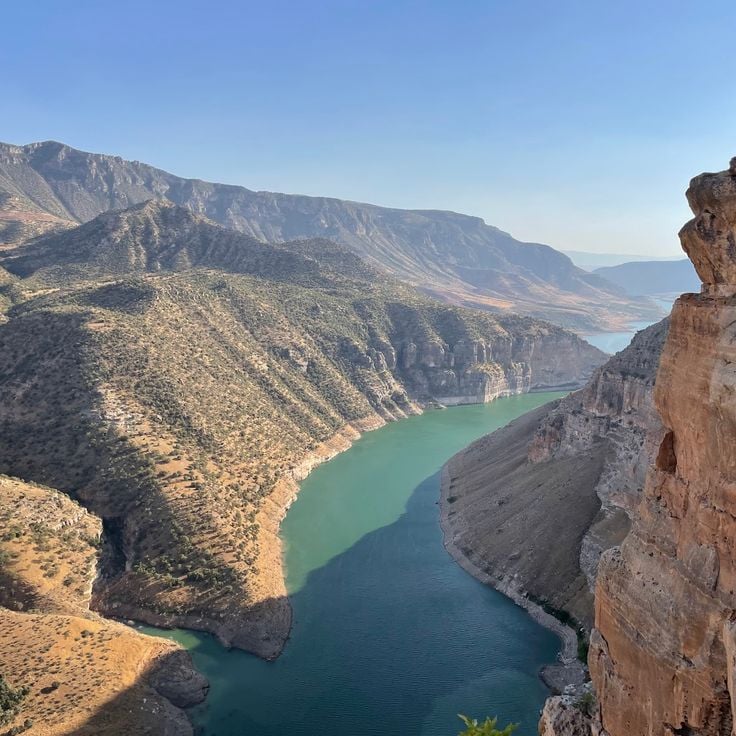
The Botan Valley sits near the city of Siirt in southeastern Turkey, carved by the Botan River over centuries of erosion. Deep gorges and steep rock faces define the terrain, creating a raw and rugged landscape that has sheltered human life since ancient times. Walking through the valley, you get a sense of how this land shaped the people who lived here, making it a fitting end point for a journey through the ancient sites of Upper Mesopotamia.
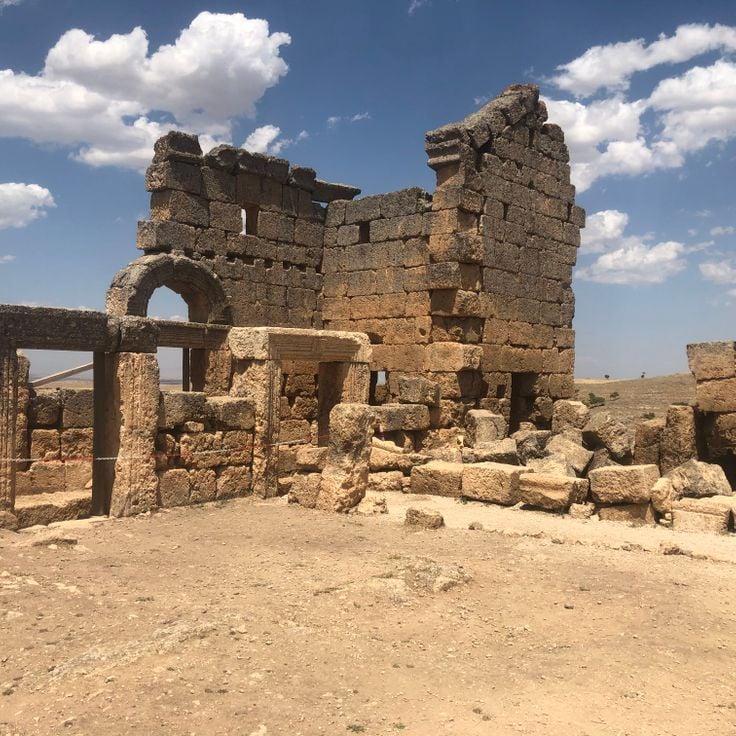
The Zerzevan Fortress sits on a hilltop in the Diyarbakır province, looking out over the flat plains of upper Mesopotamia. It was once a Roman garrison that guarded a key route between East and West. Inside its still-standing walls, you can see the remains of buildings and, most notably, an underground sanctuary dedicated to the god Mithras, where soldiers once gathered for their rituals. This cult was common in the Roman army, and the Zerzevan sanctuary is one of the best examples surviving in the region. Walking through the site gives a clear sense of what life on a frontier garrison might have looked like around 1,700 years ago (roughly 300 CE).
Göbekli Tepe sits on a hilltop near Şanlıurfa and is considered one of the oldest known ritual sites in the world. More than 11 000 years ago, people erected massive stone pillars carved with animals and symbols here, long before they settled into permanent villages. Excavations have uncovered only a small part of the site so far, and each new discovery reshapes what we know about early human history. The site has been a UNESCO World Heritage Site since 2018.
Balıklıgöl, known as the Pool of Abraham, sits at the heart of Şanlıurfa and has drawn pilgrims and visitors for centuries. A local tradition says the prophet Abraham was thrown into a fire here, which then turned into water. Today, two calm pools rest in the shade of old trees, filled with carp that are considered sacred and must never be caught. Mosques and gardens surround the water, making this spot a center of both religious life and daily gatherings in the city.
The old town of Şanlıurfa is a maze of narrow lanes, old caravanserais and covered markets. Walking through it, you discover craft workshops where copper and fabric are worked by hand. The bazaars fill up each morning with merchants and locals buying fresh goods and spices. Courtyards with fountains hide behind heavy wooden doors. This part of the city runs at a pace that has changed little over the centuries.
The Şanlıurfa Archaeological Museum holds some of the most important finds from the region, including objects from Göbekli Tepe, one of the oldest known sites of human activity. The displays guide visitors through thousands of years of Upper Mesopotamian history, from neolithic tools and sculptures to traces of later cultures. For anyone visiting the ancient sites of southeastern Turkey, this museum offers a solid starting point for understanding how this land was once lived in and shaped.
The Haleplibahçe Mosaic Museum in Şanlıurfa displays Roman mosaics uncovered during excavations near the old city walls. One of the most celebrated pieces shows Amazons on horseback and on foot, a rare subject in ancient mosaic art. The mosaics date back to the Roman period and are among the finest examples found in Anatolia. The museum was built specifically to house and display these works.
Harran, in southeastern Turkey, is known for its cone-shaped houses made of mud brick. These rounded buildings were designed to keep out the intense summer heat. The village was once an important stop along the trade routes of ancient Mesopotamia, and the remains of its walls and early mosque are still visible today. Walking through its narrow lanes feels like stepping into a very old story, where many peoples left their mark on the same ground.
The ruins of the university and the Great Mosque of Harran sit at the heart of the old town and tell the story of a time when this city was a major center of learning and faith. The Great Mosque was built in the 8th century and is one of the oldest in the country. Next to it stood one of the earliest universities in the Islamic world. Today the walls have largely fallen, but the mosque's tower still rises above the plain.
Soğmatar sits in a dry, rocky landscape east of Şanlıurfa. It was once a major place of worship where people came to honor the planets and stars. The site holds sanctuaries carved into the rock, ancient inscriptions, and reliefs dating back to a time when this region was part of the Aramaic world. Walking through the ruins, you get the sense of a place that has changed very little over the centuries.
Şuayb Şehri is an ancient site near Şanlıurfa, where dwellings carved into the rock and crumbling walls sit within a semi-desert landscape. The site takes its name from the prophet Jethro and was inhabited for many centuries. Walking through the ruins, you find caves, cut stone stairs and rooms that were once part of daily life here.
Halfeti is a village on the banks of the Euphrates river in southeastern Turkey. When the Birecik Dam was built, part of the old village slowly went underwater. The ancient stone houses now rest on the riverbed, and only a few walls and ruins still break the surface. Boat trips along these sunken remains give the place a strange, quiet feeling. Halfeti is also known for its black roses, which grow here due to the particular soil conditions along the riverbank and are found nowhere else.
The Zeugma Mosaic Museum in Gaziantep holds one of the largest collections of Roman mosaics ever found. The works come from the ancient city of Zeugma, which once stood on the banks of the Euphrates River. The most famous piece is the portrait known as the Gypsy Girl, a young woman's face whose gaze stops visitors in their tracks. These mosaics were rescued before a dam flooded part of the ancient site.
The Gaziantep Citadel stands on a hill at the center of the old city, looking out over the rooftops and streets below. Its walls and towers were built and rebuilt over many centuries, from Roman times through the Byzantine and Ottoman periods. Today it is one of the most recognizable landmarks in the city and a good place to start understanding the long history of this part of southeastern Turkey.
Gaziantep's old town has kept the rhythm of trade and craft for centuries. At the Bakırcılar Çarşısı, the copper market, men still shape bowls and pitchers by hand. Narrow lanes run past old caravanserais and spice stalls whose aromas fill the air. Gaziantep is one of Turkey's most celebrated food cities, and every corner of the bazaars makes that easy to believe.
Rumkale rises on a rocky spur where the Euphrates and the Merzimen rivers meet. The fortress looks down over the canyon, and from its walls you can see the water far below. Galleries carved into the rock, towers, and old ramparts bear witness to the Byzantines, Armenians, and Arabs who passed through over the centuries. Part of the site now lies submerged under the Birecik Dam, which gives it an unusual appearance when seen from the water.
Yesemek is one of the oldest known sculpture workshops in the world. More than 3,000 years ago, Hittite craftsmen quarried basalt here and shaped it into large lions, sphinxes, and other figures. Many of these sculptures were left unfinished and still lie where the work stopped. Walking through the site, you can see tool marks in the stone and get a real sense of how an ancient workshop operated.
The old city of Mardin sits on a rocky spur high above the Mesopotamian plain. Its houses, churches, and mosques are all carved from the same honey-colored stone, giving the whole place a warm, golden tone. The lanes are narrow and steep, lined with sculpted facades and arched doorways. For centuries, Arameans, Kurds, Arabs, and Christians of different denominations lived here side by side.
Deyrulzafaran Monastery sits on a hillside just outside Mardin and is one of the oldest continuously used monasteries of the Syriac Orthodox Church. Its walls are built from golden limestone that glows in the sun of the southeastern Anatolian plateau. Inside, you find old chapels, inscriptions in Aramaic, and the tombs of patriarchs. For many centuries, this was the seat of the Syriac Orthodox Patriarchate, and today it remains a place of active prayer and living memory.
The Zinciriye Medresesi sits in the heart of Mardin, a city that rises above the Mesopotamian plain like a stone terrace. This medieval Islamic school was built from the pale local limestone, arranged around an open courtyard framed by domes and arched galleries. From its terraces, the view reaches far out over the plain below. Walking through it, you sense how learning, faith and daily life were woven together in the Middle Ages.
The Kasımiye Medresesi sits in the heart of Mardin, a city that rises like a stone theater above the Mesopotamian plain. Built in the 15th century, this old school of religious learning was carved from the pale local limestone. Its open courtyard invites you to slow down, and the stone arches around it show the skill of the craftsmen who shaped them. Walking through it gives a clear sense of how life and study were organized in a medieval Islamic city.
Dara, also known as Anastasiopolis, sits near Mardin and is one of the most striking ancient sites in southeastern Turkey. Founded in the 5th century as a Byzantine border fortress against the Sassanid empire, this ancient city still shows the marks of its long history. Visitors can walk among tombs carved directly into the rock, explore large underground cisterns, and follow the remains of walls that once defined a whole city. The scale of what remains gives a real sense of how important this place once was.
Mor Gabriel Monastery stands near Midyat and was founded at the end of the 4th century. It is one of the oldest Christian monasteries still in use anywhere in the world. Its yellow limestone walls enclose churches, courtyards, and living quarters where Syriac Orthodox monks and nuns continue to pray and work today. The liturgy is performed in Aramaic, the language Jesus is believed to have spoken. Walking through this monastery feels like stepping into a world that has barely changed in centuries.
The village of Anıtlı, once called Hah, sits near Mardin and is one of the oldest Syriac Christian settlements in the region. Its church, dedicated to the Virgin Mary, dates back to early Christian centuries and is built from local stone carved with reliefs and inscriptions. The building has survived wars, migrations, and the passage of time. A small Syriac Orthodox community still lives here, keeping old rituals alive. Walking through the village feels like stepping into a world that has changed very little over the past 1,500 years.
The city walls of Diyarbakır form a long black ring around the old town, built from dark volcanic basalt cut from a nearby source. Towers punctuate the wall at regular intervals, and from their tops you can look out over the rooftops toward the Tigris valley. Walking along the ramparts, you pass through layers of history that span Roman, Byzantine, and Ottoman periods. These walls have shaped the life of the city for centuries and were added to the UNESCO World Heritage List in 2015.
The Hevsel Gardens stretch between the old walls of Diyarbakır and the Tigris River. People have farmed this land for thousands of years, and it is now part of a UNESCO World Heritage site. Fruit trees, vegetable plots, and fields follow one another along the riverbank. Walking through the gardens, you get a clear sense of how the city and this green strip of land have always depended on each other.
The Ulu Cami in Diyarbakır is one of the oldest mosques in Anatolia. It stands in the heart of the old city, surrounded by the black basalt walls that give Diyarbakır its strong visual character. The courtyard is wide and open, with an old fountain at its center. People come here daily to pray, and visitors can feel the weight and age of the stone all around them. The building carries traces of several periods, from Roman times through the Seljuk era and into the Islamic centuries.
The Hasan Paşa Hanı is an old caravanserai in the heart of Diyarbakır, built from the dark basalt stone that defines much of the city. It once served as a resting place for merchants and travelers passing through the region. Today it remains a gathering spot where people sit over tea while the old city moves around them. From this courtyard, the Sur neighborhood unfolds on foot, with its narrow lanes, bazaars, and stone monuments telling the story of this ancient city.
The On Gözlü Köprü, or Bridge of Ten Eyes, crosses the Tigris River just outside the old city of Diyarbakır. Its ten stone arches have carried people and goods across the river for centuries. Standing on the bridge, you see the dark basalt city walls on one side and the Hevsel Gardens on the other, both part of the same UNESCO World Heritage site. The river runs slowly below, and the surrounding landscape feels open and raw.
Mount Nemrut is a peak in the Adıyaman province where King Antiochus I of Commagene built his funerary sanctuary in the 1st century BC. At around 7,050 feet (2,150 m) above sea level, colossal stone heads of gods and kings rest on the ground, having fallen from their thrones over the centuries. Walking among them feels like stepping into a forgotten world. The site has been a UNESCO World Heritage Site since 1987.
Arsameia was the summer capital of the Commagene Kingdom, a small realm that flourished around 2,000 years ago in what is now southeastern Turkey. Walking through the site, you pass rock reliefs carved into the cliff face, showing kings shaking hands with gods. A long staircase cut into the rock leads down to an underground chamber. From the hillside, you get a wide view over the valley of the Nymphaios River and the surrounding mountains.
The Cendere Bridge, known as the Bridge of Septimius Severus, crosses a river at the bottom of a narrow gorge near Adıyaman. Built in the 2nd century AD, it is one of the best-preserved Roman bridges in Turkey. Walking across it, you get a direct sense of Roman engineering: the stone arch spans roughly 115 ft (35 m) and still carries the weight of centuries without a crack. Four Corinthian columns once marked the two ends of the bridge. Three of them still stand.
Hasankeyf sits on the banks of the Tigris River and is one of the oldest continuously inhabited places in the world. For thousands of years, it served as a crossing point between Mesopotamia and Anatolia. After the Ilısu Dam was built, some of its monuments were moved to higher ground, while others were submerged. Walking through Hasankeyf today, you can see cave dwellings carved into the cliffs, a medieval minaret, and the remains of an old bridge that once spanned the river.
The Botan Valley sits near the city of Siirt in southeastern Turkey, carved by the Botan River over centuries of erosion. Deep gorges and steep rock faces define the terrain, creating a raw and rugged landscape that has sheltered human life since ancient times. Walking through the valley, you get a sense of how this land shaped the people who lived here, making it a fitting end point for a journey through the ancient sites of Upper Mesopotamia.
The Zerzevan Fortress sits on a hilltop in the Diyarbakır province, looking out over the flat plains of upper Mesopotamia. It was once a Roman garrison that guarded a key route between East and West. Inside its still-standing walls, you can see the remains of buildings and, most notably, an underground sanctuary dedicated to the god Mithras, where soldiers once gathered for their rituals. This cult was common in the Roman army, and the Zerzevan sanctuary is one of the best examples surviving in the region. Walking through the site gives a clear sense of what life on a frontier garrison might have looked like around 1,700 years ago (roughly 300 CE).
Göbekli Tepe sits on a hilltop near Şanlıurfa and is considered one of the oldest known ritual sites in the world. More than 11 000 years ago, people erected massive stone pillars carved with animals and symbols here, long before they settled into permanent villages. Excavations have uncovered only a small part of the site so far, and each new discovery reshapes what we know about early human history. The site has been a UNESCO World Heritage Site since 2018.
Balıklıgöl, known as the Pool of Abraham, sits at the heart of Şanlıurfa and has drawn pilgrims and visitors for centuries. A local tradition says the prophet Abraham was thrown into a fire here, which then turned into water. Today, two calm pools rest in the shade of old trees, filled with carp that are considered sacred and must never be caught. Mosques and gardens surround the water, making this spot a center of both religious life and daily gatherings in the city.
The old town of Şanlıurfa is a maze of narrow lanes, old caravanserais and covered markets. Walking through it, you discover craft workshops where copper and fabric are worked by hand. The bazaars fill up each morning with merchants and locals buying fresh goods and spices. Courtyards with fountains hide behind heavy wooden doors. This part of the city runs at a pace that has changed little over the centuries.
The Şanlıurfa Archaeological Museum holds some of the most important finds from the region, including objects from Göbekli Tepe, one of the oldest known sites of human activity. The displays guide visitors through thousands of years of Upper Mesopotamian history, from neolithic tools and sculptures to traces of later cultures. For anyone visiting the ancient sites of southeastern Turkey, this museum offers a solid starting point for understanding how this land was once lived in and shaped.
The Haleplibahçe Mosaic Museum in Şanlıurfa displays Roman mosaics uncovered during excavations near the old city walls. One of the most celebrated pieces shows Amazons on horseback and on foot, a rare subject in ancient mosaic art. The mosaics date back to the Roman period and are among the finest examples found in Anatolia. The museum was built specifically to house and display these works.
Harran, in southeastern Turkey, is known for its cone-shaped houses made of mud brick. These rounded buildings were designed to keep out the intense summer heat. The village was once an important stop along the trade routes of ancient Mesopotamia, and the remains of its walls and early mosque are still visible today. Walking through its narrow lanes feels like stepping into a very old story, where many peoples left their mark on the same ground.
The ruins of the university and the Great Mosque of Harran sit at the heart of the old town and tell the story of a time when this city was a major center of learning and faith. The Great Mosque was built in the 8th century and is one of the oldest in the country. Next to it stood one of the earliest universities in the Islamic world. Today the walls have largely fallen, but the mosque's tower still rises above the plain.
Soğmatar sits in a dry, rocky landscape east of Şanlıurfa. It was once a major place of worship where people came to honor the planets and stars. The site holds sanctuaries carved into the rock, ancient inscriptions, and reliefs dating back to a time when this region was part of the Aramaic world. Walking through the ruins, you get the sense of a place that has changed very little over the centuries.
Şuayb Şehri is an ancient site near Şanlıurfa, where dwellings carved into the rock and crumbling walls sit within a semi-desert landscape. The site takes its name from the prophet Jethro and was inhabited for many centuries. Walking through the ruins, you find caves, cut stone stairs and rooms that were once part of daily life here.
Halfeti is a village on the banks of the Euphrates river in southeastern Turkey. When the Birecik Dam was built, part of the old village slowly went underwater. The ancient stone houses now rest on the riverbed, and only a few walls and ruins still break the surface. Boat trips along these sunken remains give the place a strange, quiet feeling. Halfeti is also known for its black roses, which grow here due to the particular soil conditions along the riverbank and are found nowhere else.
The Zeugma Mosaic Museum in Gaziantep holds one of the largest collections of Roman mosaics ever found. The works come from the ancient city of Zeugma, which once stood on the banks of the Euphrates River. The most famous piece is the portrait known as the Gypsy Girl, a young woman's face whose gaze stops visitors in their tracks. These mosaics were rescued before a dam flooded part of the ancient site.
The Gaziantep Citadel stands on a hill at the center of the old city, looking out over the rooftops and streets below. Its walls and towers were built and rebuilt over many centuries, from Roman times through the Byzantine and Ottoman periods. Today it is one of the most recognizable landmarks in the city and a good place to start understanding the long history of this part of southeastern Turkey.
Gaziantep's old town has kept the rhythm of trade and craft for centuries. At the Bakırcılar Çarşısı, the copper market, men still shape bowls and pitchers by hand. Narrow lanes run past old caravanserais and spice stalls whose aromas fill the air. Gaziantep is one of Turkey's most celebrated food cities, and every corner of the bazaars makes that easy to believe.
Rumkale rises on a rocky spur where the Euphrates and the Merzimen rivers meet. The fortress looks down over the canyon, and from its walls you can see the water far below. Galleries carved into the rock, towers, and old ramparts bear witness to the Byzantines, Armenians, and Arabs who passed through over the centuries. Part of the site now lies submerged under the Birecik Dam, which gives it an unusual appearance when seen from the water.
Yesemek is one of the oldest known sculpture workshops in the world. More than 3,000 years ago, Hittite craftsmen quarried basalt here and shaped it into large lions, sphinxes, and other figures. Many of these sculptures were left unfinished and still lie where the work stopped. Walking through the site, you can see tool marks in the stone and get a real sense of how an ancient workshop operated.
The old city of Mardin sits on a rocky spur high above the Mesopotamian plain. Its houses, churches, and mosques are all carved from the same honey-colored stone, giving the whole place a warm, golden tone. The lanes are narrow and steep, lined with sculpted facades and arched doorways. For centuries, Arameans, Kurds, Arabs, and Christians of different denominations lived here side by side.
Deyrulzafaran Monastery sits on a hillside just outside Mardin and is one of the oldest continuously used monasteries of the Syriac Orthodox Church. Its walls are built from golden limestone that glows in the sun of the southeastern Anatolian plateau. Inside, you find old chapels, inscriptions in Aramaic, and the tombs of patriarchs. For many centuries, this was the seat of the Syriac Orthodox Patriarchate, and today it remains a place of active prayer and living memory.
The Zinciriye Medresesi sits in the heart of Mardin, a city that rises above the Mesopotamian plain like a stone terrace. This medieval Islamic school was built from the pale local limestone, arranged around an open courtyard framed by domes and arched galleries. From its terraces, the view reaches far out over the plain below. Walking through it, you sense how learning, faith and daily life were woven together in the Middle Ages.
The Kasımiye Medresesi sits in the heart of Mardin, a city that rises like a stone theater above the Mesopotamian plain. Built in the 15th century, this old school of religious learning was carved from the pale local limestone. Its open courtyard invites you to slow down, and the stone arches around it show the skill of the craftsmen who shaped them. Walking through it gives a clear sense of how life and study were organized in a medieval Islamic city.
Dara, also known as Anastasiopolis, sits near Mardin and is one of the most striking ancient sites in southeastern Turkey. Founded in the 5th century as a Byzantine border fortress against the Sassanid empire, this ancient city still shows the marks of its long history. Visitors can walk among tombs carved directly into the rock, explore large underground cisterns, and follow the remains of walls that once defined a whole city. The scale of what remains gives a real sense of how important this place once was.
Mor Gabriel Monastery stands near Midyat and was founded at the end of the 4th century. It is one of the oldest Christian monasteries still in use anywhere in the world. Its yellow limestone walls enclose churches, courtyards, and living quarters where Syriac Orthodox monks and nuns continue to pray and work today. The liturgy is performed in Aramaic, the language Jesus is believed to have spoken. Walking through this monastery feels like stepping into a world that has barely changed in centuries.
The village of Anıtlı, once called Hah, sits near Mardin and is one of the oldest Syriac Christian settlements in the region. Its church, dedicated to the Virgin Mary, dates back to early Christian centuries and is built from local stone carved with reliefs and inscriptions. The building has survived wars, migrations, and the passage of time. A small Syriac Orthodox community still lives here, keeping old rituals alive. Walking through the village feels like stepping into a world that has changed very little over the past 1,500 years.
The city walls of Diyarbakır form a long black ring around the old town, built from dark volcanic basalt cut from a nearby source. Towers punctuate the wall at regular intervals, and from their tops you can look out over the rooftops toward the Tigris valley. Walking along the ramparts, you pass through layers of history that span Roman, Byzantine, and Ottoman periods. These walls have shaped the life of the city for centuries and were added to the UNESCO World Heritage List in 2015.
The Hevsel Gardens stretch between the old walls of Diyarbakır and the Tigris River. People have farmed this land for thousands of years, and it is now part of a UNESCO World Heritage site. Fruit trees, vegetable plots, and fields follow one another along the riverbank. Walking through the gardens, you get a clear sense of how the city and this green strip of land have always depended on each other.
The Ulu Cami in Diyarbakır is one of the oldest mosques in Anatolia. It stands in the heart of the old city, surrounded by the black basalt walls that give Diyarbakır its strong visual character. The courtyard is wide and open, with an old fountain at its center. People come here daily to pray, and visitors can feel the weight and age of the stone all around them. The building carries traces of several periods, from Roman times through the Seljuk era and into the Islamic centuries.
The Hasan Paşa Hanı is an old caravanserai in the heart of Diyarbakır, built from the dark basalt stone that defines much of the city. It once served as a resting place for merchants and travelers passing through the region. Today it remains a gathering spot where people sit over tea while the old city moves around them. From this courtyard, the Sur neighborhood unfolds on foot, with its narrow lanes, bazaars, and stone monuments telling the story of this ancient city.
The On Gözlü Köprü, or Bridge of Ten Eyes, crosses the Tigris River just outside the old city of Diyarbakır. Its ten stone arches have carried people and goods across the river for centuries. Standing on the bridge, you see the dark basalt city walls on one side and the Hevsel Gardens on the other, both part of the same UNESCO World Heritage site. The river runs slowly below, and the surrounding landscape feels open and raw.
Mount Nemrut is a peak in the Adıyaman province where King Antiochus I of Commagene built his funerary sanctuary in the 1st century BC. At around 7,050 feet (2,150 m) above sea level, colossal stone heads of gods and kings rest on the ground, having fallen from their thrones over the centuries. Walking among them feels like stepping into a forgotten world. The site has been a UNESCO World Heritage Site since 1987.
Arsameia was the summer capital of the Commagene Kingdom, a small realm that flourished around 2,000 years ago in what is now southeastern Turkey. Walking through the site, you pass rock reliefs carved into the cliff face, showing kings shaking hands with gods. A long staircase cut into the rock leads down to an underground chamber. From the hillside, you get a wide view over the valley of the Nymphaios River and the surrounding mountains.
The Cendere Bridge, known as the Bridge of Septimius Severus, crosses a river at the bottom of a narrow gorge near Adıyaman. Built in the 2nd century AD, it is one of the best-preserved Roman bridges in Turkey. Walking across it, you get a direct sense of Roman engineering: the stone arch spans roughly 115 ft (35 m) and still carries the weight of centuries without a crack. Four Corinthian columns once marked the two ends of the bridge. Three of them still stand.
Hasankeyf sits on the banks of the Tigris River and is one of the oldest continuously inhabited places in the world. For thousands of years, it served as a crossing point between Mesopotamia and Anatolia. After the Ilısu Dam was built, some of its monuments were moved to higher ground, while others were submerged. Walking through Hasankeyf today, you can see cave dwellings carved into the cliffs, a medieval minaret, and the remains of an old bridge that once spanned the river.
The Botan Valley sits near the city of Siirt in southeastern Turkey, carved by the Botan River over centuries of erosion. Deep gorges and steep rock faces define the terrain, creating a raw and rugged landscape that has sheltered human life since ancient times. Walking through the valley, you get a sense of how this land shaped the people who lived here, making it a fitting end point for a journey through the ancient sites of Upper Mesopotamia.
The Zerzevan Fortress sits on a hilltop in the Diyarbakır province, looking out over the flat plains of upper Mesopotamia. It was once a Roman garrison that guarded a key route between East and West. Inside its still-standing walls, you can see the remains of buildings and, most notably, an underground sanctuary dedicated to the god Mithras, where soldiers once gathered for their rituals. This cult was common in the Roman army, and the Zerzevan sanctuary is one of the best examples surviving in the region. Walking through the site gives a clear sense of what life on a frontier garrison might have looked like around 1,700 years ago (roughly 300 CE).
Take the time you need to explore the local archaeological museums before visiting the sites. A visit to the museum in Şanlıurfa or to Zeugma will help you understand better what you will see in the field, because many major pieces are kept there. The objects on display shed light on the history of these places and make your journeys more meaningful.