See the monuments around you in AROpen chests in the app
Around Us is built for your phone — point your camera at the streets and discover the monuments and places around you in augmented reality.Around Us is built for your phone — chests unlock when you walk, explore and capture nearby places.
Visit Silesia and the Sudeten: medieval castles, mountains and old towns
Silesia and the Sudeten Mountains in the southwest of Poland include old towns, wooded mountains, and signs of a rich past. You see Wroclaw with its large market square surrounded by colorful houses, Tumski Island with brick churches, and the Raclawice Panorama which shows a circular painting of a battle from the 18th century. Further away, the Karkonosze National Park offers trails to Sniezka, the highest peak in the range, while Karpacz and Szklarska Poreba are starting points for exploring forests and waterfalls.
The area also has medieval castles on rocky ridges, churches listed as world heritage sites, and old thermal spas. The history of industry can be seen in some buildings and museums. Between city visits and mountain walks, this part of Poland allows you to go from a paved square to a forest trail in just a few kilometers.
Visit Silesia and the Sudeten: medieval castles, mountains and old towns
Silesia and the Sudeten Mountains in the southwest of Poland include old towns, wooded mountains, and signs of a rich past. You see Wroclaw with its large market square surrounded by colorful houses, Tumski Island with brick churches, and the Raclawice Panorama which shows a circular painting of a battle from the 18th century. Further away, the Karkonosze National Park offers trails to Sniezka, the highest peak in the range, while Karpacz and Szklarska Poreba are starting points for exploring forests and waterfalls.
The area also has medieval castles on rocky ridges, churches listed as world heritage sites, and old thermal spas. The history of industry can be seen in some buildings and museums. Between city visits and mountain walks, this part of Poland allows you to go from a paved square to a forest trail in just a few kilometers.
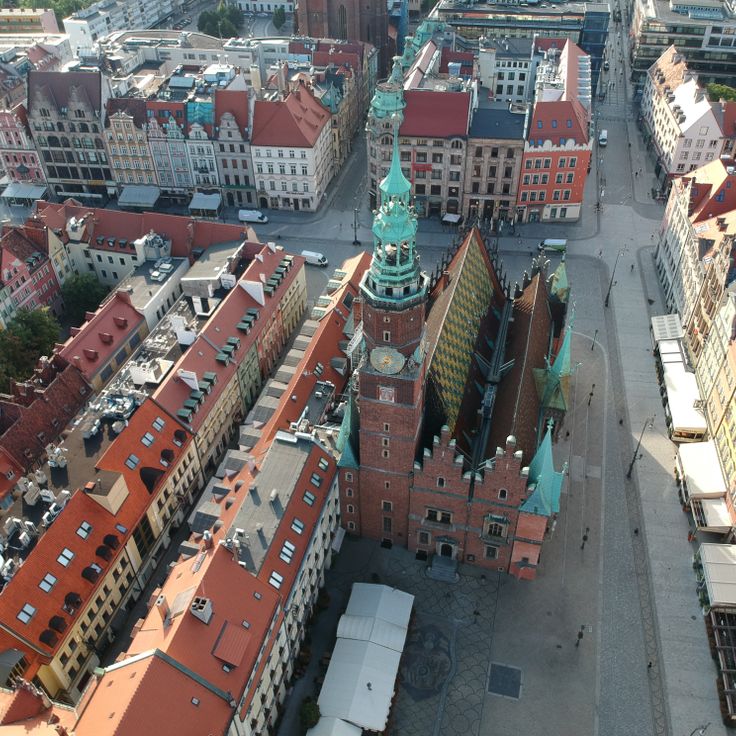
The Market Square of Wroclaw is a large historic plaza at the heart of the old town. It is surrounded by old buildings with colorful facades that now house shops and restaurants. The square serves as a living gathering place where people walk, rest, and watch daily life unfold. In the center stands a historic town hall that reflects the city's medieval past. Around the square you can see buildings from different periods that show the layered history of Wroclaw.
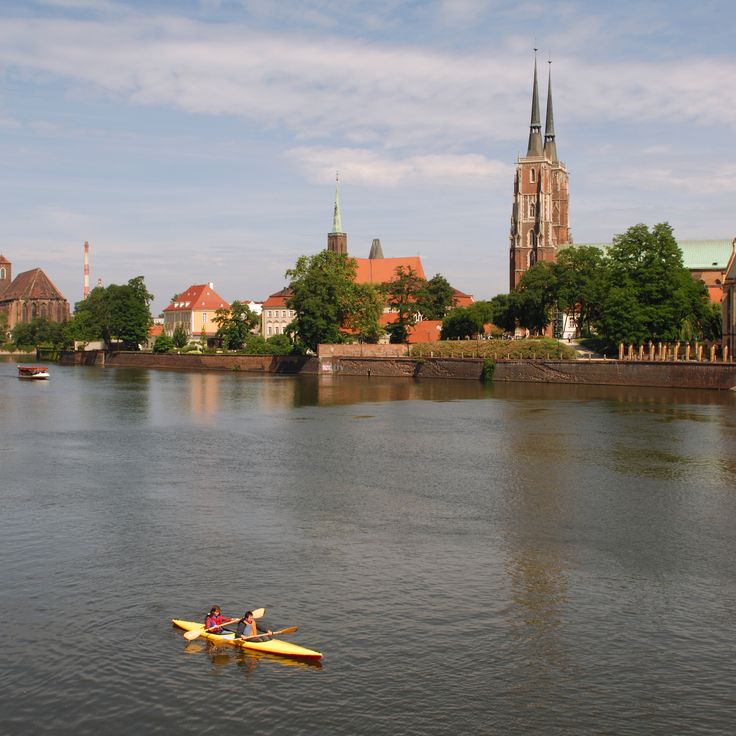
Tumski Island in Wroclaw is the historical heart of the city. Here red brick churches and the cathedral stand as the ancient religious center of Wroclaw. Walking across the bridges, you step back in time through buildings from different periods that tell the story of this island. Nestled between the river arms, Tumski Island offers a place of reflection within the city.
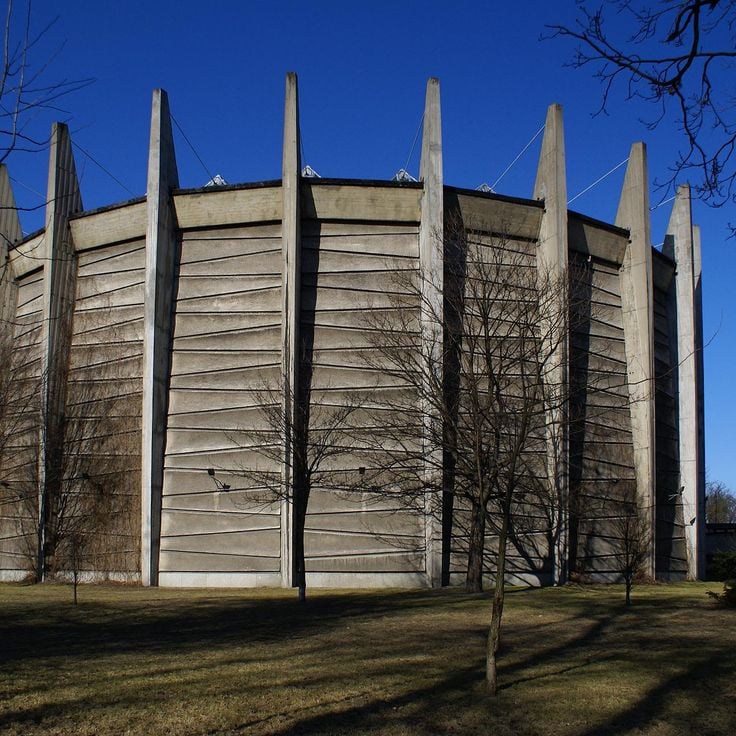
The Panorama of Raclawice in Wroclaw is a monumental circular painting depicting a 19th-century battle. Visitors enter a room where the artwork surrounds them on all sides, creating the sensation of standing within the historical scene. The painting shows soldiers, horses, and the landscape of the battlefield in fine detail. Created in the 19th century, it allows viewers to experience an episode of regional history from close proximity.
The University of Wroclaw is a building with a history spanning several centuries. Its heart is the Aula Leopoldina, a hall with Baroque architecture where formal ceremonies take place. The building itself shows how the city changed across different periods. Visitors can see the carefully designed rooms and learn about the role this institution played in the education history of the region.
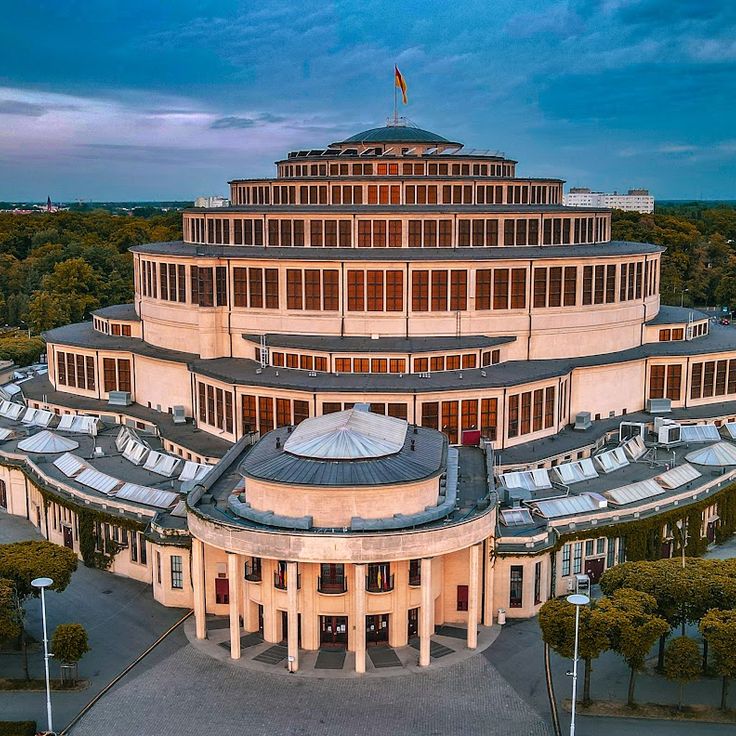
Hala Stulecia in Wroclaw is a large circular building built in the early 1900s and listed as a UNESCO World Heritage site. The structure stands out for its unusual round shape and historical importance. A park surrounds the building, offering space to walk and sit. The hall shows the construction techniques of its era and remains part of Wroclaw's place in the history of Silesia.
The Karkonosze National Park sits in southwestern Poland and is a large mountainous area with hiking trails, waterfalls, and peaks in the Giant Mountains. This park provides access to some of the region's highest points and serves as a starting point for exploring the forested slopes and natural landscapes that define Silesia and the Sudetes.
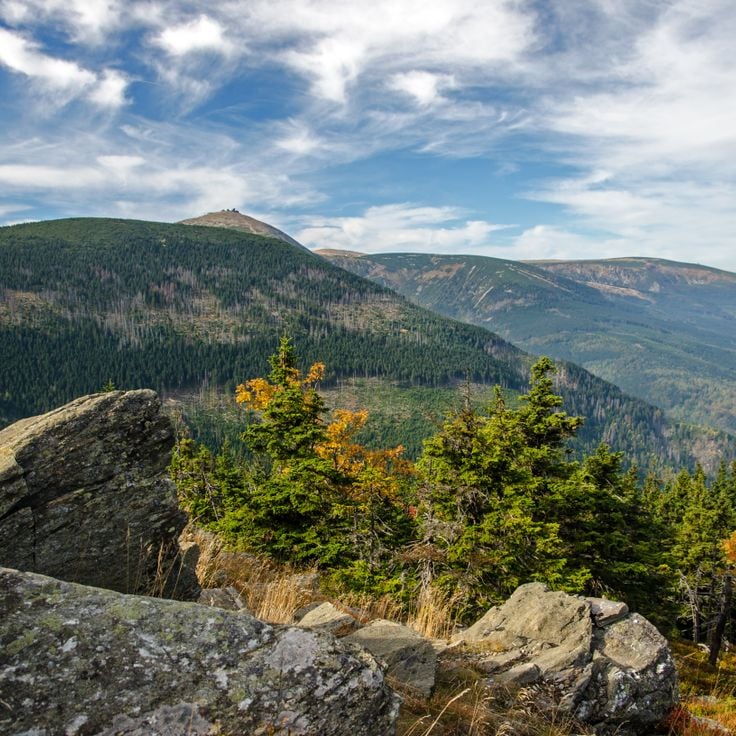
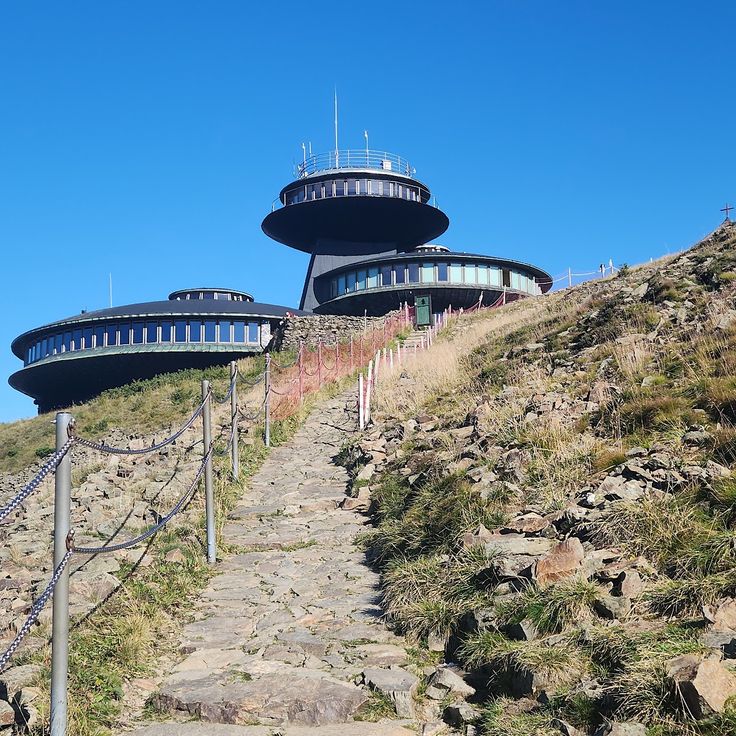
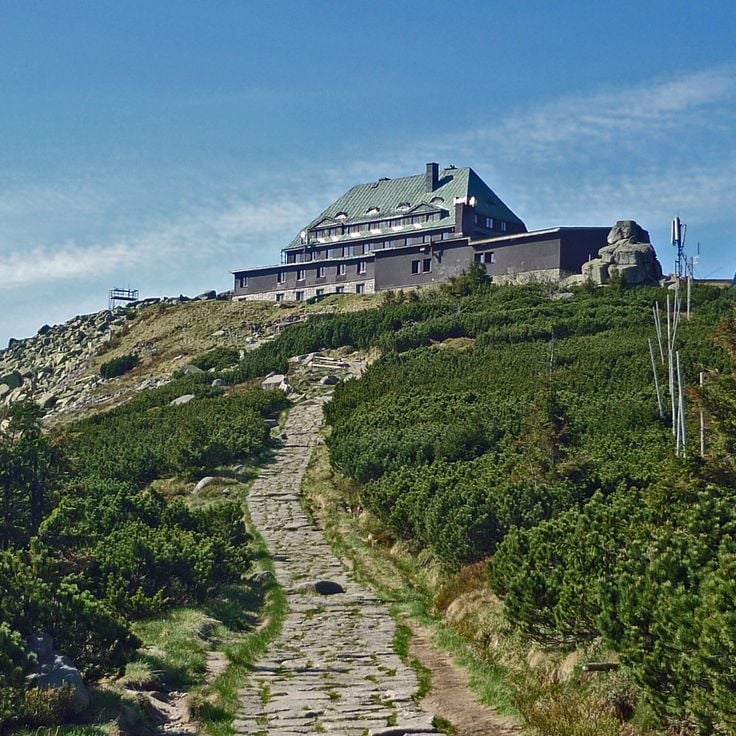
Sniezka is the highest peak in the Karkonosze Mountains in southwestern Poland. From its summit, wide views extend across the surrounding mountain ranges and valleys. The mountain attracts hikers who climb along well-marked trails. On clear days, the border between Poland and the Czech Republic becomes visible from the top. Nearby mountain villages like Karpacz and Szklarska Poreba serve as starting points for exploring the region's forests and waterfalls.
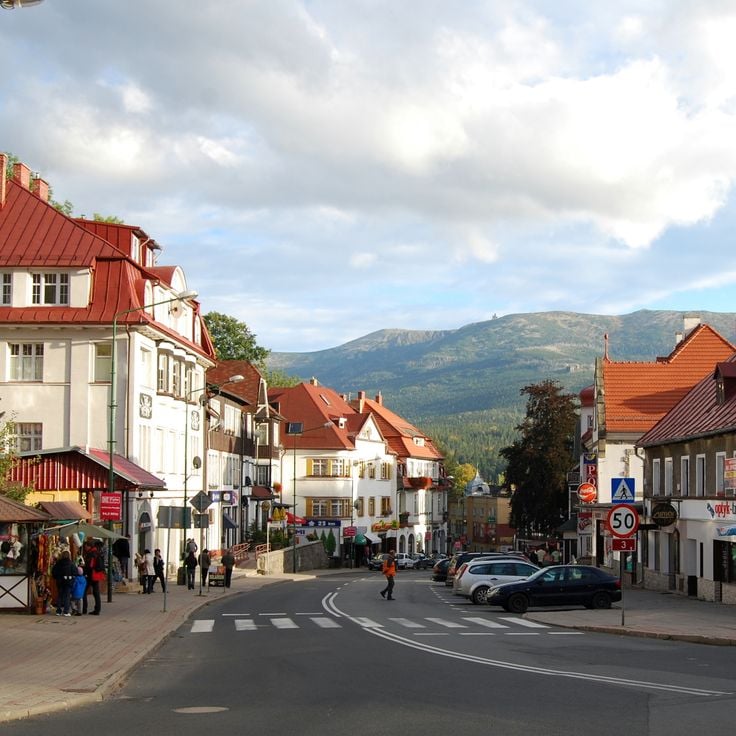
Karpacz is a mountain resort town in the Karkonosze range, where trails begin for hikes into the surrounding mountains. The town serves as a starting point for visitors exploring the peaks and forests of the area. From here, travelers can easily access paths leading to waterfalls and through the old mountain forests. Karpacz combines the character of a traditional mountain station with the role of a modern resort destination.
Szklarska Poreba is a mountain resort in the Karkonosze where visitors can access hiking trails and waterfalls. The town serves as a starting point for exploring the forests and mountain landscape of the region. Travelers will find a setting where nature is immediately at hand and walking paths lead into the surrounding peaks and valleys.
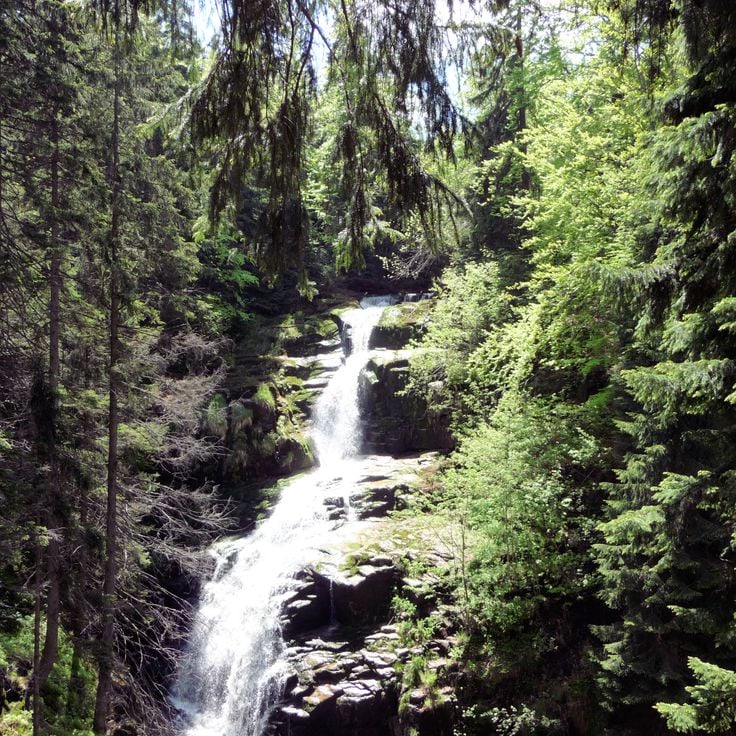
Kamienczyk Waterfall lies in the forests near Szklarska Poreba in the Sudetes. This cascade is a popular destination for hikers exploring the green mountain forests of the region. The waterfall drops over rocky steps, creating a cool, moist environment surrounded by trees. Visitors walking from Szklarska Poreba encounter this spot where water rushes over stones and the air feels fresh.
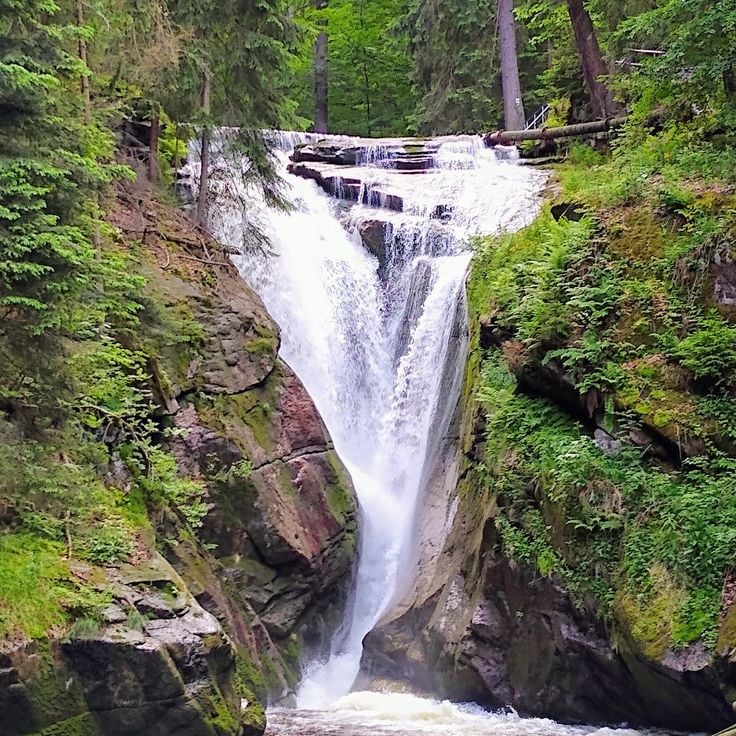
The Szklarki Waterfall in the Karkonosze mountains is a cascade that tumbles through forested slopes near Szklarska Poreba. This starting point for mountain exploration in the Karkonosze range sits in the heart of Silesia's natural landscape. The waterfall can be reached by a hiking trail that winds through rocks and trees, offering views of the mountain terrain and surrounding forest.
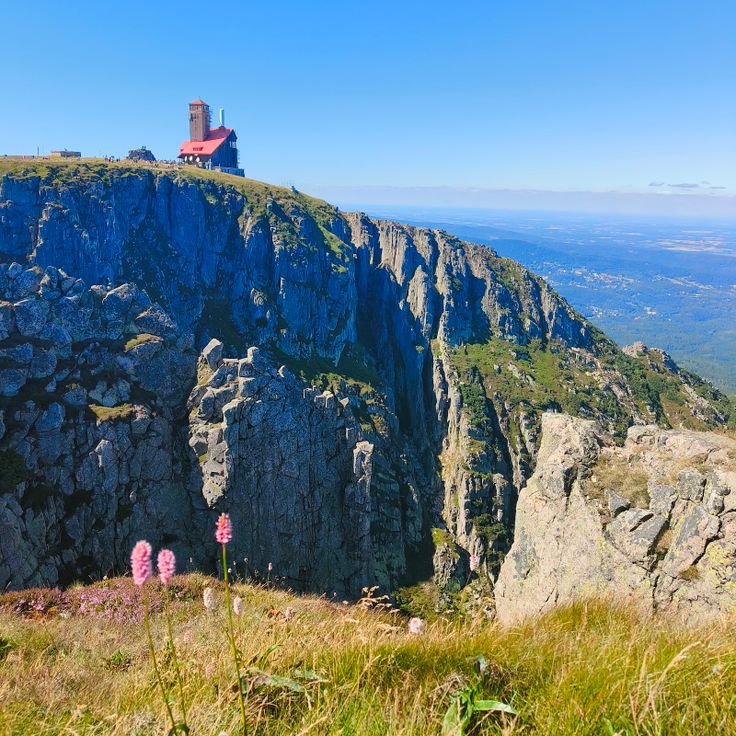
The Snow Kettles in the Karkonosze Mountains are rocky basins carved out by ancient glaciers. These high-altitude cirques were formed over thousands of years as ice erosion shaped the terrain. Today, hikers encounter a dramatic alpine landscape with steep walls and small mountain streams flowing through the basins. Hardy alpine plants and dwarf pines cling to the rocky slopes. This location reveals the geological history of the range and offers access to further exploration of the surrounding peaks and valleys.
Szrenica is a mountain in the Karkonosze range, part of southwestern Poland's landscape of medieval castles, forests and ancient towns. From its peak, visitors look out over surrounding mountains and valleys. The mountain draws hikers exploring the region's trails, from forested paths to alpine views. It serves as a viewpoint where people stop to take in the broader geography of the Sudetes.
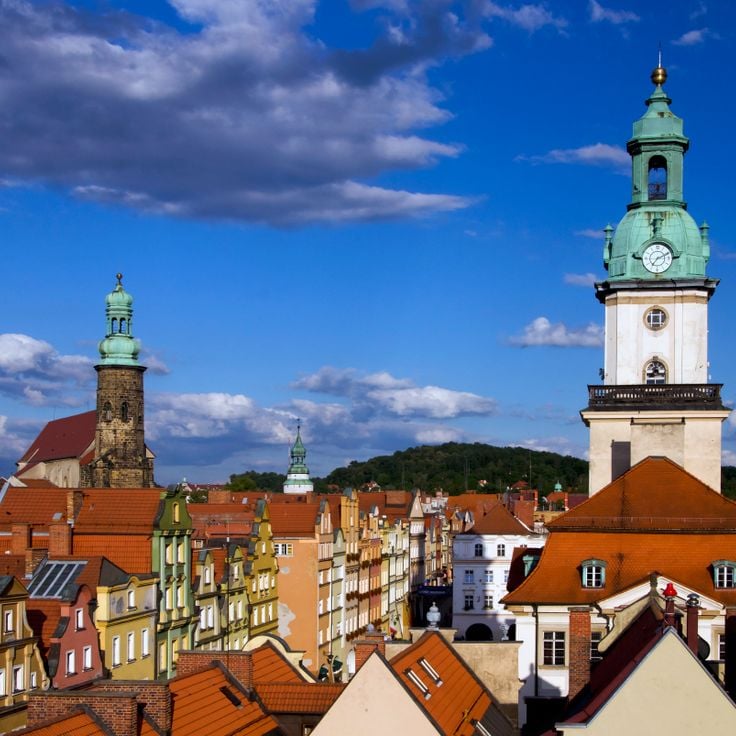
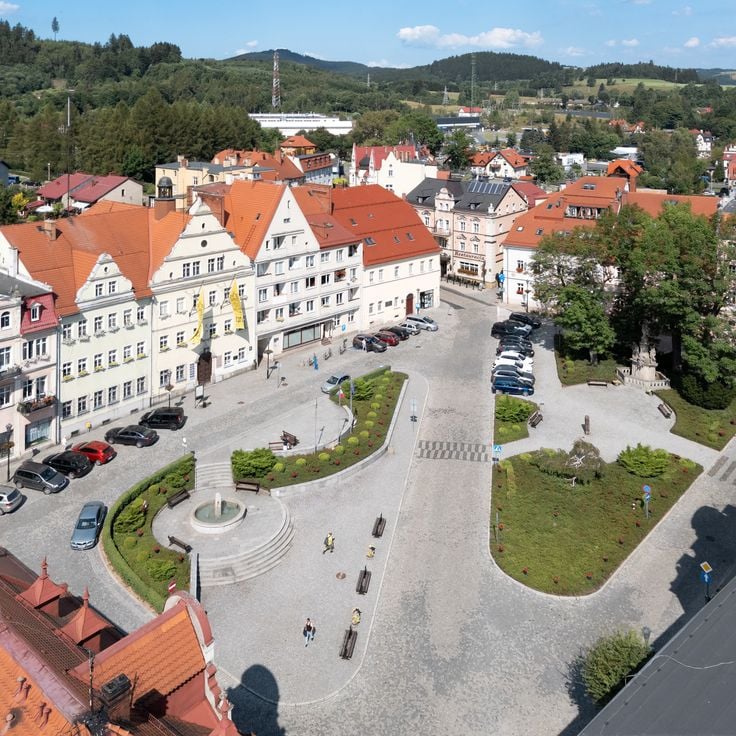
The downtown of Jelenia Gora is an old town with historical buildings and a central plaza that transports visitors to the past of the region. The city conveys a sense of a place rich in tradition, where narrow streets open onto a marketplace and the house facades tell stories from earlier times.
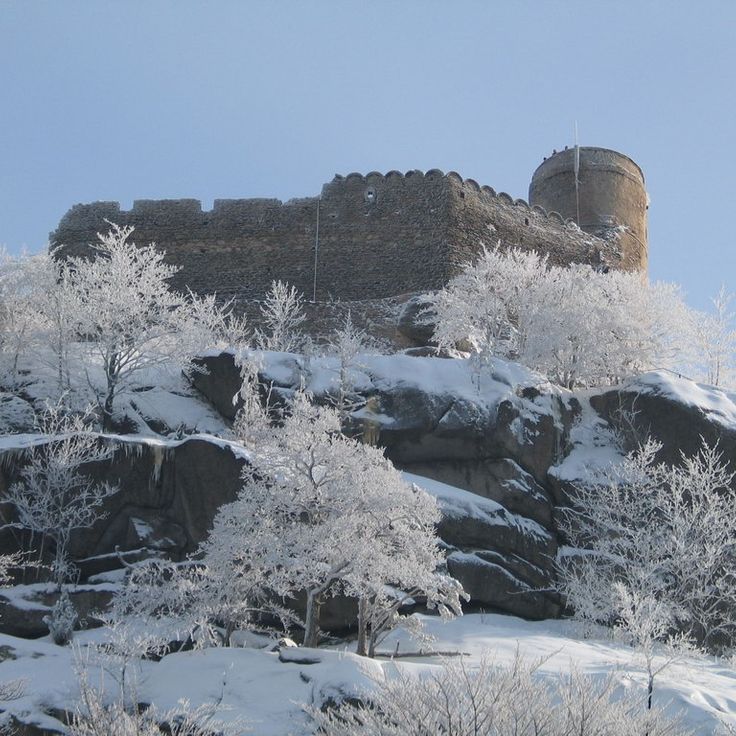
This castle ruin stands on a rocky outcrop that rises above the valley near Sobieszow, offering views across the surrounding mountains. The climb to reach the walls takes you through forest paths and past rock formations. Built in the medieval period, the castle's remains reflect the long history of this part of the Sudetes.
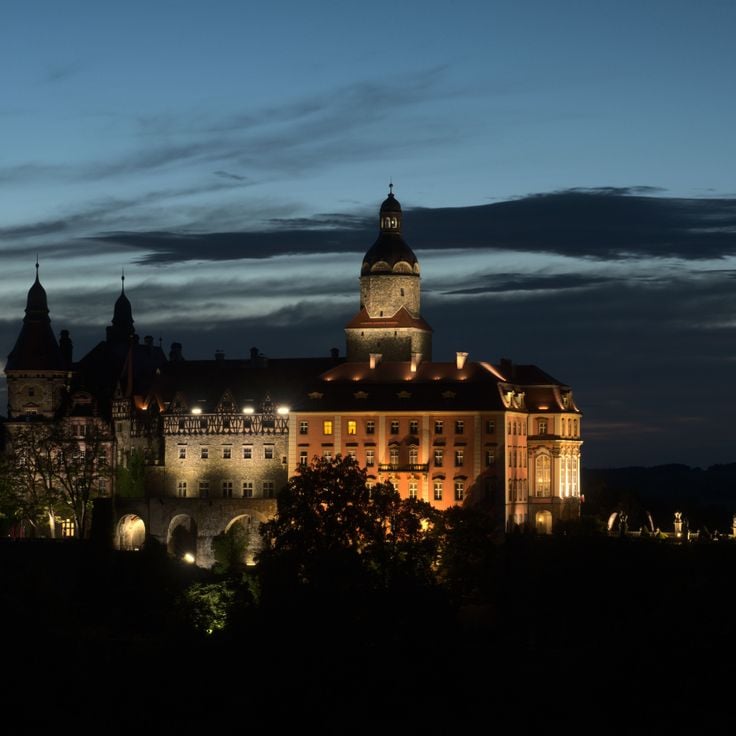
Ksiaz Castle near Walbrzych is one of Poland's largest castles and defines the Silesian region with its remarkable architecture. The fortress stands on a rocky outcrop and combines several architectural styles from different periods. Inside, rooms display rich furnishings and historical details. The complex offers insights into aristocratic life from earlier centuries and now functions as a museum. Visitors can wander through the corridors and look out from the terraces across the surrounding wooded landscape.
Palmiarnia Walbrzych is a greenhouse in this former mining city that houses tropical plants and palms. It provides a contrast to the forests and mountains of the Silesia and Sudetes region, where visitors otherwise encounter hiking trails and medieval castles. This greenhouse allows you to experience a different kind of vegetation before heading out to explore the Karkonosze mountains or visit other sites in the area.
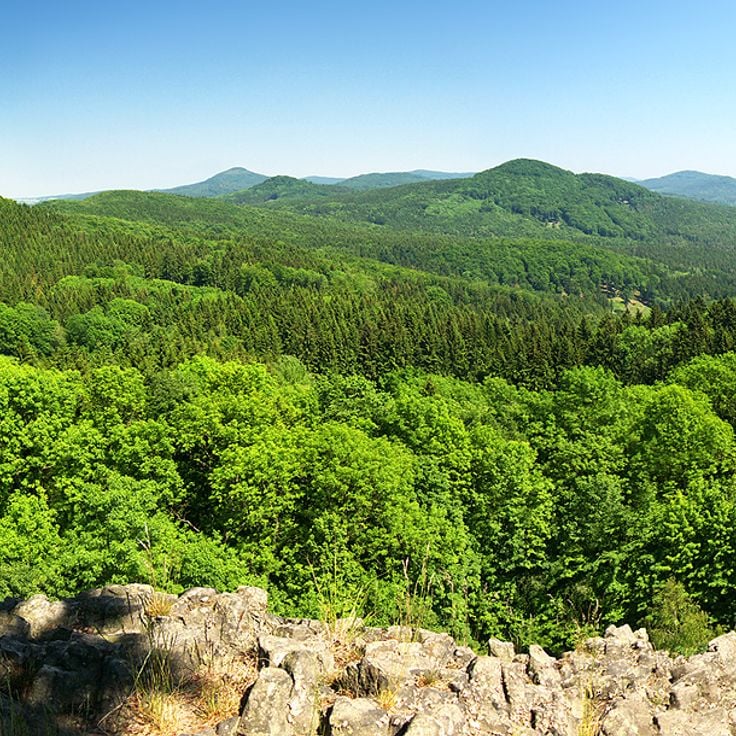
The Rudawy Janowickie are a rocky zone in the Sudetes with distinctive rock formations for climbing and hiking. This mountain area is part of southwestern Poland's varied landscape, where medieval castles sit on rocky ridges and forests contain waterfalls. The rock formations offer different levels of challenge for climbers and hikers who want to explore the raw character of the Sudetes.
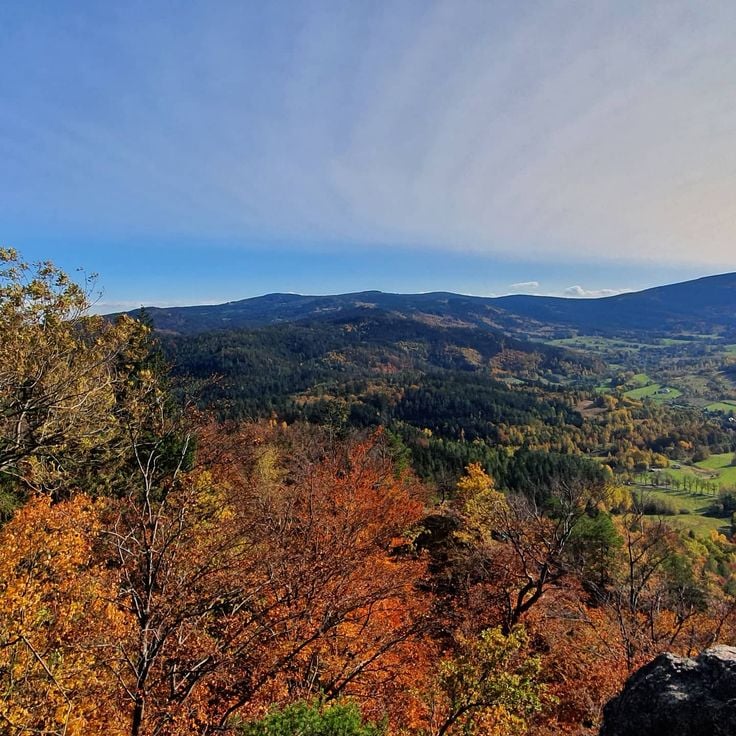
The Sudetes are a mountain range in southwest Poland with hiking trails and panoramic views. This mountain chain offers opportunities to explore nature. Many people visit the Sudetes to walk through forests and look out over the landscape from higher points. The area is part of a region with old cities and medieval castles, where history and nature sit close together.
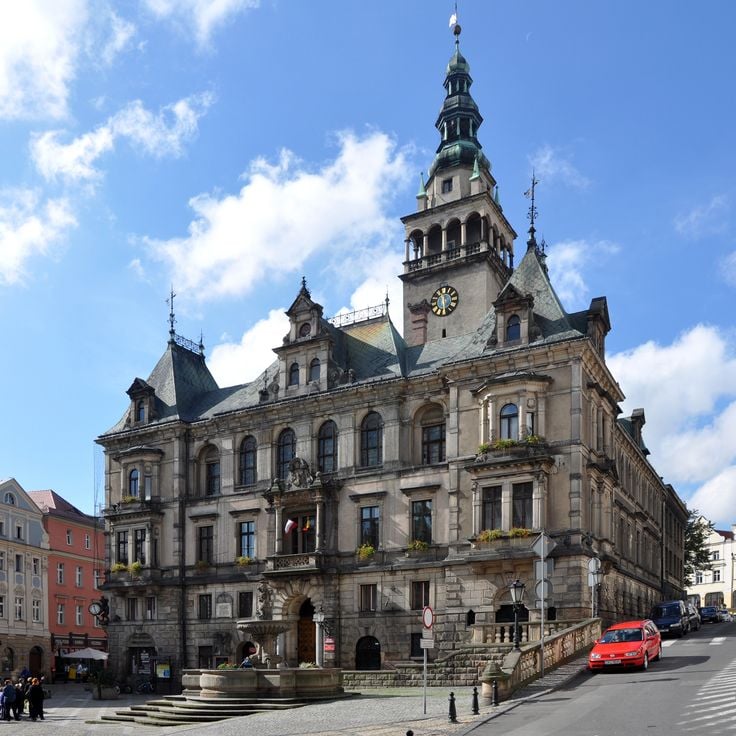
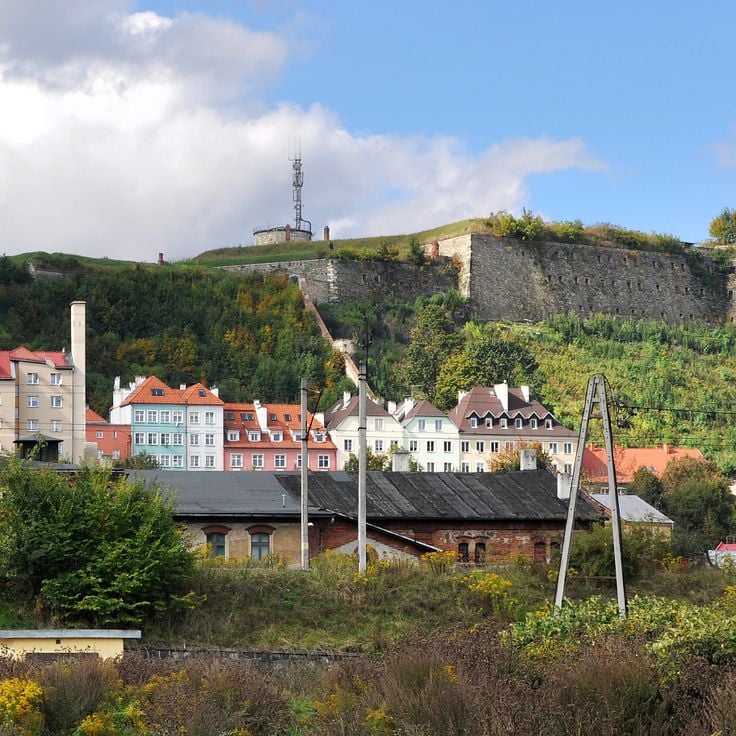
Kłodzko is a historic town in southwestern Poland situated along river valleys. The town features an old fortress rising from a hilltop above the town streets and an ancient town center with cobblestone lanes and buildings spanning different periods. Churches with stone towers, merchant houses that once belonged to craft workers, and narrow passages wind between the structures. Kłodzko sits in a mountainous region surrounded by forests and serves as a starting point for walks into the Sudetes.
The Kłodzko Fortress is a medieval castle that dominates the town of Kłodzko from above. Built on a high point, it once served as an important center of power and control in the region. From the fortress, you can see across the town and the valley below. Walking through its walls gives you a sense of how people used strategic locations in the Sudetes to protect their lands. Today, the fortress tells the story of the region's past through its structure and position.
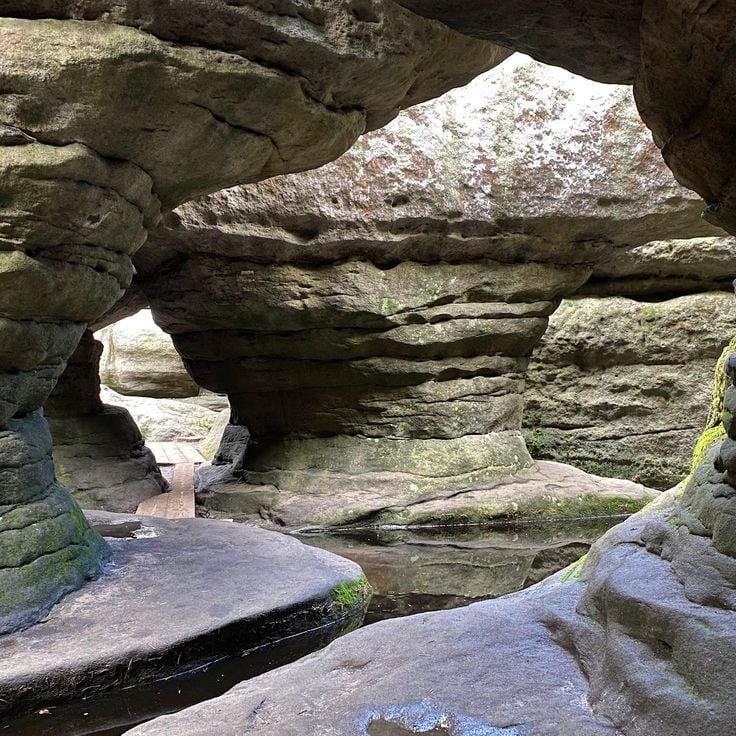
Bledne Skaly is a natural rock labyrinth located in the Table Mountains. Narrow passages wind between towering stone formations that seem randomly stacked. Visitors walk through tight crevices and discover hidden paths between the boulders. The stones create an unusual landscape where it is easy to lose your way. This natural site is accessible for short hikes and exploration among the rock formations.
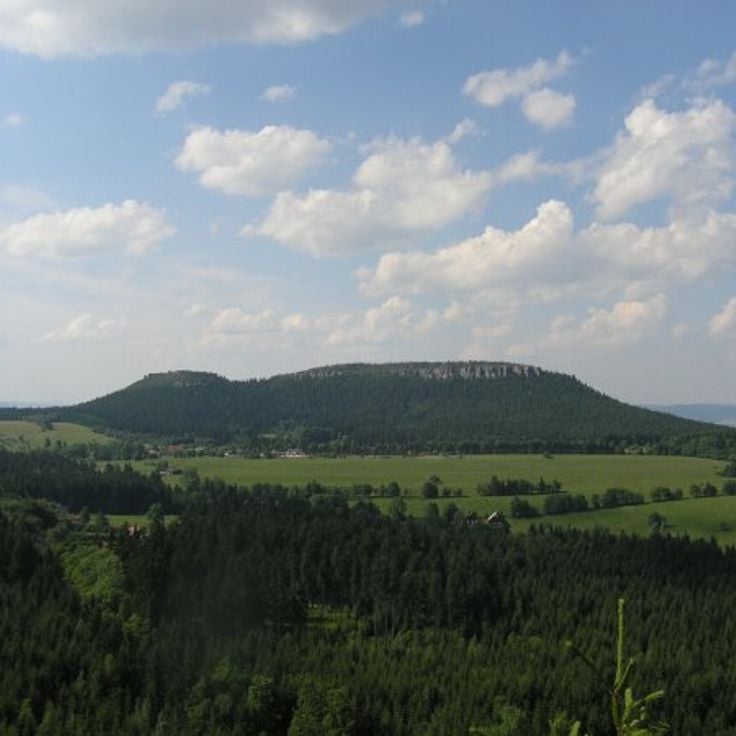
Szczeliniec Wielki is the highest peak in the Table Mountains and offers views across the entire region. From this summit you can see the distinctive rock towers and plateaus that shape this mountain landscape. The climb passes through forests and across rocky paths. On clear days the view extends to the Sudetes and beyond. Many people hike here to experience the landscape and feel the quietness of the mountains.
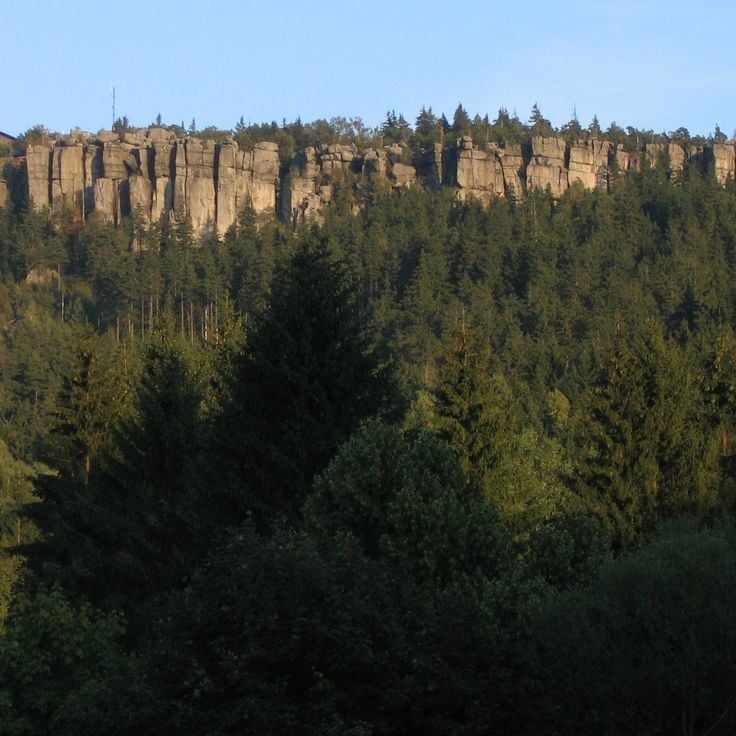
The Table Mountains National Park sits in the Sudetes in southwestern Poland. This mountain park features distinctive rock formations that rise like tables from the landscape. Hiking trails crisscross the area, leading visitors through forests and across ridges. The park offers views over the surrounding region and attracts people who want to explore nature on foot.
Kudowa-Zdroj is a spa town in southwestern Poland where thermal springs and wellness facilities welcome visitors. Located in the Silesia and Sudetes region, it sits amid medieval castles perched on rocky ridges and ancient cities filled with history. Guests can soak in warm mineral waters while remaining close to nearby forests and mountains. The town connects the experience of thermal baths with easy access to hiking trails and Sudetes nature.
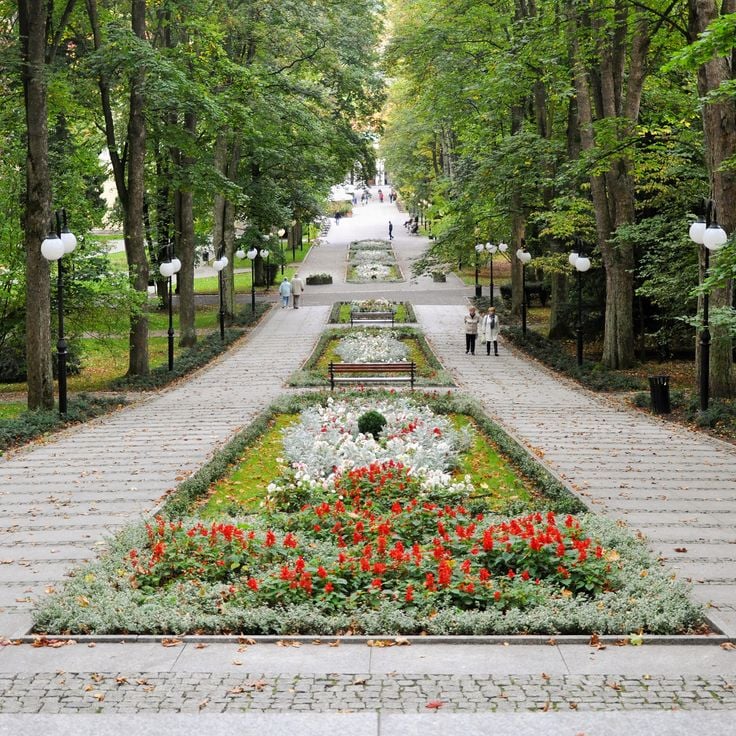
Polanica-Zdroj is a spa town in the Sudetes with parks and mineral springs. The town developed around healing waters that draw visitors seeking rest in nature. It fits naturally into the Silesia and Sudetes region, where you can move between old cities, mountain hiking, and thermal baths. Here you walk through green spaces, breathe fresh forest air, and can use the water from natural springs.
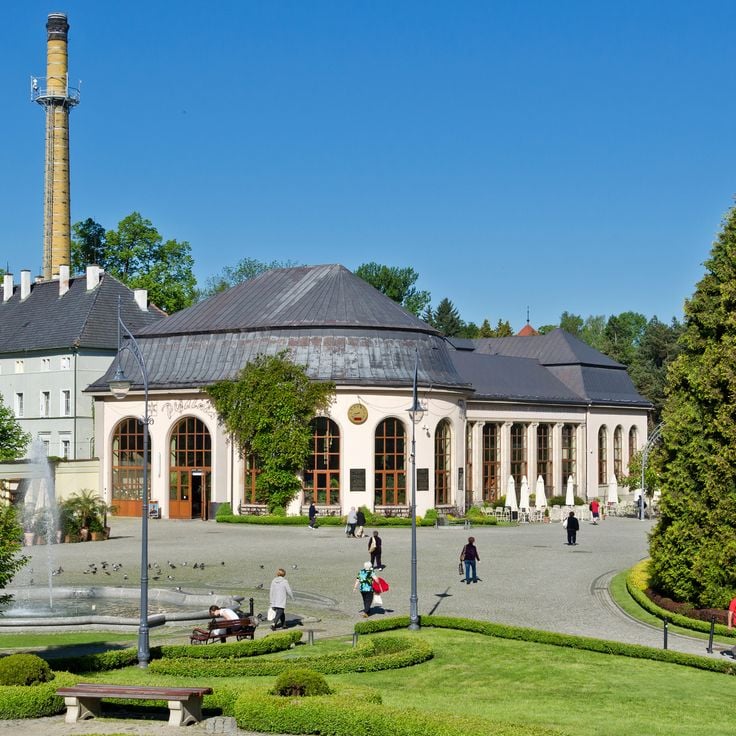
Duszniki-Zdroj is a spa town in the Sudetes with natural thermal springs and extensive parks. The town developed in the 19th century as a healing resort where visitors came to experience warm mineral waters believed to relieve various ailments. Today it retains this character with well-maintained green spaces, elegant period villas, and a relaxed pace. The parks invite leisurely walks, while the springs are accessible through modern bathhouses and wellness centers. Duszniki-Zdroj represents the tradition of European spa towns and now serves as both a place to rest and a base for hiking into the surrounding forests and mountains.
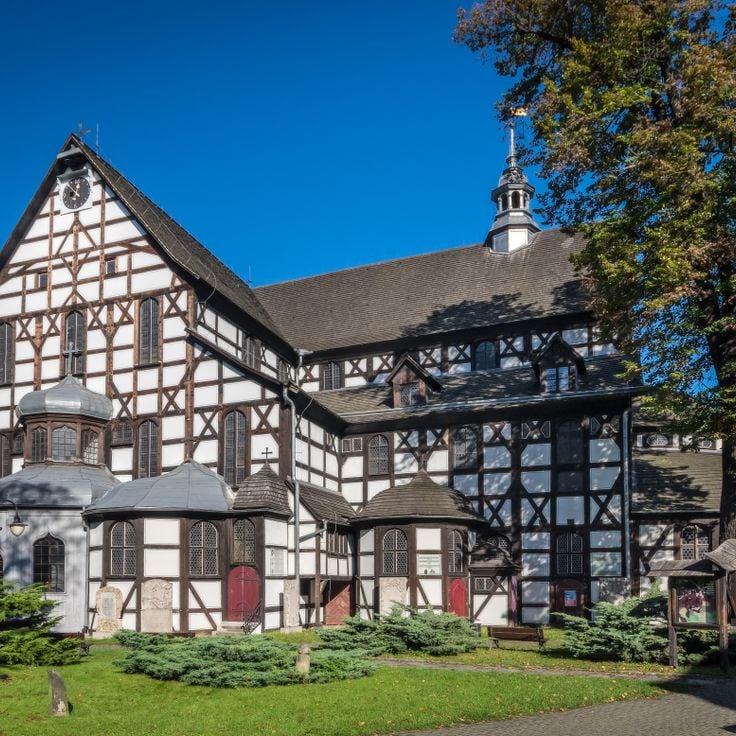
The Church of Peace in Swidnica sits in a region rich with religious history and cultural importance. Built in the 17th century, this wooden structure shows how craftsmanship and faith came together in that era. The church is recognized by UNESCO as a World Heritage site and stands as a testament to the enduring traditions of this part of Poland.
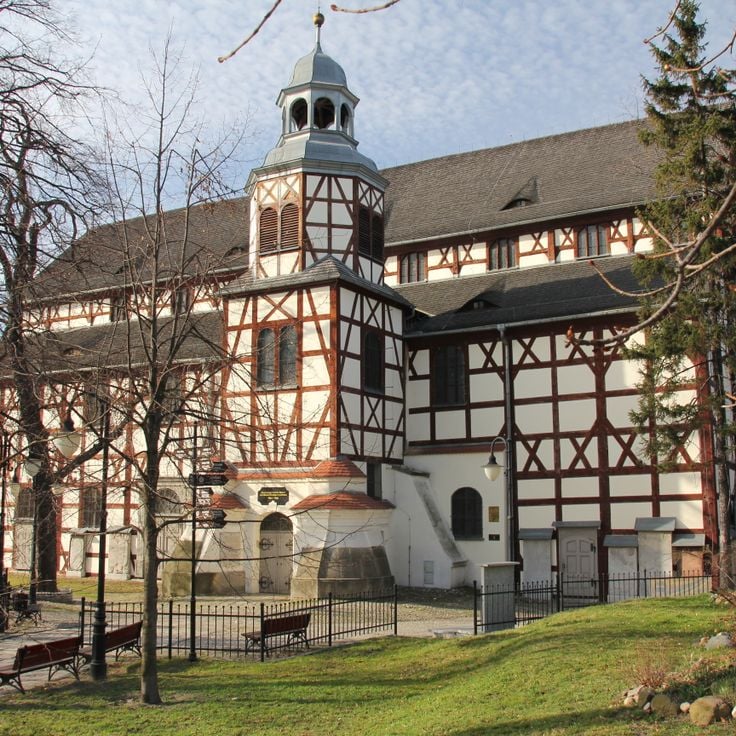
This wooden church in Jawor is a 17th-century house of worship recognized as a UNESCO World Heritage site. It was built in a period when Catholics and Protestants competed for religious space in the region. The structure is made almost entirely of wood, without nails or metal fasteners, making it a remarkable feat of carpentry. Inside, painted panels and carved wooden decorations show the skill of the craftspeople who built it. This church sits in a region known for medieval castles perched on rocky ridges, forested mountains, and old spa towns like those found throughout Silesia and the Sudetes.
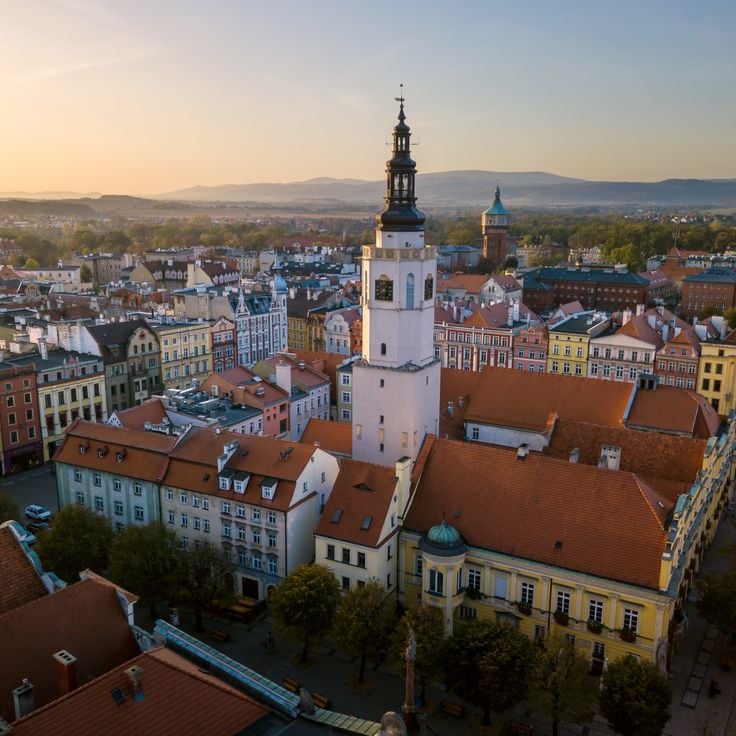
Swidnica is a town in southwest Poland with an old town center and a historic cathedral. The town sits in the Silesia and Sudetes region, where ancient cities, forested mountains, and traces of a rich history come together. The town center displays architecture from different periods, and the cathedral is an important religious building. Swidnica serves as a base to explore the medieval castles, churches, and natural landscapes of the region.
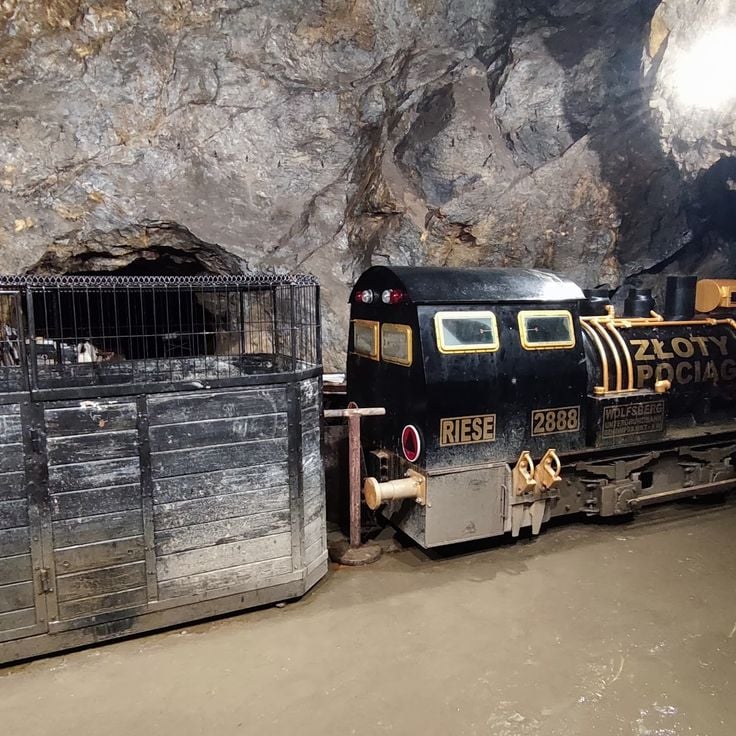
Project Riese is an underground complex in the Owl Mountains consisting of tunnels from the 20th century. This site tells the story of the region's industrial and military past during World War II. The tunnels run beneath the mountains and reveal the scale of construction projects from that era. Visitors can walk through these underground passages and see how the tunnels were carved into the rock.
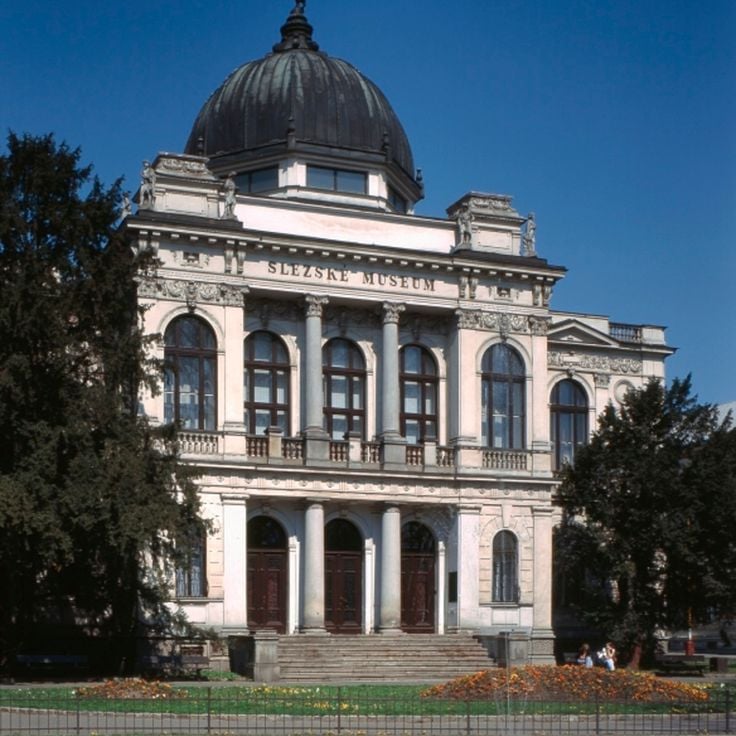
The Silesia Museum in Katowice presents the history and culture of the Silesian region. It documents the industrial past, the development of cities, and the diverse traditions of the people who lived here. The collections tell stories of mining, craftsmanship, and daily life in this historically rich area.
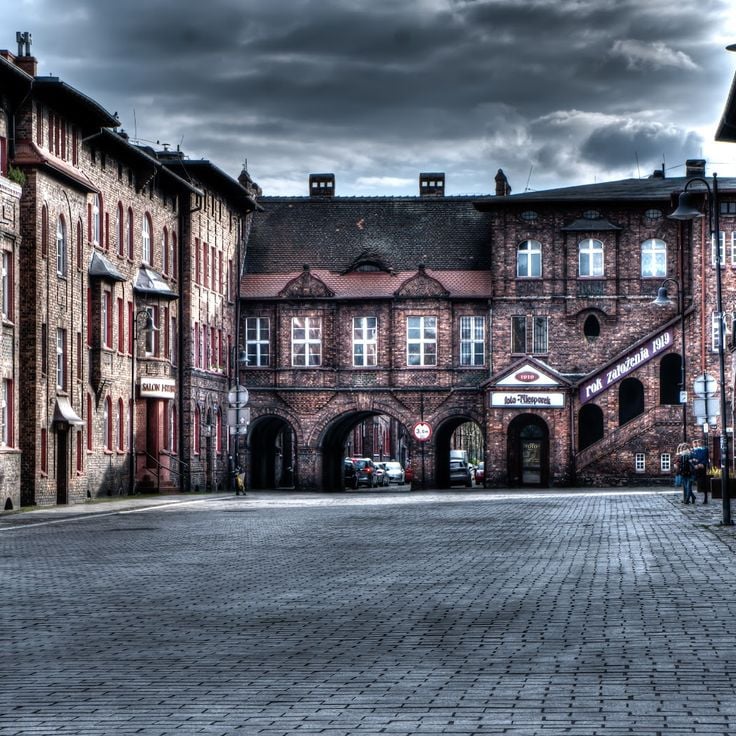
The Nikiszowiec neighborhood in Katowice shows worker housing from the 19th and 20th centuries. It lies in Silesia, a region known for medieval castles, forested mountains, and rich history. The buildings here were constructed for mine workers and stand in tight rows. Red brick, small windows, and simple designs mark the houses. Narrow streets and courtyards create their own rhythm. Walking through, you see how people lived near factories and mines in earlier times.
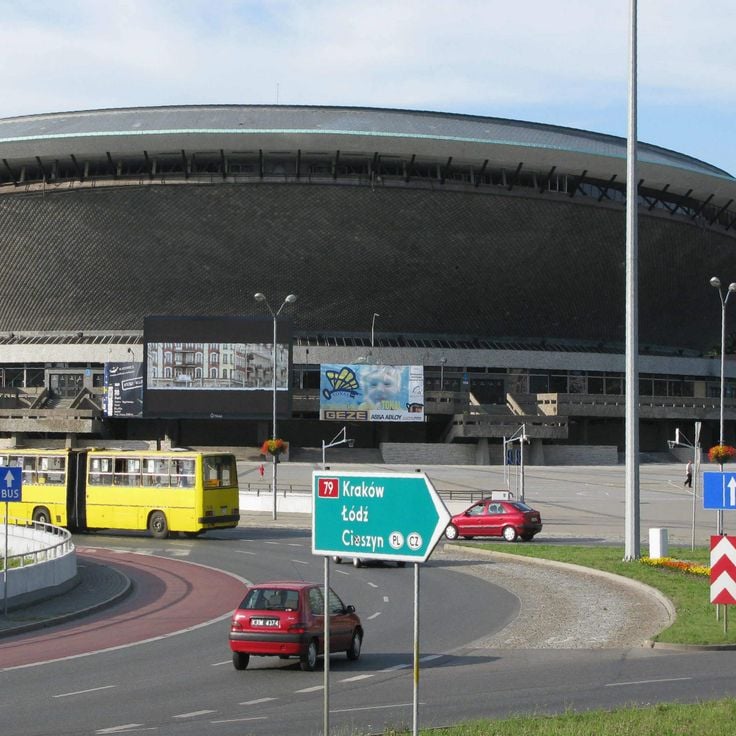
The Spodek in Katowice is a distinctive circular hall that has served as a cultural and entertainment venue since its opening. It hosts concerts, sports events, and major gatherings, making it an important landmark in the city. The building reflects the modern development of the Silesian region, an area rich in medieval castles, old towns, and mountain landscapes. Visiting the Spodek connects you with the contemporary culture of Katowice, while the broader Silesian region around you offers historic city centers, mountain trails, and traces of centuries past.
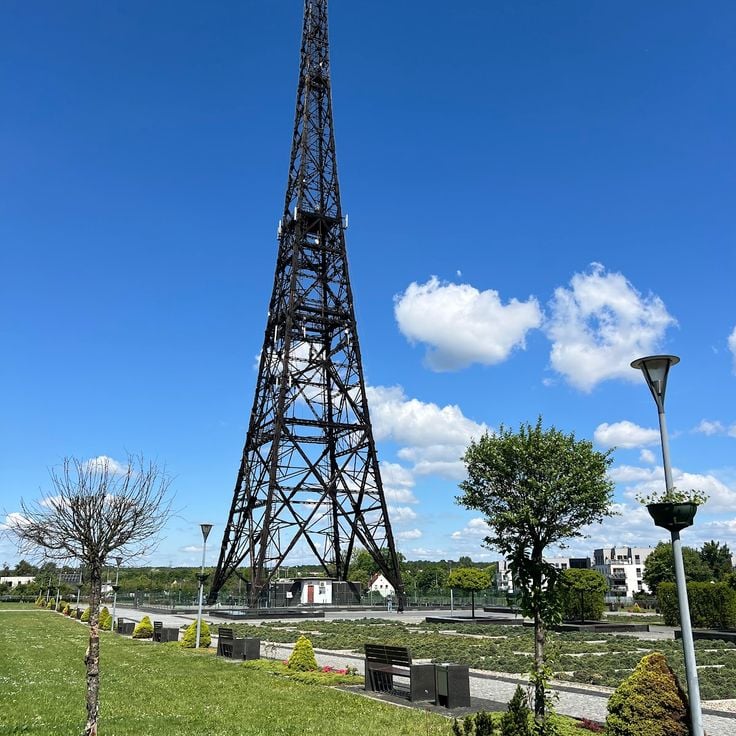
The Gliwice radio station is a wooden tower from the 20th century and an important monument in the history of broadcasting. This transmitter stands in Gliwice, a city in Silesia, and is part of the region's industrial heritage. The structure shows how radio technology developed in the early days of broadcasting and reminds visitors of a time when radio towers shaped the landscape. The tower is a visible piece of Silesian history, a region rich in industrial remnants and architectural traces.
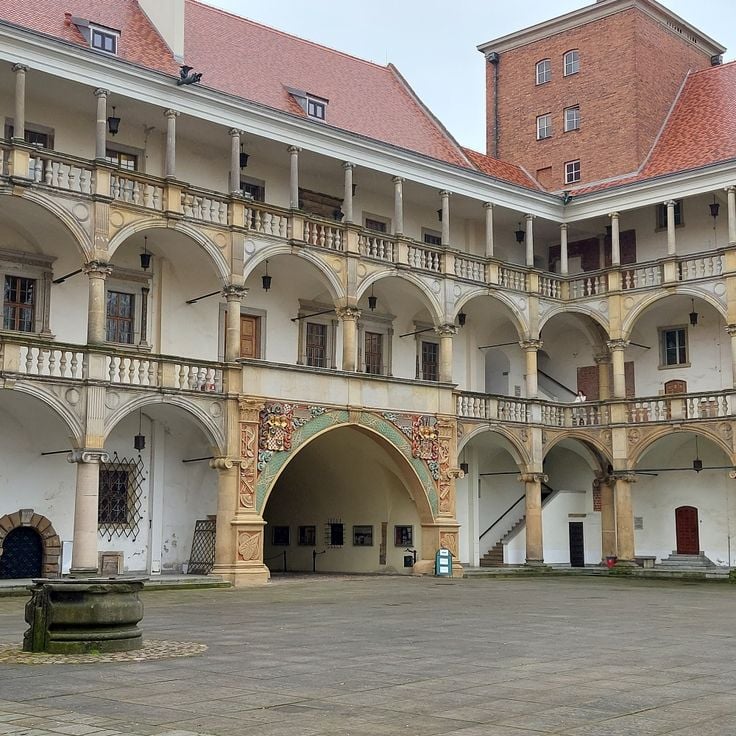
Brzeg's Piast Castle is a major fortress that shaped the history of Silesia. The walls and towers stand above the Oder River and define the town's character. Inside, visitors walk through halls and chambers that speak to the power held here by the dukes who ruled the region. This castle represents the broader story of Silesia and the Sudetes: medieval strongholds on rocky crests, ancient cities, and a past that still runs through the landscape today.
Ogrodzieniec Castle sits as a medieval ruin on a rocky outcrop near Podzamcze. This fortress was one of many castles that defended the Sudetes region. From the remaining walls, you can see across the surrounding mountain landscape, understanding why this location mattered strategically. Walking through the ruins today helps you picture the medieval period and connect with the broader history of castles scattered across this part of Poland.
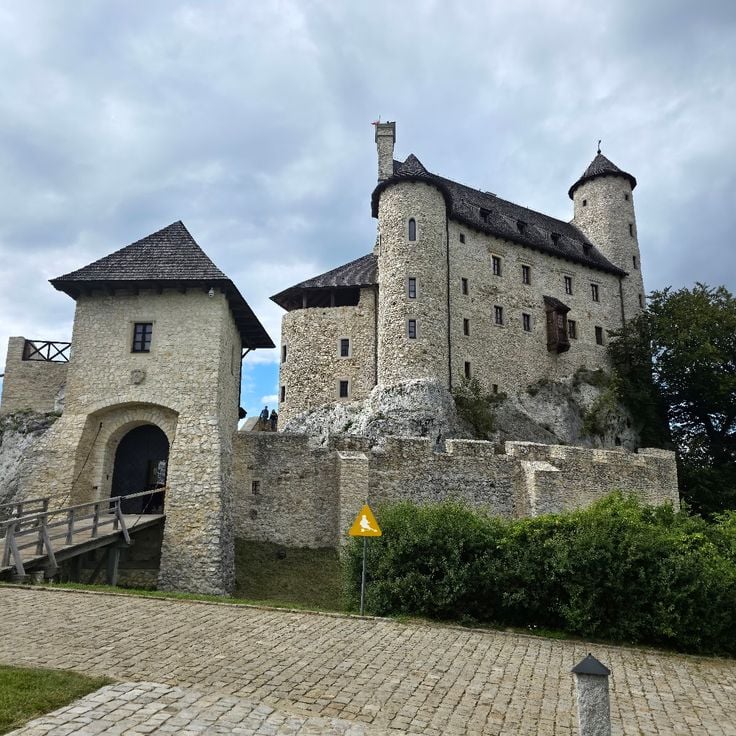
Bobolice Castle is a medieval ruin perched on a mountain near Niegowa. It stands among the castles of Silesia and the Sudetes, where medieval fortresses sit on rocky ridges overlooking forested slopes. The castle forms part of a landscape where ancient towns, mountain trails, and the remnants of centuries past come together.
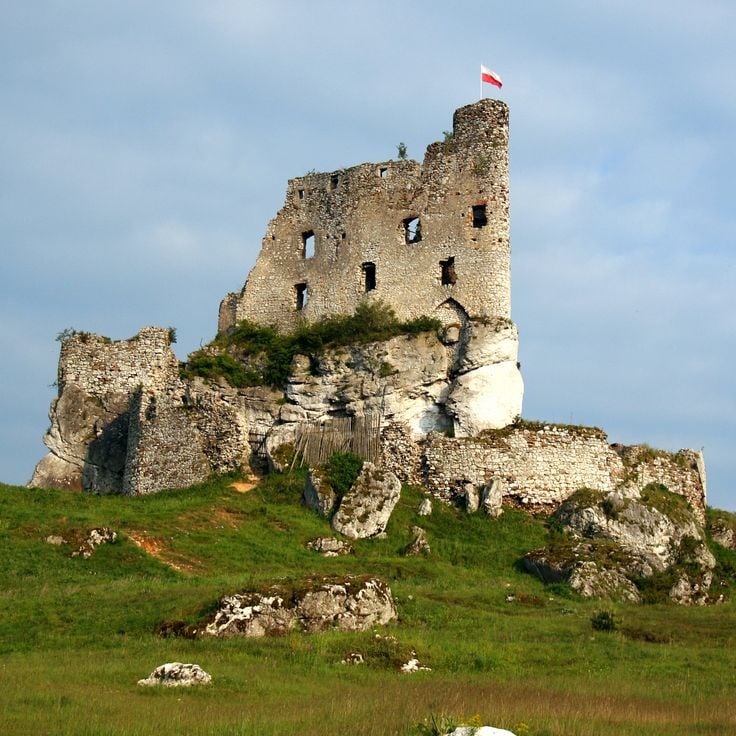
Mirow Castle is a partially preserved medieval fortress in the Eagle's Nests castle region. It stands on a rocky ridge and offers views over the surrounding Sudeten landscape. This castle is one of many fortified structures that define this area and tell the story of a rich past.
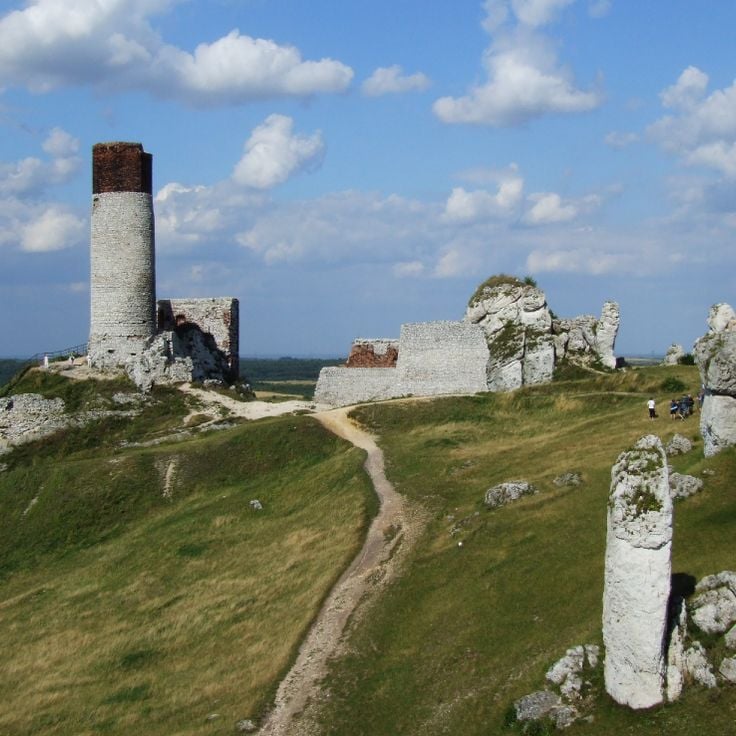
Olsztyn Castle is a medieval fortress in ruins situated near Czestochowa. The structure stands on a rocky ridge with substantial stone walls that speak to its former strength. Visitors can see remains of fortifications and towers that tell of the time when such castles protected the borderlands of this region. This castle fits among the many medieval structures found throughout Silesia and the Sudetes, set within the forested landscape of southwestern Poland.
The Market Square of Wroclaw is a large historic plaza at the heart of the old town. It is surrounded by old buildings with colorful facades that now house shops and restaurants. The square serves as a living gathering place where people walk, rest, and watch daily life unfold. In the center stands a historic town hall that reflects the city's medieval past. Around the square you can see buildings from different periods that show the layered history of Wroclaw.
Tumski Island in Wroclaw is the historical heart of the city. Here red brick churches and the cathedral stand as the ancient religious center of Wroclaw. Walking across the bridges, you step back in time through buildings from different periods that tell the story of this island. Nestled between the river arms, Tumski Island offers a place of reflection within the city.
The Panorama of Raclawice in Wroclaw is a monumental circular painting depicting a 19th-century battle. Visitors enter a room where the artwork surrounds them on all sides, creating the sensation of standing within the historical scene. The painting shows soldiers, horses, and the landscape of the battlefield in fine detail. Created in the 19th century, it allows viewers to experience an episode of regional history from close proximity.
The University of Wroclaw is a building with a history spanning several centuries. Its heart is the Aula Leopoldina, a hall with Baroque architecture where formal ceremonies take place. The building itself shows how the city changed across different periods. Visitors can see the carefully designed rooms and learn about the role this institution played in the education history of the region.
Hala Stulecia in Wroclaw is a large circular building built in the early 1900s and listed as a UNESCO World Heritage site. The structure stands out for its unusual round shape and historical importance. A park surrounds the building, offering space to walk and sit. The hall shows the construction techniques of its era and remains part of Wroclaw's place in the history of Silesia.
The Karkonosze National Park sits in southwestern Poland and is a large mountainous area with hiking trails, waterfalls, and peaks in the Giant Mountains. This park provides access to some of the region's highest points and serves as a starting point for exploring the forested slopes and natural landscapes that define Silesia and the Sudetes.
Sniezka is the highest peak in the Karkonosze Mountains in southwestern Poland. From its summit, wide views extend across the surrounding mountain ranges and valleys. The mountain attracts hikers who climb along well-marked trails. On clear days, the border between Poland and the Czech Republic becomes visible from the top. Nearby mountain villages like Karpacz and Szklarska Poreba serve as starting points for exploring the region's forests and waterfalls.
Karpacz is a mountain resort town in the Karkonosze range, where trails begin for hikes into the surrounding mountains. The town serves as a starting point for visitors exploring the peaks and forests of the area. From here, travelers can easily access paths leading to waterfalls and through the old mountain forests. Karpacz combines the character of a traditional mountain station with the role of a modern resort destination.
Szklarska Poreba is a mountain resort in the Karkonosze where visitors can access hiking trails and waterfalls. The town serves as a starting point for exploring the forests and mountain landscape of the region. Travelers will find a setting where nature is immediately at hand and walking paths lead into the surrounding peaks and valleys.
Kamienczyk Waterfall lies in the forests near Szklarska Poreba in the Sudetes. This cascade is a popular destination for hikers exploring the green mountain forests of the region. The waterfall drops over rocky steps, creating a cool, moist environment surrounded by trees. Visitors walking from Szklarska Poreba encounter this spot where water rushes over stones and the air feels fresh.
The Szklarki Waterfall in the Karkonosze mountains is a cascade that tumbles through forested slopes near Szklarska Poreba. This starting point for mountain exploration in the Karkonosze range sits in the heart of Silesia's natural landscape. The waterfall can be reached by a hiking trail that winds through rocks and trees, offering views of the mountain terrain and surrounding forest.
The Snow Kettles in the Karkonosze Mountains are rocky basins carved out by ancient glaciers. These high-altitude cirques were formed over thousands of years as ice erosion shaped the terrain. Today, hikers encounter a dramatic alpine landscape with steep walls and small mountain streams flowing through the basins. Hardy alpine plants and dwarf pines cling to the rocky slopes. This location reveals the geological history of the range and offers access to further exploration of the surrounding peaks and valleys.
Szrenica is a mountain in the Karkonosze range, part of southwestern Poland's landscape of medieval castles, forests and ancient towns. From its peak, visitors look out over surrounding mountains and valleys. The mountain draws hikers exploring the region's trails, from forested paths to alpine views. It serves as a viewpoint where people stop to take in the broader geography of the Sudetes.
The downtown of Jelenia Gora is an old town with historical buildings and a central plaza that transports visitors to the past of the region. The city conveys a sense of a place rich in tradition, where narrow streets open onto a marketplace and the house facades tell stories from earlier times.
This castle ruin stands on a rocky outcrop that rises above the valley near Sobieszow, offering views across the surrounding mountains. The climb to reach the walls takes you through forest paths and past rock formations. Built in the medieval period, the castle's remains reflect the long history of this part of the Sudetes.
Ksiaz Castle near Walbrzych is one of Poland's largest castles and defines the Silesian region with its remarkable architecture. The fortress stands on a rocky outcrop and combines several architectural styles from different periods. Inside, rooms display rich furnishings and historical details. The complex offers insights into aristocratic life from earlier centuries and now functions as a museum. Visitors can wander through the corridors and look out from the terraces across the surrounding wooded landscape.
Palmiarnia Walbrzych is a greenhouse in this former mining city that houses tropical plants and palms. It provides a contrast to the forests and mountains of the Silesia and Sudetes region, where visitors otherwise encounter hiking trails and medieval castles. This greenhouse allows you to experience a different kind of vegetation before heading out to explore the Karkonosze mountains or visit other sites in the area.
The Rudawy Janowickie are a rocky zone in the Sudetes with distinctive rock formations for climbing and hiking. This mountain area is part of southwestern Poland's varied landscape, where medieval castles sit on rocky ridges and forests contain waterfalls. The rock formations offer different levels of challenge for climbers and hikers who want to explore the raw character of the Sudetes.
The Sudetes are a mountain range in southwest Poland with hiking trails and panoramic views. This mountain chain offers opportunities to explore nature. Many people visit the Sudetes to walk through forests and look out over the landscape from higher points. The area is part of a region with old cities and medieval castles, where history and nature sit close together.
Kłodzko is a historic town in southwestern Poland situated along river valleys. The town features an old fortress rising from a hilltop above the town streets and an ancient town center with cobblestone lanes and buildings spanning different periods. Churches with stone towers, merchant houses that once belonged to craft workers, and narrow passages wind between the structures. Kłodzko sits in a mountainous region surrounded by forests and serves as a starting point for walks into the Sudetes.
The Kłodzko Fortress is a medieval castle that dominates the town of Kłodzko from above. Built on a high point, it once served as an important center of power and control in the region. From the fortress, you can see across the town and the valley below. Walking through its walls gives you a sense of how people used strategic locations in the Sudetes to protect their lands. Today, the fortress tells the story of the region's past through its structure and position.
Bledne Skaly is a natural rock labyrinth located in the Table Mountains. Narrow passages wind between towering stone formations that seem randomly stacked. Visitors walk through tight crevices and discover hidden paths between the boulders. The stones create an unusual landscape where it is easy to lose your way. This natural site is accessible for short hikes and exploration among the rock formations.
Szczeliniec Wielki is the highest peak in the Table Mountains and offers views across the entire region. From this summit you can see the distinctive rock towers and plateaus that shape this mountain landscape. The climb passes through forests and across rocky paths. On clear days the view extends to the Sudetes and beyond. Many people hike here to experience the landscape and feel the quietness of the mountains.
The Table Mountains National Park sits in the Sudetes in southwestern Poland. This mountain park features distinctive rock formations that rise like tables from the landscape. Hiking trails crisscross the area, leading visitors through forests and across ridges. The park offers views over the surrounding region and attracts people who want to explore nature on foot.
Kudowa-Zdroj is a spa town in southwestern Poland where thermal springs and wellness facilities welcome visitors. Located in the Silesia and Sudetes region, it sits amid medieval castles perched on rocky ridges and ancient cities filled with history. Guests can soak in warm mineral waters while remaining close to nearby forests and mountains. The town connects the experience of thermal baths with easy access to hiking trails and Sudetes nature.
Polanica-Zdroj is a spa town in the Sudetes with parks and mineral springs. The town developed around healing waters that draw visitors seeking rest in nature. It fits naturally into the Silesia and Sudetes region, where you can move between old cities, mountain hiking, and thermal baths. Here you walk through green spaces, breathe fresh forest air, and can use the water from natural springs.
Duszniki-Zdroj is a spa town in the Sudetes with natural thermal springs and extensive parks. The town developed in the 19th century as a healing resort where visitors came to experience warm mineral waters believed to relieve various ailments. Today it retains this character with well-maintained green spaces, elegant period villas, and a relaxed pace. The parks invite leisurely walks, while the springs are accessible through modern bathhouses and wellness centers. Duszniki-Zdroj represents the tradition of European spa towns and now serves as both a place to rest and a base for hiking into the surrounding forests and mountains.
The Church of Peace in Swidnica sits in a region rich with religious history and cultural importance. Built in the 17th century, this wooden structure shows how craftsmanship and faith came together in that era. The church is recognized by UNESCO as a World Heritage site and stands as a testament to the enduring traditions of this part of Poland.
This wooden church in Jawor is a 17th-century house of worship recognized as a UNESCO World Heritage site. It was built in a period when Catholics and Protestants competed for religious space in the region. The structure is made almost entirely of wood, without nails or metal fasteners, making it a remarkable feat of carpentry. Inside, painted panels and carved wooden decorations show the skill of the craftspeople who built it. This church sits in a region known for medieval castles perched on rocky ridges, forested mountains, and old spa towns like those found throughout Silesia and the Sudetes.
Swidnica is a town in southwest Poland with an old town center and a historic cathedral. The town sits in the Silesia and Sudetes region, where ancient cities, forested mountains, and traces of a rich history come together. The town center displays architecture from different periods, and the cathedral is an important religious building. Swidnica serves as a base to explore the medieval castles, churches, and natural landscapes of the region.
Project Riese is an underground complex in the Owl Mountains consisting of tunnels from the 20th century. This site tells the story of the region's industrial and military past during World War II. The tunnels run beneath the mountains and reveal the scale of construction projects from that era. Visitors can walk through these underground passages and see how the tunnels were carved into the rock.
The Silesia Museum in Katowice presents the history and culture of the Silesian region. It documents the industrial past, the development of cities, and the diverse traditions of the people who lived here. The collections tell stories of mining, craftsmanship, and daily life in this historically rich area.
The Nikiszowiec neighborhood in Katowice shows worker housing from the 19th and 20th centuries. It lies in Silesia, a region known for medieval castles, forested mountains, and rich history. The buildings here were constructed for mine workers and stand in tight rows. Red brick, small windows, and simple designs mark the houses. Narrow streets and courtyards create their own rhythm. Walking through, you see how people lived near factories and mines in earlier times.
The Spodek in Katowice is a distinctive circular hall that has served as a cultural and entertainment venue since its opening. It hosts concerts, sports events, and major gatherings, making it an important landmark in the city. The building reflects the modern development of the Silesian region, an area rich in medieval castles, old towns, and mountain landscapes. Visiting the Spodek connects you with the contemporary culture of Katowice, while the broader Silesian region around you offers historic city centers, mountain trails, and traces of centuries past.
The Gliwice radio station is a wooden tower from the 20th century and an important monument in the history of broadcasting. This transmitter stands in Gliwice, a city in Silesia, and is part of the region's industrial heritage. The structure shows how radio technology developed in the early days of broadcasting and reminds visitors of a time when radio towers shaped the landscape. The tower is a visible piece of Silesian history, a region rich in industrial remnants and architectural traces.
Brzeg's Piast Castle is a major fortress that shaped the history of Silesia. The walls and towers stand above the Oder River and define the town's character. Inside, visitors walk through halls and chambers that speak to the power held here by the dukes who ruled the region. This castle represents the broader story of Silesia and the Sudetes: medieval strongholds on rocky crests, ancient cities, and a past that still runs through the landscape today.
Ogrodzieniec Castle sits as a medieval ruin on a rocky outcrop near Podzamcze. This fortress was one of many castles that defended the Sudetes region. From the remaining walls, you can see across the surrounding mountain landscape, understanding why this location mattered strategically. Walking through the ruins today helps you picture the medieval period and connect with the broader history of castles scattered across this part of Poland.
Bobolice Castle is a medieval ruin perched on a mountain near Niegowa. It stands among the castles of Silesia and the Sudetes, where medieval fortresses sit on rocky ridges overlooking forested slopes. The castle forms part of a landscape where ancient towns, mountain trails, and the remnants of centuries past come together.
Mirow Castle is a partially preserved medieval fortress in the Eagle's Nests castle region. It stands on a rocky ridge and offers views over the surrounding Sudeten landscape. This castle is one of many fortified structures that define this area and tell the story of a rich past.
Olsztyn Castle is a medieval fortress in ruins situated near Czestochowa. The structure stands on a rocky ridge with substantial stone walls that speak to its former strength. Visitors can see remains of fortifications and towers that tell of the time when such castles protected the borderlands of this region. This castle fits among the many medieval structures found throughout Silesia and the Sudetes, set within the forested landscape of southwestern Poland.
The Market Square of Wroclaw is a large historic plaza at the heart of the old town. It is surrounded by old buildings with colorful facades that now house shops and restaurants. The square serves as a living gathering place where people walk, rest, and watch daily life unfold. In the center stands a historic town hall that reflects the city's medieval past. Around the square you can see buildings from different periods that show the layered history of Wroclaw.
Tumski Island in Wroclaw is the historical heart of the city. Here red brick churches and the cathedral stand as the ancient religious center of Wroclaw. Walking across the bridges, you step back in time through buildings from different periods that tell the story of this island. Nestled between the river arms, Tumski Island offers a place of reflection within the city.
The Panorama of Raclawice in Wroclaw is a monumental circular painting depicting a 19th-century battle. Visitors enter a room where the artwork surrounds them on all sides, creating the sensation of standing within the historical scene. The painting shows soldiers, horses, and the landscape of the battlefield in fine detail. Created in the 19th century, it allows viewers to experience an episode of regional history from close proximity.
The University of Wroclaw is a building with a history spanning several centuries. Its heart is the Aula Leopoldina, a hall with Baroque architecture where formal ceremonies take place. The building itself shows how the city changed across different periods. Visitors can see the carefully designed rooms and learn about the role this institution played in the education history of the region.
Hala Stulecia in Wroclaw is a large circular building built in the early 1900s and listed as a UNESCO World Heritage site. The structure stands out for its unusual round shape and historical importance. A park surrounds the building, offering space to walk and sit. The hall shows the construction techniques of its era and remains part of Wroclaw's place in the history of Silesia.
The Karkonosze National Park sits in southwestern Poland and is a large mountainous area with hiking trails, waterfalls, and peaks in the Giant Mountains. This park provides access to some of the region's highest points and serves as a starting point for exploring the forested slopes and natural landscapes that define Silesia and the Sudetes.
Sniezka is the highest peak in the Karkonosze Mountains in southwestern Poland. From its summit, wide views extend across the surrounding mountain ranges and valleys. The mountain attracts hikers who climb along well-marked trails. On clear days, the border between Poland and the Czech Republic becomes visible from the top. Nearby mountain villages like Karpacz and Szklarska Poreba serve as starting points for exploring the region's forests and waterfalls.
Karpacz is a mountain resort town in the Karkonosze range, where trails begin for hikes into the surrounding mountains. The town serves as a starting point for visitors exploring the peaks and forests of the area. From here, travelers can easily access paths leading to waterfalls and through the old mountain forests. Karpacz combines the character of a traditional mountain station with the role of a modern resort destination.
Szklarska Poreba is a mountain resort in the Karkonosze where visitors can access hiking trails and waterfalls. The town serves as a starting point for exploring the forests and mountain landscape of the region. Travelers will find a setting where nature is immediately at hand and walking paths lead into the surrounding peaks and valleys.
Kamienczyk Waterfall lies in the forests near Szklarska Poreba in the Sudetes. This cascade is a popular destination for hikers exploring the green mountain forests of the region. The waterfall drops over rocky steps, creating a cool, moist environment surrounded by trees. Visitors walking from Szklarska Poreba encounter this spot where water rushes over stones and the air feels fresh.
The Szklarki Waterfall in the Karkonosze mountains is a cascade that tumbles through forested slopes near Szklarska Poreba. This starting point for mountain exploration in the Karkonosze range sits in the heart of Silesia's natural landscape. The waterfall can be reached by a hiking trail that winds through rocks and trees, offering views of the mountain terrain and surrounding forest.
The Snow Kettles in the Karkonosze Mountains are rocky basins carved out by ancient glaciers. These high-altitude cirques were formed over thousands of years as ice erosion shaped the terrain. Today, hikers encounter a dramatic alpine landscape with steep walls and small mountain streams flowing through the basins. Hardy alpine plants and dwarf pines cling to the rocky slopes. This location reveals the geological history of the range and offers access to further exploration of the surrounding peaks and valleys.
Szrenica is a mountain in the Karkonosze range, part of southwestern Poland's landscape of medieval castles, forests and ancient towns. From its peak, visitors look out over surrounding mountains and valleys. The mountain draws hikers exploring the region's trails, from forested paths to alpine views. It serves as a viewpoint where people stop to take in the broader geography of the Sudetes.
The downtown of Jelenia Gora is an old town with historical buildings and a central plaza that transports visitors to the past of the region. The city conveys a sense of a place rich in tradition, where narrow streets open onto a marketplace and the house facades tell stories from earlier times.
This castle ruin stands on a rocky outcrop that rises above the valley near Sobieszow, offering views across the surrounding mountains. The climb to reach the walls takes you through forest paths and past rock formations. Built in the medieval period, the castle's remains reflect the long history of this part of the Sudetes.
Ksiaz Castle near Walbrzych is one of Poland's largest castles and defines the Silesian region with its remarkable architecture. The fortress stands on a rocky outcrop and combines several architectural styles from different periods. Inside, rooms display rich furnishings and historical details. The complex offers insights into aristocratic life from earlier centuries and now functions as a museum. Visitors can wander through the corridors and look out from the terraces across the surrounding wooded landscape.
Palmiarnia Walbrzych is a greenhouse in this former mining city that houses tropical plants and palms. It provides a contrast to the forests and mountains of the Silesia and Sudetes region, where visitors otherwise encounter hiking trails and medieval castles. This greenhouse allows you to experience a different kind of vegetation before heading out to explore the Karkonosze mountains or visit other sites in the area.
The Rudawy Janowickie are a rocky zone in the Sudetes with distinctive rock formations for climbing and hiking. This mountain area is part of southwestern Poland's varied landscape, where medieval castles sit on rocky ridges and forests contain waterfalls. The rock formations offer different levels of challenge for climbers and hikers who want to explore the raw character of the Sudetes.
The Sudetes are a mountain range in southwest Poland with hiking trails and panoramic views. This mountain chain offers opportunities to explore nature. Many people visit the Sudetes to walk through forests and look out over the landscape from higher points. The area is part of a region with old cities and medieval castles, where history and nature sit close together.
Kłodzko is a historic town in southwestern Poland situated along river valleys. The town features an old fortress rising from a hilltop above the town streets and an ancient town center with cobblestone lanes and buildings spanning different periods. Churches with stone towers, merchant houses that once belonged to craft workers, and narrow passages wind between the structures. Kłodzko sits in a mountainous region surrounded by forests and serves as a starting point for walks into the Sudetes.
The Kłodzko Fortress is a medieval castle that dominates the town of Kłodzko from above. Built on a high point, it once served as an important center of power and control in the region. From the fortress, you can see across the town and the valley below. Walking through its walls gives you a sense of how people used strategic locations in the Sudetes to protect their lands. Today, the fortress tells the story of the region's past through its structure and position.
Bledne Skaly is a natural rock labyrinth located in the Table Mountains. Narrow passages wind between towering stone formations that seem randomly stacked. Visitors walk through tight crevices and discover hidden paths between the boulders. The stones create an unusual landscape where it is easy to lose your way. This natural site is accessible for short hikes and exploration among the rock formations.
Szczeliniec Wielki is the highest peak in the Table Mountains and offers views across the entire region. From this summit you can see the distinctive rock towers and plateaus that shape this mountain landscape. The climb passes through forests and across rocky paths. On clear days the view extends to the Sudetes and beyond. Many people hike here to experience the landscape and feel the quietness of the mountains.
The Table Mountains National Park sits in the Sudetes in southwestern Poland. This mountain park features distinctive rock formations that rise like tables from the landscape. Hiking trails crisscross the area, leading visitors through forests and across ridges. The park offers views over the surrounding region and attracts people who want to explore nature on foot.
Kudowa-Zdroj is a spa town in southwestern Poland where thermal springs and wellness facilities welcome visitors. Located in the Silesia and Sudetes region, it sits amid medieval castles perched on rocky ridges and ancient cities filled with history. Guests can soak in warm mineral waters while remaining close to nearby forests and mountains. The town connects the experience of thermal baths with easy access to hiking trails and Sudetes nature.
Polanica-Zdroj is a spa town in the Sudetes with parks and mineral springs. The town developed around healing waters that draw visitors seeking rest in nature. It fits naturally into the Silesia and Sudetes region, where you can move between old cities, mountain hiking, and thermal baths. Here you walk through green spaces, breathe fresh forest air, and can use the water from natural springs.
Duszniki-Zdroj is a spa town in the Sudetes with natural thermal springs and extensive parks. The town developed in the 19th century as a healing resort where visitors came to experience warm mineral waters believed to relieve various ailments. Today it retains this character with well-maintained green spaces, elegant period villas, and a relaxed pace. The parks invite leisurely walks, while the springs are accessible through modern bathhouses and wellness centers. Duszniki-Zdroj represents the tradition of European spa towns and now serves as both a place to rest and a base for hiking into the surrounding forests and mountains.
The Church of Peace in Swidnica sits in a region rich with religious history and cultural importance. Built in the 17th century, this wooden structure shows how craftsmanship and faith came together in that era. The church is recognized by UNESCO as a World Heritage site and stands as a testament to the enduring traditions of this part of Poland.
This wooden church in Jawor is a 17th-century house of worship recognized as a UNESCO World Heritage site. It was built in a period when Catholics and Protestants competed for religious space in the region. The structure is made almost entirely of wood, without nails or metal fasteners, making it a remarkable feat of carpentry. Inside, painted panels and carved wooden decorations show the skill of the craftspeople who built it. This church sits in a region known for medieval castles perched on rocky ridges, forested mountains, and old spa towns like those found throughout Silesia and the Sudetes.
Swidnica is a town in southwest Poland with an old town center and a historic cathedral. The town sits in the Silesia and Sudetes region, where ancient cities, forested mountains, and traces of a rich history come together. The town center displays architecture from different periods, and the cathedral is an important religious building. Swidnica serves as a base to explore the medieval castles, churches, and natural landscapes of the region.
Project Riese is an underground complex in the Owl Mountains consisting of tunnels from the 20th century. This site tells the story of the region's industrial and military past during World War II. The tunnels run beneath the mountains and reveal the scale of construction projects from that era. Visitors can walk through these underground passages and see how the tunnels were carved into the rock.
The Silesia Museum in Katowice presents the history and culture of the Silesian region. It documents the industrial past, the development of cities, and the diverse traditions of the people who lived here. The collections tell stories of mining, craftsmanship, and daily life in this historically rich area.
The Nikiszowiec neighborhood in Katowice shows worker housing from the 19th and 20th centuries. It lies in Silesia, a region known for medieval castles, forested mountains, and rich history. The buildings here were constructed for mine workers and stand in tight rows. Red brick, small windows, and simple designs mark the houses. Narrow streets and courtyards create their own rhythm. Walking through, you see how people lived near factories and mines in earlier times.
The Spodek in Katowice is a distinctive circular hall that has served as a cultural and entertainment venue since its opening. It hosts concerts, sports events, and major gatherings, making it an important landmark in the city. The building reflects the modern development of the Silesian region, an area rich in medieval castles, old towns, and mountain landscapes. Visiting the Spodek connects you with the contemporary culture of Katowice, while the broader Silesian region around you offers historic city centers, mountain trails, and traces of centuries past.
The Gliwice radio station is a wooden tower from the 20th century and an important monument in the history of broadcasting. This transmitter stands in Gliwice, a city in Silesia, and is part of the region's industrial heritage. The structure shows how radio technology developed in the early days of broadcasting and reminds visitors of a time when radio towers shaped the landscape. The tower is a visible piece of Silesian history, a region rich in industrial remnants and architectural traces.
Brzeg's Piast Castle is a major fortress that shaped the history of Silesia. The walls and towers stand above the Oder River and define the town's character. Inside, visitors walk through halls and chambers that speak to the power held here by the dukes who ruled the region. This castle represents the broader story of Silesia and the Sudetes: medieval strongholds on rocky crests, ancient cities, and a past that still runs through the landscape today.
Ogrodzieniec Castle sits as a medieval ruin on a rocky outcrop near Podzamcze. This fortress was one of many castles that defended the Sudetes region. From the remaining walls, you can see across the surrounding mountain landscape, understanding why this location mattered strategically. Walking through the ruins today helps you picture the medieval period and connect with the broader history of castles scattered across this part of Poland.
Bobolice Castle is a medieval ruin perched on a mountain near Niegowa. It stands among the castles of Silesia and the Sudetes, where medieval fortresses sit on rocky ridges overlooking forested slopes. The castle forms part of a landscape where ancient towns, mountain trails, and the remnants of centuries past come together.
Mirow Castle is a partially preserved medieval fortress in the Eagle's Nests castle region. It stands on a rocky ridge and offers views over the surrounding Sudeten landscape. This castle is one of many fortified structures that define this area and tell the story of a rich past.
Olsztyn Castle is a medieval fortress in ruins situated near Czestochowa. The structure stands on a rocky ridge with substantial stone walls that speak to its former strength. Visitors can see remains of fortifications and towers that tell of the time when such castles protected the borderlands of this region. This castle fits among the many medieval structures found throughout Silesia and the Sudetes, set within the forested landscape of southwestern Poland.