See the monuments around you in AROpen chests in the app
Around Us is built for your phone — point your camera at the streets and discover the monuments and places around you in augmented reality.Around Us is built for your phone — chests unlock when you walk, explore and capture nearby places.
On the five continents, some places catch the evening light in a way that stops you in your tracks.
Here we present a selection of 30 special places on all continents. These spots are known for the experience of watching the sunset. From dramatic cliffs to endless deserts, mountain peaks to lonely beaches, these places capture the last light of the day in natural or historic settings. Each site offers a different view of this special part of the day.
On the five continents, some places catch the evening light in a way that stops you in your tracks.
Here we present a selection of 30 special places on all continents. These spots are known for the experience of watching the sunset. From dramatic cliffs to endless deserts, mountain peaks to lonely beaches, these places capture the last light of the day in natural or historic settings. Each site offers a different view of this special part of the day.
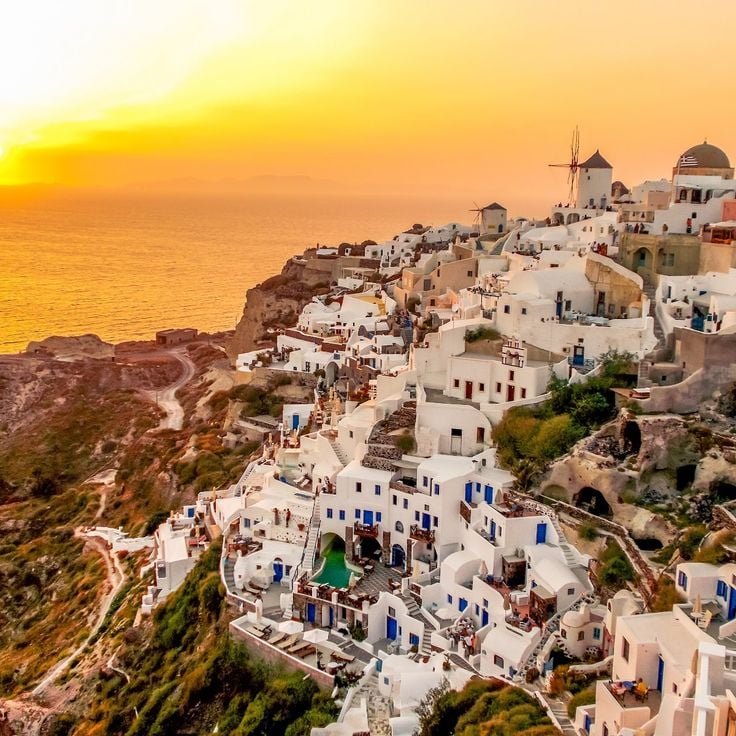
Oia is a small village perched on the cliffs of Santorini, overlooking the caldera. Its white houses with blue domes are stacked tightly together, facing the sea. When the sun goes down over the caldera, the sky turns deep shades of orange and red, and people gather on terraces and stairways to watch the last light of the day fade away.
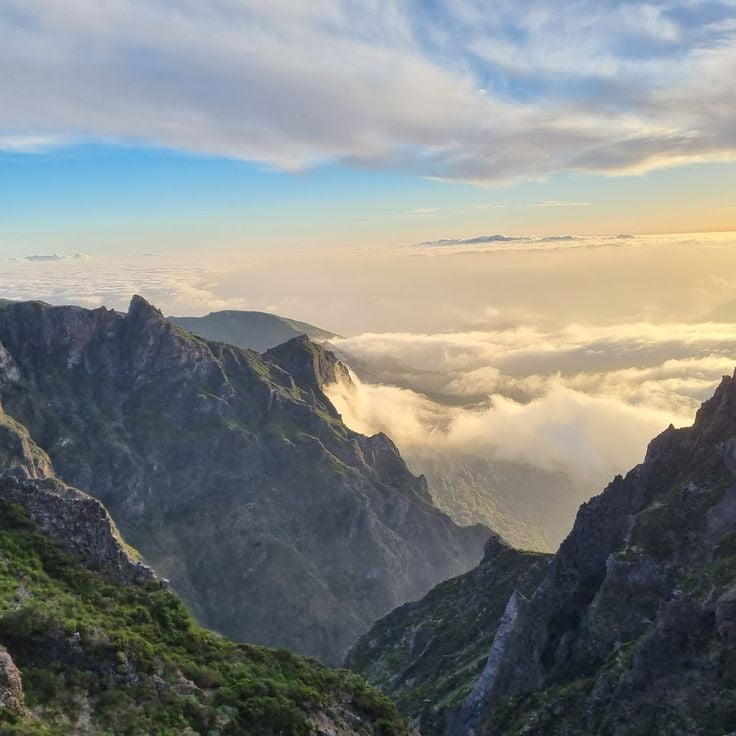
Pico do Arieiro is one of the highest peaks on Madeira. Standing at the top, you watch the sun go down over the Atlantic Ocean. The ridges of the island catch the last light of the day, and the sky turns from orange to deep red before darkness falls. Many visitors make the drive up the winding road just to be here at sunset.
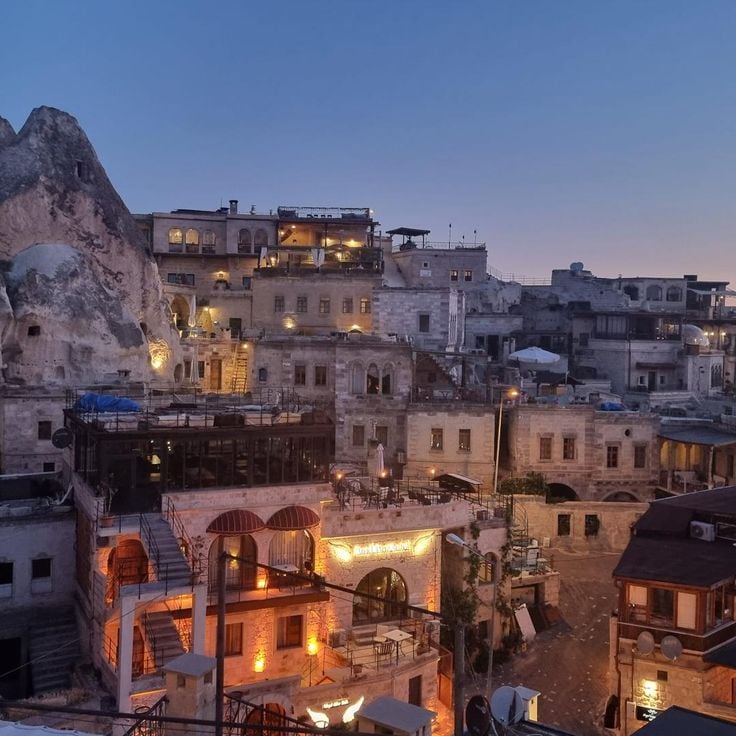
Göreme Sunset Point sits above the rock formations of Cappadocia and offers an open view over the valleys and cone-shaped towers of volcanic stone. As the sun drops, the light turns the landscape deep red and orange. Many visitors gather here in the evening to watch the last hot air ballons drift across the sky before dark.
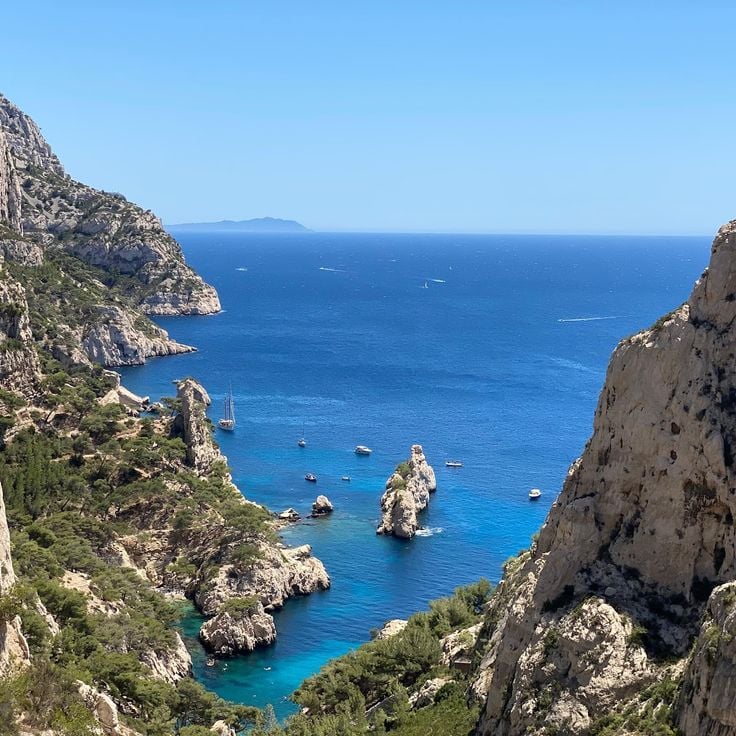
The Calanques de Sugiton sit along the coast just outside Marseille, where tall limestone cliffs drop sharply into a narrow inlet. As the sun sets, the pale rock picks up warm orange and pink tones, and the water below shifts from blue to gold. The walk down to the cove takes about 45 minutes and rewards you with a front-row view of the last light fading over the Mediterranean.
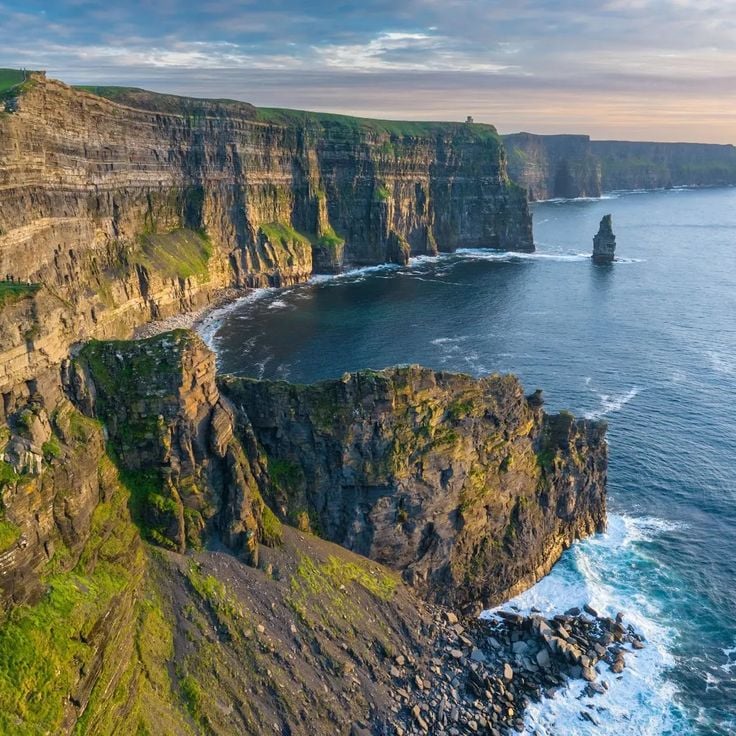
The Cliffs of Moher drop sharply into the Atlantic Ocean along the west coast of Ireland. At sunset, the stone face of the cliffs catches the last light of the day, turning a deep shade of orange and red. Standing at the edge, you look out toward open water with nothing between you and the horizon. Few places on the Irish coast give such a raw sense of standing at the end of the land.
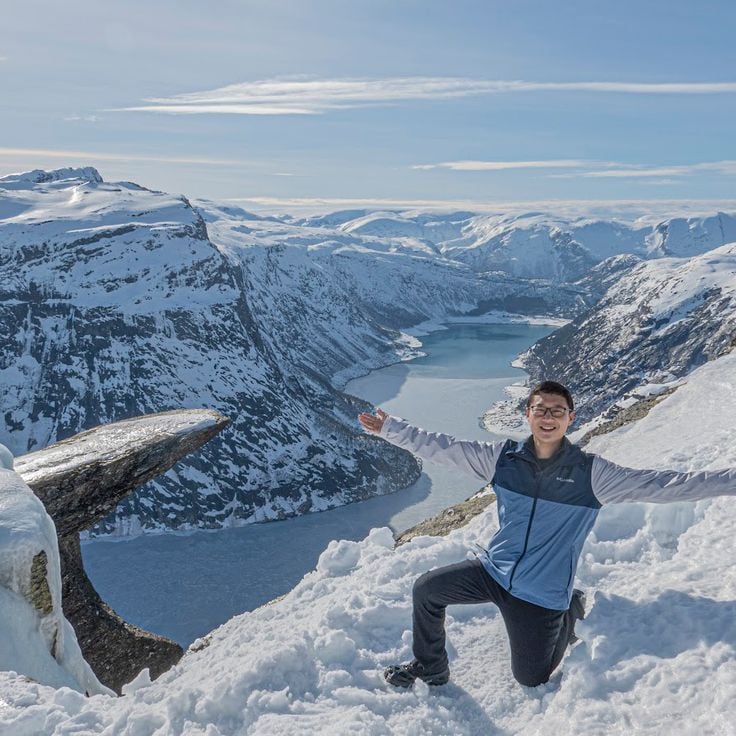
Trolltunga is a rock ledge in Norway that juts out high above a mountain lake. As the sun sets, the sky and the water below turn shades of orange and red. The hike to reach it is long, but the reward at the end of the day is a view that stays with you.
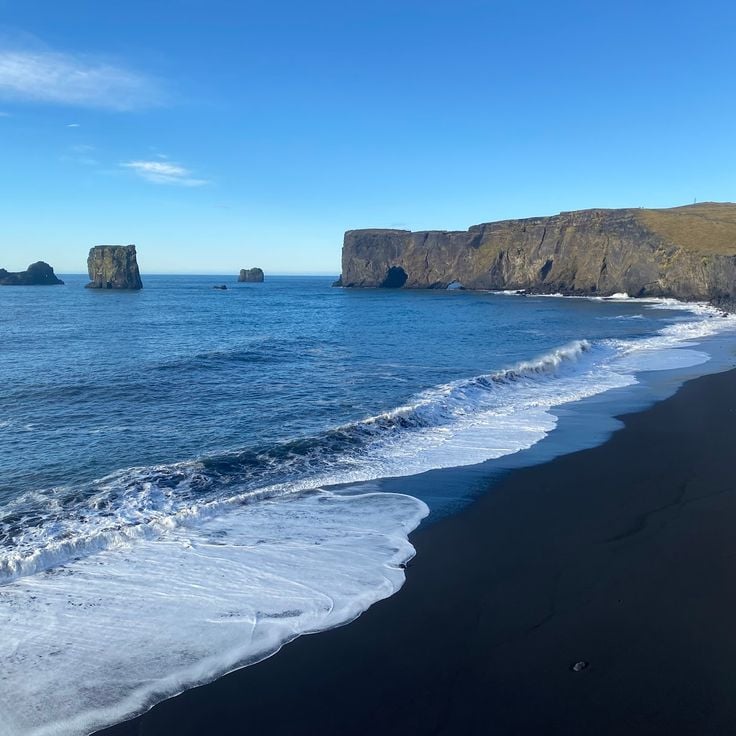
Reynisfjara is a black sand beach on the south coast of Iceland, shaped by volcanic activity over centuries. The sand is dark and coarse, bordered by tall columns of basalt rock that rise from the ground like a natural wall. When the sun sets here, the sky often turns orange and red, creating a sharp contrast with the black shore and the rough Atlantic waves. It is one of those places where the end of the day feels raw and powerful.
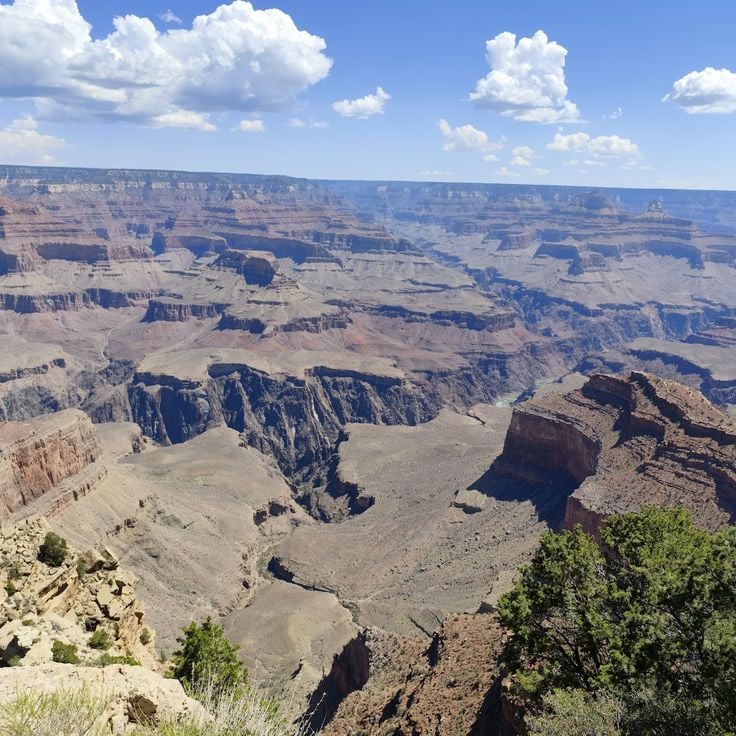
Hopi Point is one of the most visited overlooks on the South Rim of the Grand Canyon in Arizona. As the sun sets, the light moves across the canyon walls and turns the rock from orange to deep red. The view opens wide in several directions, and the depth of the gorge becomes even more visible when shadows start to fill the lower levels. Many visitors arrive early to get a good spot before the sun goes down.
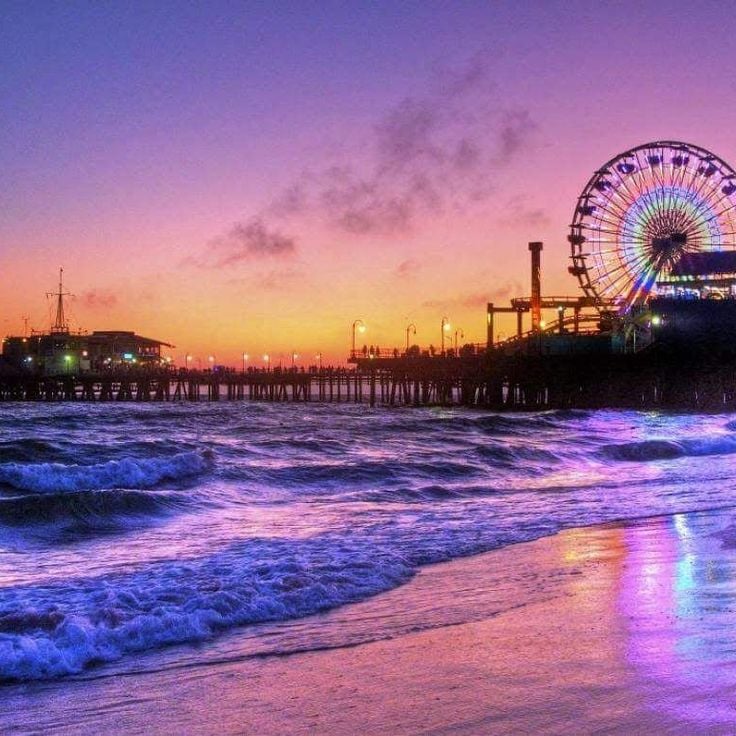
The Santa Monica Pier stretches out over the Pacific Ocean and offers one of the most photographed sunsets on the West Coast. As the sun drops toward the water, the sky turns red and orange above the old wooden structure. Visitors gather at the railing to watch the light fade, with the sounds of the nearby amusement rides in the background. It is a simple and genuine moment that stays with you.
The Haleakalā Summit on Maui sits so far above the clouds that the landscape feels remote and almost lunar. As the sun drops toward the horizon, the sky shifts through deep oranges and reds that spread across the cloud layer far below. The air is cold and thin up here, around 10,000 feet (3,000 meters) above sea level. Many visitors arrive in the afternoon to wait for the last light of the day to fade over the crater.
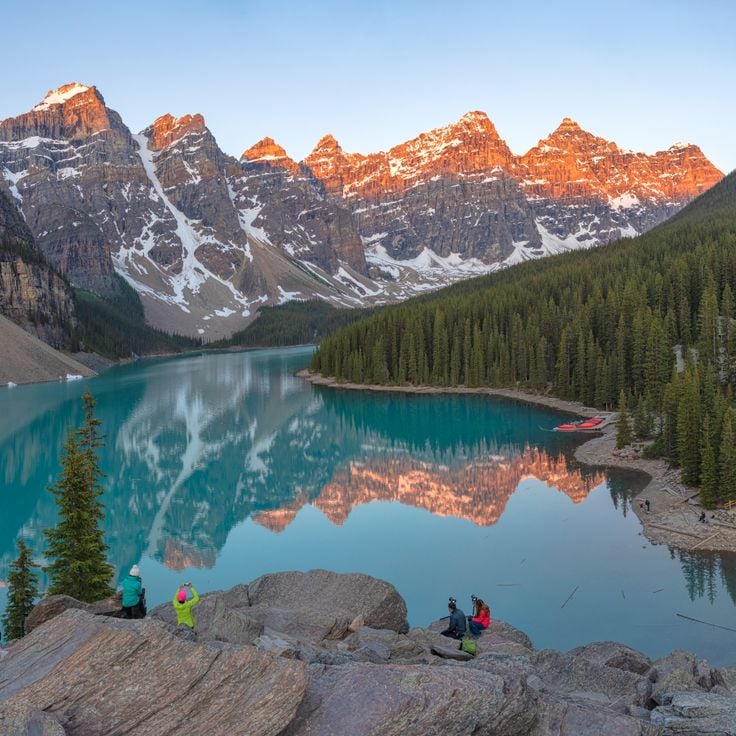
Moraine Lake sits in the Rocky Mountains of western Canada, fed by glacial meltwater that gives it a vivid blue-green color. At sunset, the light shifts across the surrounding rock peaks in shades of orange and pink, and the colors reflect in the water below. The scene is simple and direct, and that is exactly what makes it worth the walk to the shore.
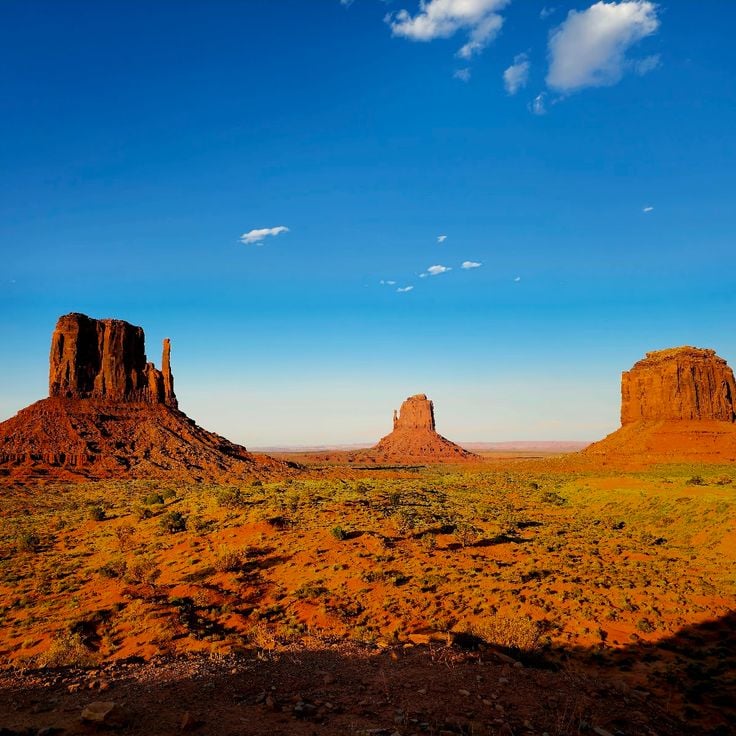
Monument Valley sits on the border between Arizona and Utah, in the American Southwest. Its tall sandstone formations rise from a flat, open plain, and at sunset they turn deep shades of orange and red. The low light catches every crack and ledge on the rock faces, throwing long shadows across the desert floor. Watching the sun go down here feels like a slow, quiet event that holds your attention until the last light fades.
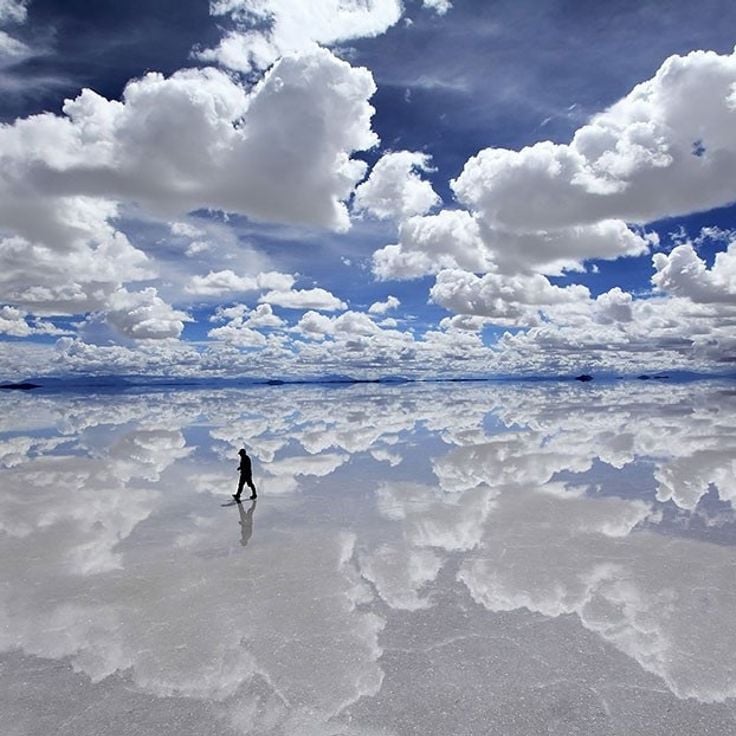
The Salar de Uyuni in Bolivia is the largest salt flat on Earth. When a thin layer of water covers the ground after rain, the sky reflects perfectly on the surface. At sunset, the colors of the sky, from orange to deep blue, appear both above and below you. Walking across this place as the sun goes down feels like standing inside the sky itself.
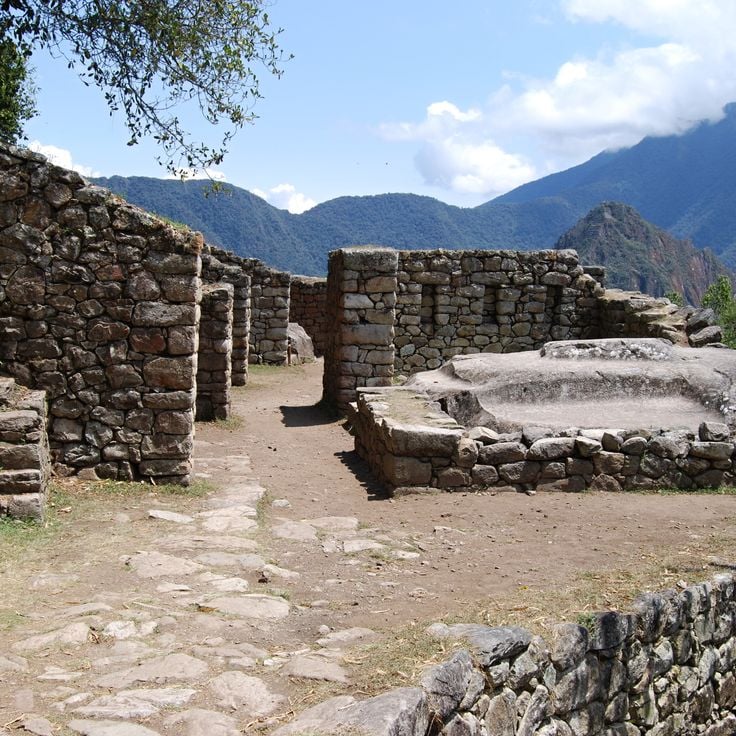
The Sun Gate at Machu Picchu is a stone doorway perched at the top of the Inca ruins. As the sun sets, its light passes through the gate and casts long shadows over the mountains and the valley below. Hikers arriving via the Inca Trail often reach this point near the end of the day, making the sunset a natural reward after hours of walking.
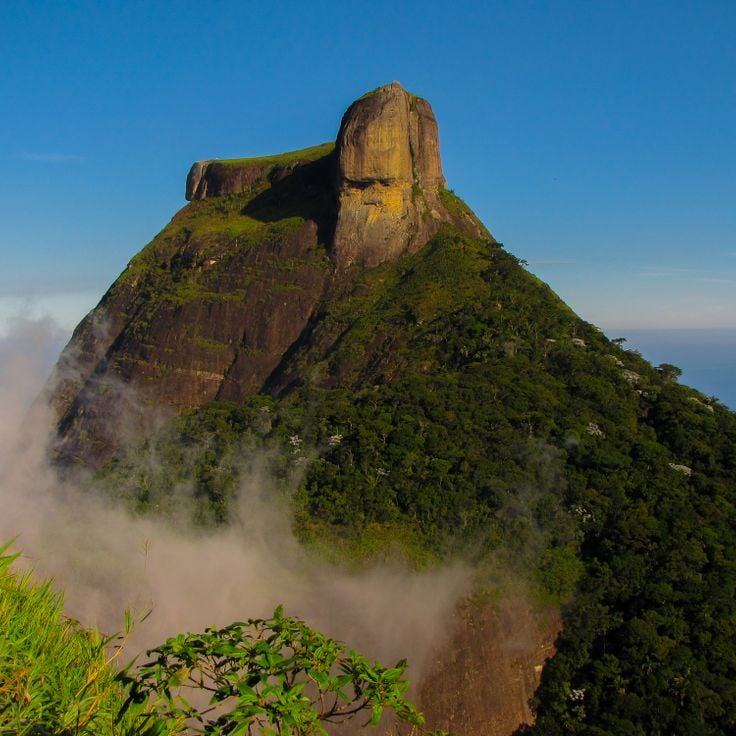
Pedra da Gávea is a massive granite rock that rises above Rio de Janeiro. From the top, you can see the city, the Atlantic Ocean, and the surrounding forest all at once. At sunset, the sky turns deep shades of orange and red while the city lights begin to glow below. The hike to reach the summit makes the moment feel well earned.
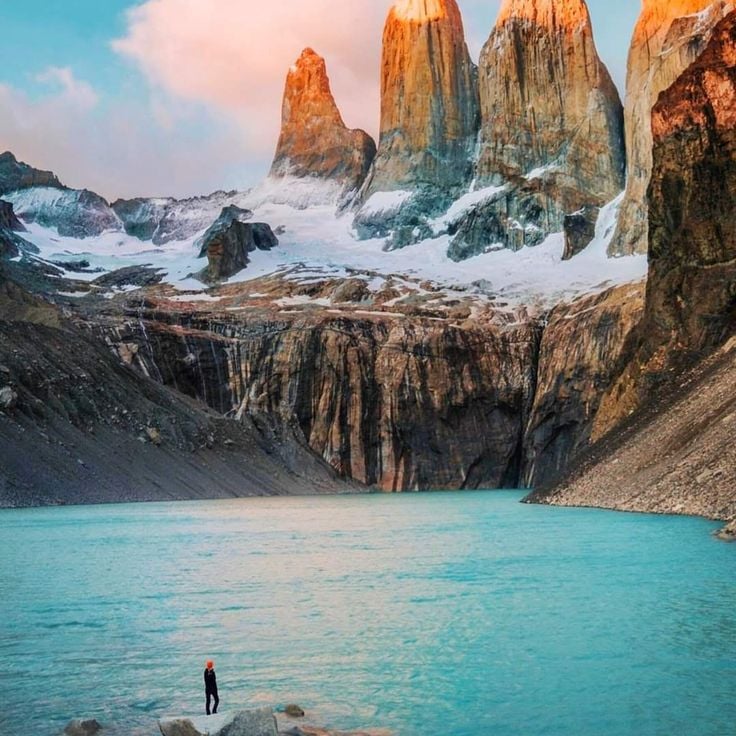
Torres del Paine National Park, in southern Chile, is home to sharp granite peaks and cold mountain lakes. At sunset, the light turns the rock towers orange and red, and the reflection on the water adds to the effect. The sky changes fast here, and each evening looks different from the last. Visitors often stop on the trails just to watch the colors shift across the peaks.
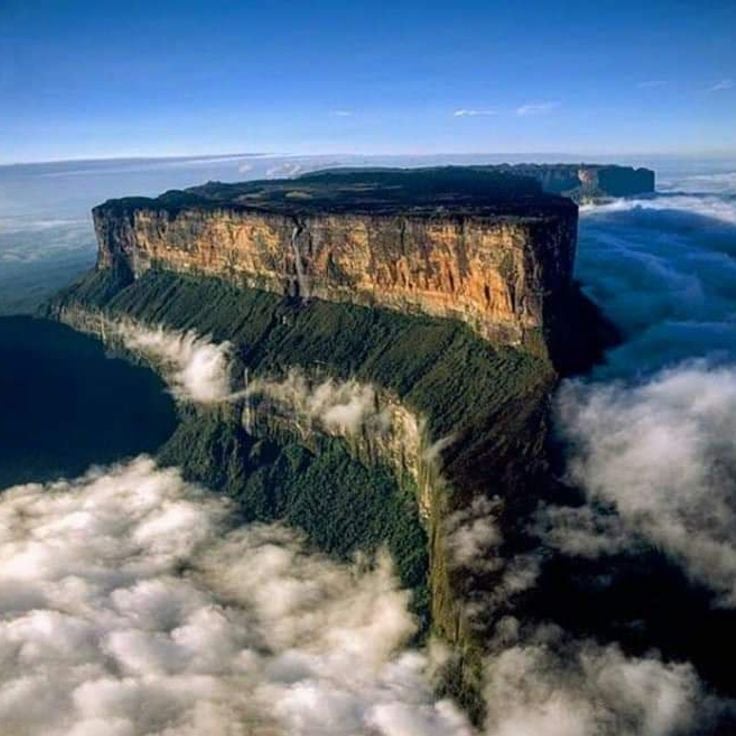
Mont Roraima is a flat-topped mountain rising above the Amazon forest at the junction of Venezuela, Brazil, and Guyana. Its vertical stone walls climb far above the clouds. At sunset, the light turns the rock faces deep orange and red while fog drifts through the gorges below. Few places on Earth make the end of the day feel as remote and raw as this summit does.
Erg Chebbi is a vast field of sand dunes in the Moroccan Sahara, where the light at the end of the day turns everything deep orange and red. The dunes shift in color as the sun drops, casting long shadows across the sand. Many travelers climb to the top of a dune to watch the last light fade over the desert.
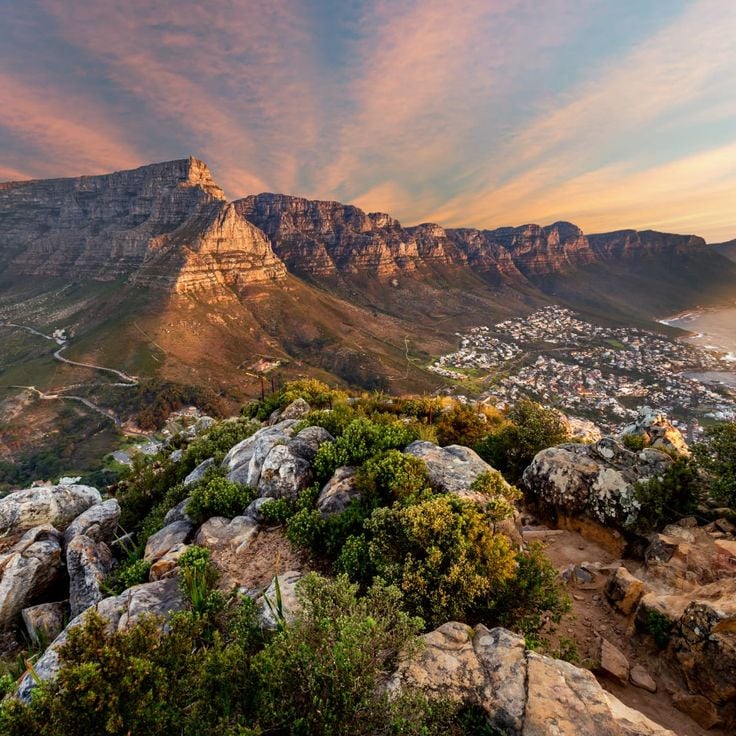
Table Mountain rises flat and wide above Cape Town, making it one of the most recognized places to watch the sun go down. As the light fades, the rock face turns shades of orange and red, while the city below and the ocean behind it slowly darken. Visitors can hike up or take the cable car to reach the top, where the view stretches in every direction.
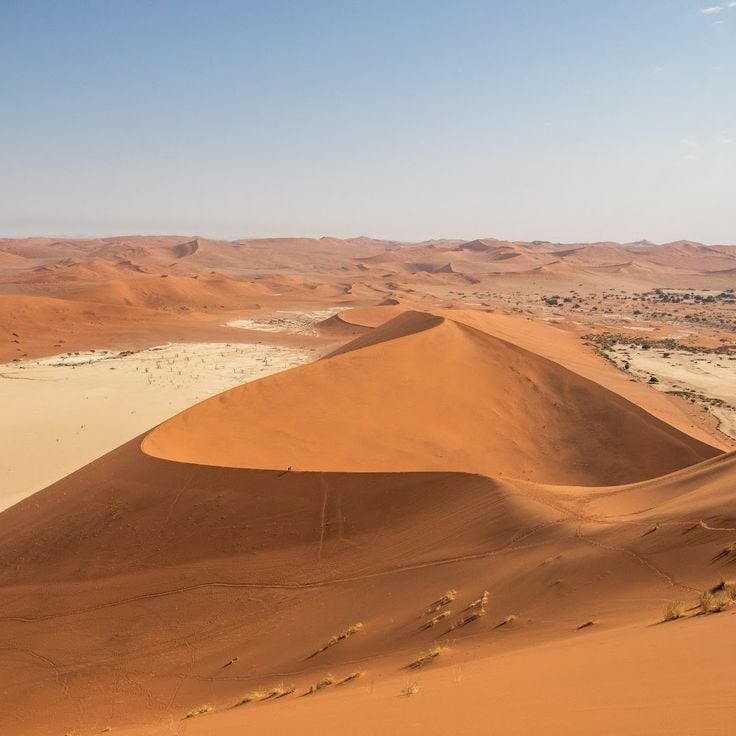
The dunes of Sossusvlei are among the most recognizable landscapes in Namibia. At sunset, the sand shifts through deep shades of red and orange. The light changes from one minute to the next, and the shadows cast by the dunes draw long lines across the ground. It is a still moment that stays with you long after you leave.
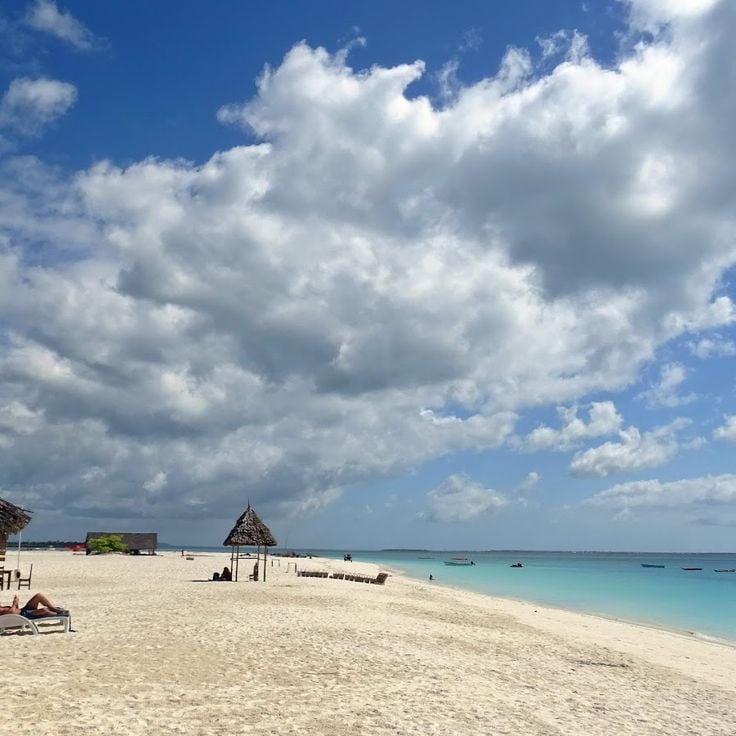
Nungwi Beach sits at the northern tip of Zanzibar, where the water stays shallow far from shore. In the evening, the sun sets directly over the sea, turning the sky orange and pink. Local fishermen pull their wooden dhows onto the sand as the light fades, making this one of the best spots on the island to watch the day come to an end.
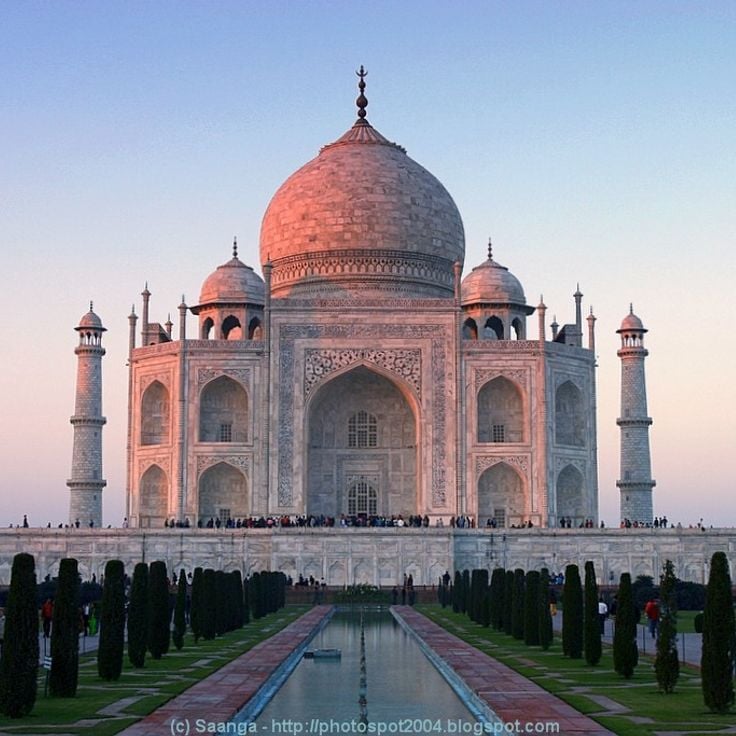
The Taj Mahal in Agra was built in the 17th century from white marble. As the sun goes down, the stone turns shades of orange and pink. The light shifts quickly, making the surface glow in a way that looks nothing like it does during the day. People gather along the garden paths to watch this moment together.
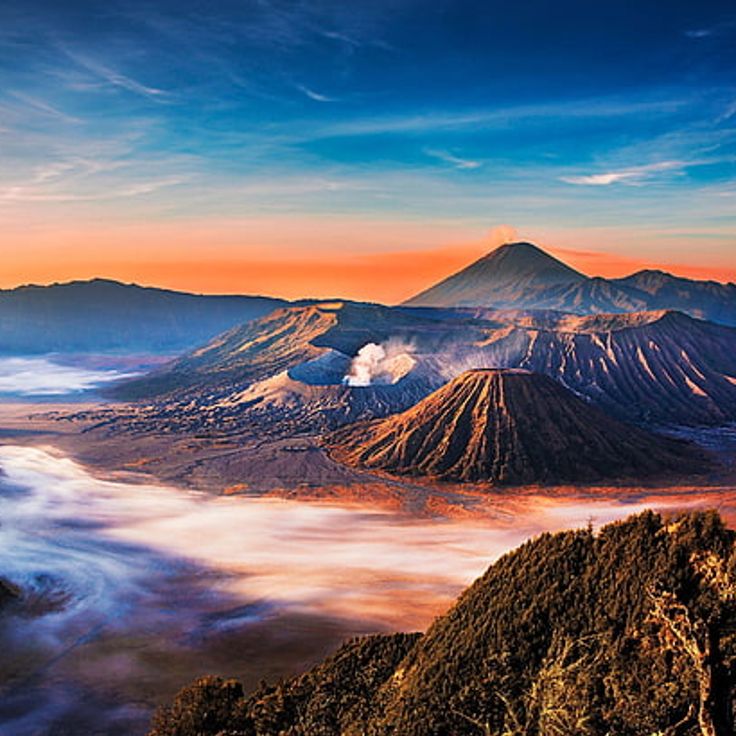
Mount Bromo is an active volcano in East Java that rises above a wide field of ash and sand. As the sun sets, the sky turns deep shades of orange and red, and the smoke drifting from the crater catches the last light of the day. Visitors often climb to the Penanjakan viewpoint to watch the silhouette of the volcano stand out against the colored sky.
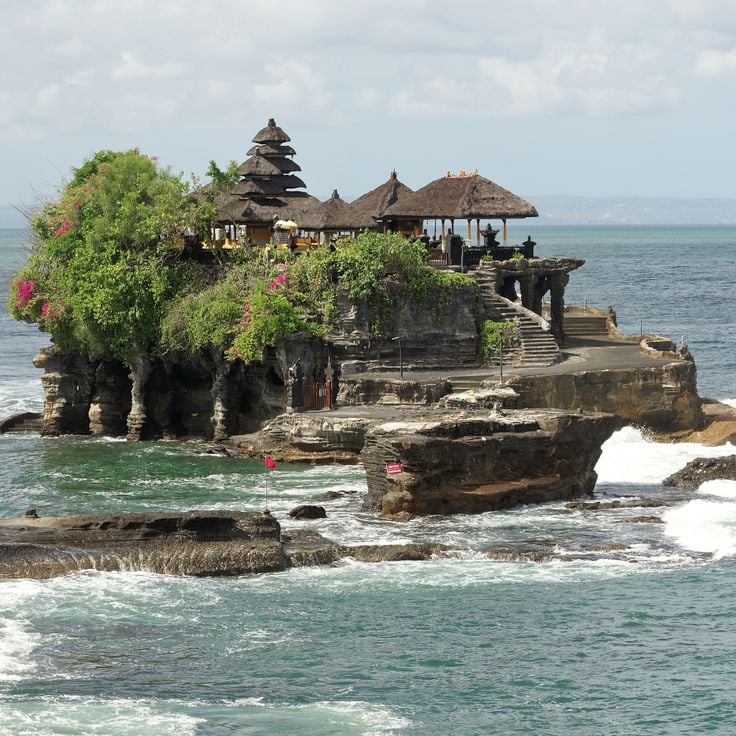
Tanah Lot Temple sits on a rock rising out of the sea, just off the coast of Bali. At low tide, visitors can walk across to it. At high tide, the ocean surrounds it on all sides. When the sun goes down, the dark shape of the temple stands out against the sky, making it one of the most photographed sunset spots in Indonesia.
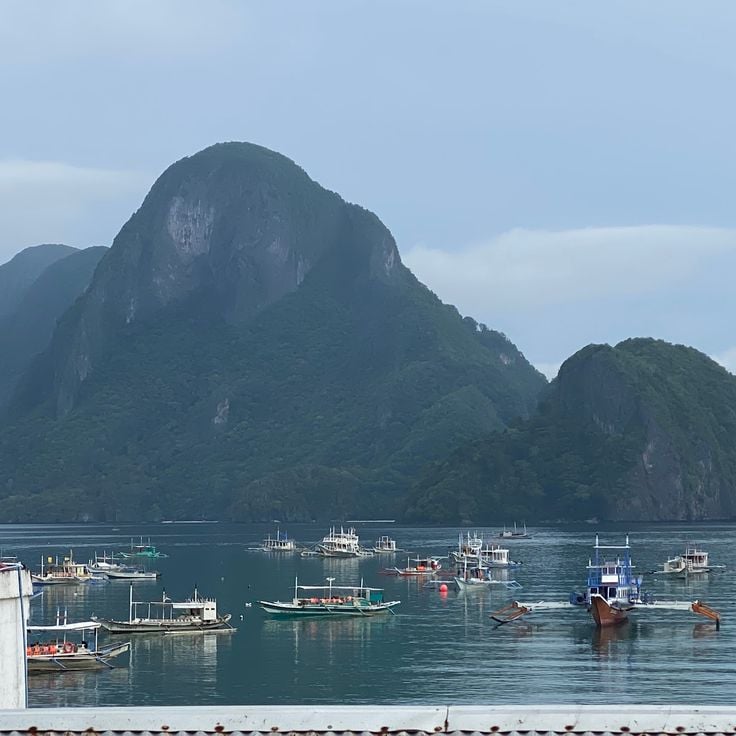
El Nido sits at the northern tip of Palawan, where tall limestone cliffs rise straight out of the sea. As the sun goes down, the rock faces turn orange and pink, and the shallow lagoons catch the last light on the water. Local boats head back to shore in the early evening, and the sky above the islands shifts through a range of warm colors before dark.
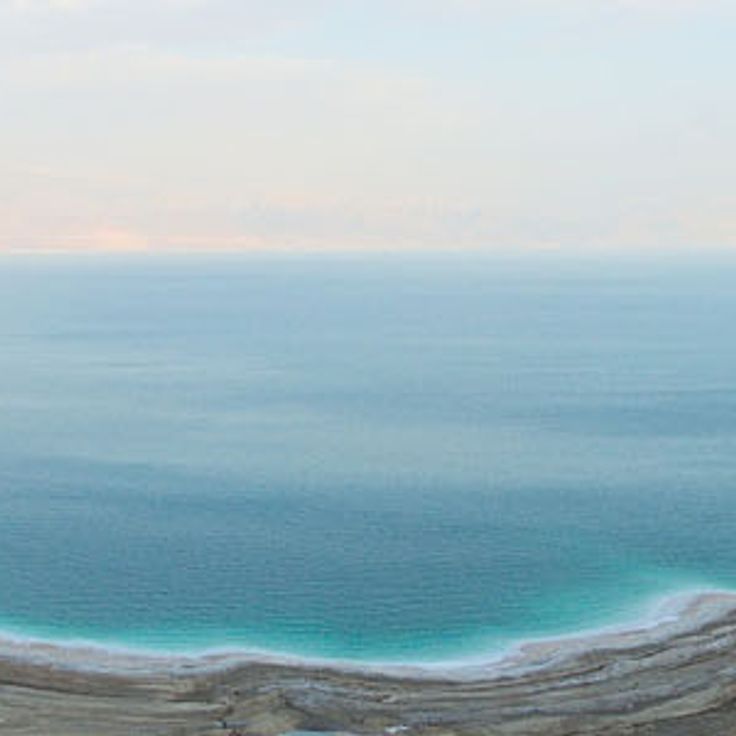
The Dead Sea sits on the border between Jordan and Israel, in one of the lowest points on Earth. Its water is so salty that you float on the surface without any effort. At sunset, the sky turns deep shades of orange and red, and those colors reflect off the flat, still water. The surrounding desert and the distant hills on both sides frame the moment in a way that is hard to forget. The air is warm, the light is soft, and the place feels removed from the rest of the world.
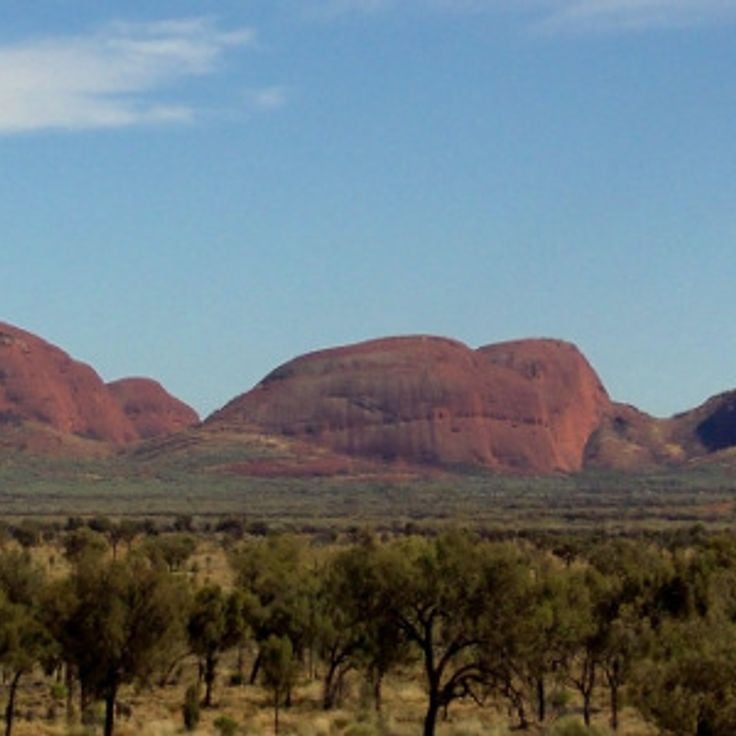
Uluru is a massive red rock standing in the middle of the Australian desert. As the sun goes down, its color shifts from orange to deep red, making the rock seem to glow from within. The Anangu people, the traditional owners of this land, consider it sacred. Visitors often sit quietly in the sand and watch the light fade across the flat desert around it.
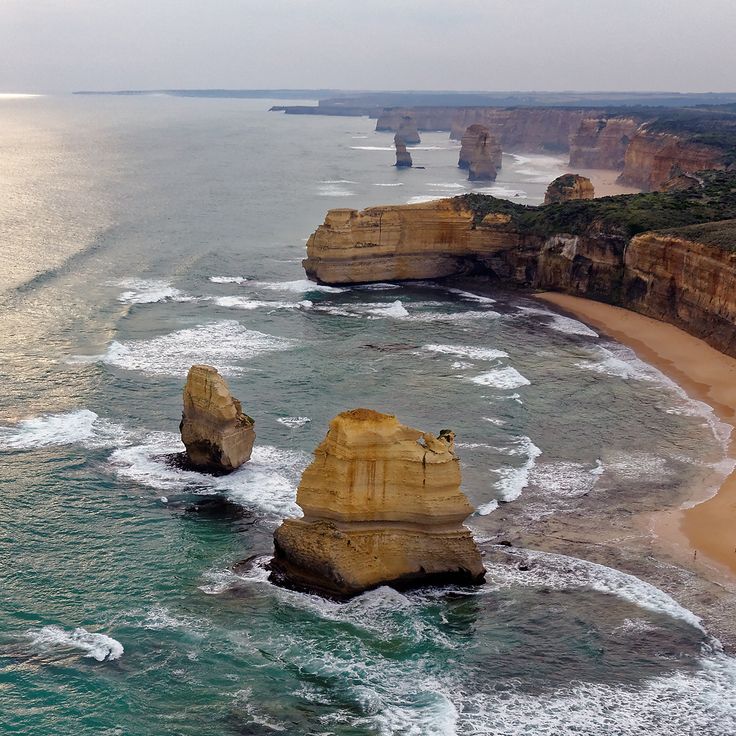
The Twelve Apostles are tall rock stacks rising out of the Southern Ocean along the Great Ocean Road. As the sun sets, the stone columns turn deep shades of orange and red, while the waves crash around their base. This stretch of the Victorian coast is one of the most visited spots in Australia to watch the day come to an end over open water.
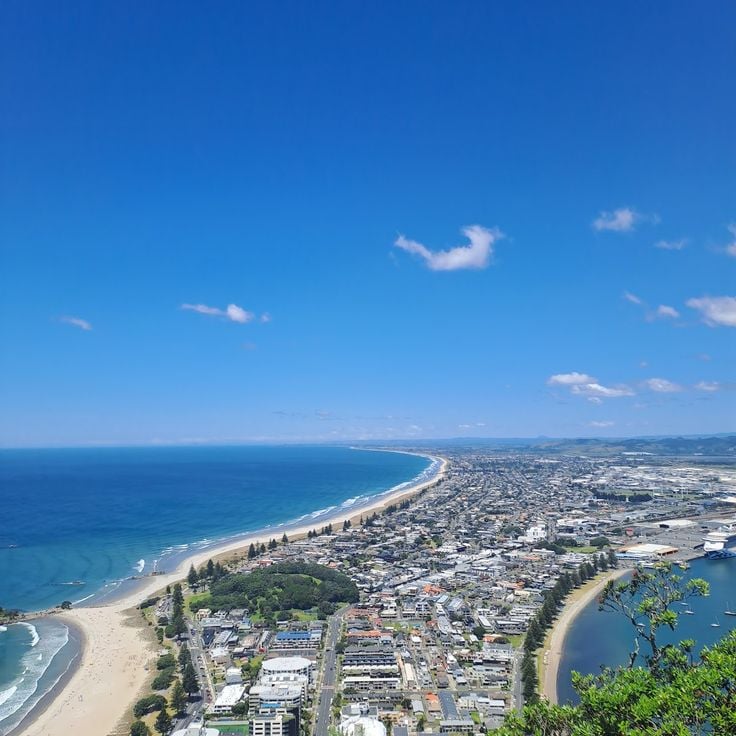
Mount Maunganui is a cone-shaped hill that juts out into the Pacific Ocean on the North Island of New Zealand. At sunset, the sky above the water turns deep shades of orange and pink, and the outline of the hill stands out against the fading light. The beaches that wrap around the base are a natural spot to watch the sun go down.
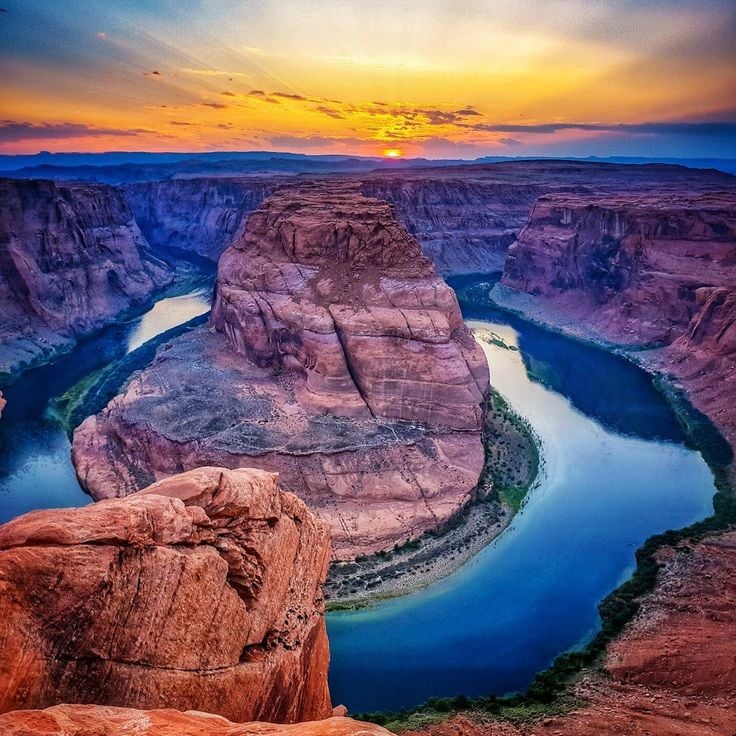
Horseshoe Bend is a curve of the Colorado River in Arizona, where the water wraps almost entirely around a large sandstone rock. You stand on the edge of a plateau and look straight down at the river about 1,000 feet (300 meters) below. At sunset, the canyon walls turn deep red and orange, and the river reflects the last light of the day. Few places make the scale of the landscape so easy to feel.
Oia is a small village perched on the cliffs of Santorini, overlooking the caldera. Its white houses with blue domes are stacked tightly together, facing the sea. When the sun goes down over the caldera, the sky turns deep shades of orange and red, and people gather on terraces and stairways to watch the last light of the day fade away.
Pico do Arieiro is one of the highest peaks on Madeira. Standing at the top, you watch the sun go down over the Atlantic Ocean. The ridges of the island catch the last light of the day, and the sky turns from orange to deep red before darkness falls. Many visitors make the drive up the winding road just to be here at sunset.
Göreme Sunset Point sits above the rock formations of Cappadocia and offers an open view over the valleys and cone-shaped towers of volcanic stone. As the sun drops, the light turns the landscape deep red and orange. Many visitors gather here in the evening to watch the last hot air ballons drift across the sky before dark.
The Calanques de Sugiton sit along the coast just outside Marseille, where tall limestone cliffs drop sharply into a narrow inlet. As the sun sets, the pale rock picks up warm orange and pink tones, and the water below shifts from blue to gold. The walk down to the cove takes about 45 minutes and rewards you with a front-row view of the last light fading over the Mediterranean.
The Cliffs of Moher drop sharply into the Atlantic Ocean along the west coast of Ireland. At sunset, the stone face of the cliffs catches the last light of the day, turning a deep shade of orange and red. Standing at the edge, you look out toward open water with nothing between you and the horizon. Few places on the Irish coast give such a raw sense of standing at the end of the land.
Trolltunga is a rock ledge in Norway that juts out high above a mountain lake. As the sun sets, the sky and the water below turn shades of orange and red. The hike to reach it is long, but the reward at the end of the day is a view that stays with you.
Reynisfjara is a black sand beach on the south coast of Iceland, shaped by volcanic activity over centuries. The sand is dark and coarse, bordered by tall columns of basalt rock that rise from the ground like a natural wall. When the sun sets here, the sky often turns orange and red, creating a sharp contrast with the black shore and the rough Atlantic waves. It is one of those places where the end of the day feels raw and powerful.
Hopi Point is one of the most visited overlooks on the South Rim of the Grand Canyon in Arizona. As the sun sets, the light moves across the canyon walls and turns the rock from orange to deep red. The view opens wide in several directions, and the depth of the gorge becomes even more visible when shadows start to fill the lower levels. Many visitors arrive early to get a good spot before the sun goes down.
The Santa Monica Pier stretches out over the Pacific Ocean and offers one of the most photographed sunsets on the West Coast. As the sun drops toward the water, the sky turns red and orange above the old wooden structure. Visitors gather at the railing to watch the light fade, with the sounds of the nearby amusement rides in the background. It is a simple and genuine moment that stays with you.
The Haleakalā Summit on Maui sits so far above the clouds that the landscape feels remote and almost lunar. As the sun drops toward the horizon, the sky shifts through deep oranges and reds that spread across the cloud layer far below. The air is cold and thin up here, around 10,000 feet (3,000 meters) above sea level. Many visitors arrive in the afternoon to wait for the last light of the day to fade over the crater.
Moraine Lake sits in the Rocky Mountains of western Canada, fed by glacial meltwater that gives it a vivid blue-green color. At sunset, the light shifts across the surrounding rock peaks in shades of orange and pink, and the colors reflect in the water below. The scene is simple and direct, and that is exactly what makes it worth the walk to the shore.
Monument Valley sits on the border between Arizona and Utah, in the American Southwest. Its tall sandstone formations rise from a flat, open plain, and at sunset they turn deep shades of orange and red. The low light catches every crack and ledge on the rock faces, throwing long shadows across the desert floor. Watching the sun go down here feels like a slow, quiet event that holds your attention until the last light fades.
The Salar de Uyuni in Bolivia is the largest salt flat on Earth. When a thin layer of water covers the ground after rain, the sky reflects perfectly on the surface. At sunset, the colors of the sky, from orange to deep blue, appear both above and below you. Walking across this place as the sun goes down feels like standing inside the sky itself.
The Sun Gate at Machu Picchu is a stone doorway perched at the top of the Inca ruins. As the sun sets, its light passes through the gate and casts long shadows over the mountains and the valley below. Hikers arriving via the Inca Trail often reach this point near the end of the day, making the sunset a natural reward after hours of walking.
Pedra da Gávea is a massive granite rock that rises above Rio de Janeiro. From the top, you can see the city, the Atlantic Ocean, and the surrounding forest all at once. At sunset, the sky turns deep shades of orange and red while the city lights begin to glow below. The hike to reach the summit makes the moment feel well earned.
Torres del Paine National Park, in southern Chile, is home to sharp granite peaks and cold mountain lakes. At sunset, the light turns the rock towers orange and red, and the reflection on the water adds to the effect. The sky changes fast here, and each evening looks different from the last. Visitors often stop on the trails just to watch the colors shift across the peaks.
Mont Roraima is a flat-topped mountain rising above the Amazon forest at the junction of Venezuela, Brazil, and Guyana. Its vertical stone walls climb far above the clouds. At sunset, the light turns the rock faces deep orange and red while fog drifts through the gorges below. Few places on Earth make the end of the day feel as remote and raw as this summit does.
Erg Chebbi is a vast field of sand dunes in the Moroccan Sahara, where the light at the end of the day turns everything deep orange and red. The dunes shift in color as the sun drops, casting long shadows across the sand. Many travelers climb to the top of a dune to watch the last light fade over the desert.
Table Mountain rises flat and wide above Cape Town, making it one of the most recognized places to watch the sun go down. As the light fades, the rock face turns shades of orange and red, while the city below and the ocean behind it slowly darken. Visitors can hike up or take the cable car to reach the top, where the view stretches in every direction.
The dunes of Sossusvlei are among the most recognizable landscapes in Namibia. At sunset, the sand shifts through deep shades of red and orange. The light changes from one minute to the next, and the shadows cast by the dunes draw long lines across the ground. It is a still moment that stays with you long after you leave.
Nungwi Beach sits at the northern tip of Zanzibar, where the water stays shallow far from shore. In the evening, the sun sets directly over the sea, turning the sky orange and pink. Local fishermen pull their wooden dhows onto the sand as the light fades, making this one of the best spots on the island to watch the day come to an end.
The Taj Mahal in Agra was built in the 17th century from white marble. As the sun goes down, the stone turns shades of orange and pink. The light shifts quickly, making the surface glow in a way that looks nothing like it does during the day. People gather along the garden paths to watch this moment together.
Mount Bromo is an active volcano in East Java that rises above a wide field of ash and sand. As the sun sets, the sky turns deep shades of orange and red, and the smoke drifting from the crater catches the last light of the day. Visitors often climb to the Penanjakan viewpoint to watch the silhouette of the volcano stand out against the colored sky.
Tanah Lot Temple sits on a rock rising out of the sea, just off the coast of Bali. At low tide, visitors can walk across to it. At high tide, the ocean surrounds it on all sides. When the sun goes down, the dark shape of the temple stands out against the sky, making it one of the most photographed sunset spots in Indonesia.
El Nido sits at the northern tip of Palawan, where tall limestone cliffs rise straight out of the sea. As the sun goes down, the rock faces turn orange and pink, and the shallow lagoons catch the last light on the water. Local boats head back to shore in the early evening, and the sky above the islands shifts through a range of warm colors before dark.
The Dead Sea sits on the border between Jordan and Israel, in one of the lowest points on Earth. Its water is so salty that you float on the surface without any effort. At sunset, the sky turns deep shades of orange and red, and those colors reflect off the flat, still water. The surrounding desert and the distant hills on both sides frame the moment in a way that is hard to forget. The air is warm, the light is soft, and the place feels removed from the rest of the world.
Uluru is a massive red rock standing in the middle of the Australian desert. As the sun goes down, its color shifts from orange to deep red, making the rock seem to glow from within. The Anangu people, the traditional owners of this land, consider it sacred. Visitors often sit quietly in the sand and watch the light fade across the flat desert around it.
The Twelve Apostles are tall rock stacks rising out of the Southern Ocean along the Great Ocean Road. As the sun sets, the stone columns turn deep shades of orange and red, while the waves crash around their base. This stretch of the Victorian coast is one of the most visited spots in Australia to watch the day come to an end over open water.
Mount Maunganui is a cone-shaped hill that juts out into the Pacific Ocean on the North Island of New Zealand. At sunset, the sky above the water turns deep shades of orange and pink, and the outline of the hill stands out against the fading light. The beaches that wrap around the base are a natural spot to watch the sun go down.
Horseshoe Bend is a curve of the Colorado River in Arizona, where the water wraps almost entirely around a large sandstone rock. You stand on the edge of a plateau and look straight down at the river about 1,000 feet (300 meters) below. At sunset, the canyon walls turn deep red and orange, and the river reflects the last light of the day. Few places make the scale of the landscape so easy to feel.
Oia is a small village perched on the cliffs of Santorini, overlooking the caldera. Its white houses with blue domes are stacked tightly together, facing the sea. When the sun goes down over the caldera, the sky turns deep shades of orange and red, and people gather on terraces and stairways to watch the last light of the day fade away.
Pico do Arieiro is one of the highest peaks on Madeira. Standing at the top, you watch the sun go down over the Atlantic Ocean. The ridges of the island catch the last light of the day, and the sky turns from orange to deep red before darkness falls. Many visitors make the drive up the winding road just to be here at sunset.
Göreme Sunset Point sits above the rock formations of Cappadocia and offers an open view over the valleys and cone-shaped towers of volcanic stone. As the sun drops, the light turns the landscape deep red and orange. Many visitors gather here in the evening to watch the last hot air ballons drift across the sky before dark.
The Calanques de Sugiton sit along the coast just outside Marseille, where tall limestone cliffs drop sharply into a narrow inlet. As the sun sets, the pale rock picks up warm orange and pink tones, and the water below shifts from blue to gold. The walk down to the cove takes about 45 minutes and rewards you with a front-row view of the last light fading over the Mediterranean.
The Cliffs of Moher drop sharply into the Atlantic Ocean along the west coast of Ireland. At sunset, the stone face of the cliffs catches the last light of the day, turning a deep shade of orange and red. Standing at the edge, you look out toward open water with nothing between you and the horizon. Few places on the Irish coast give such a raw sense of standing at the end of the land.
Trolltunga is a rock ledge in Norway that juts out high above a mountain lake. As the sun sets, the sky and the water below turn shades of orange and red. The hike to reach it is long, but the reward at the end of the day is a view that stays with you.
Reynisfjara is a black sand beach on the south coast of Iceland, shaped by volcanic activity over centuries. The sand is dark and coarse, bordered by tall columns of basalt rock that rise from the ground like a natural wall. When the sun sets here, the sky often turns orange and red, creating a sharp contrast with the black shore and the rough Atlantic waves. It is one of those places where the end of the day feels raw and powerful.
Hopi Point is one of the most visited overlooks on the South Rim of the Grand Canyon in Arizona. As the sun sets, the light moves across the canyon walls and turns the rock from orange to deep red. The view opens wide in several directions, and the depth of the gorge becomes even more visible when shadows start to fill the lower levels. Many visitors arrive early to get a good spot before the sun goes down.
The Santa Monica Pier stretches out over the Pacific Ocean and offers one of the most photographed sunsets on the West Coast. As the sun drops toward the water, the sky turns red and orange above the old wooden structure. Visitors gather at the railing to watch the light fade, with the sounds of the nearby amusement rides in the background. It is a simple and genuine moment that stays with you.
The Haleakalā Summit on Maui sits so far above the clouds that the landscape feels remote and almost lunar. As the sun drops toward the horizon, the sky shifts through deep oranges and reds that spread across the cloud layer far below. The air is cold and thin up here, around 10,000 feet (3,000 meters) above sea level. Many visitors arrive in the afternoon to wait for the last light of the day to fade over the crater.
Moraine Lake sits in the Rocky Mountains of western Canada, fed by glacial meltwater that gives it a vivid blue-green color. At sunset, the light shifts across the surrounding rock peaks in shades of orange and pink, and the colors reflect in the water below. The scene is simple and direct, and that is exactly what makes it worth the walk to the shore.
Monument Valley sits on the border between Arizona and Utah, in the American Southwest. Its tall sandstone formations rise from a flat, open plain, and at sunset they turn deep shades of orange and red. The low light catches every crack and ledge on the rock faces, throwing long shadows across the desert floor. Watching the sun go down here feels like a slow, quiet event that holds your attention until the last light fades.
The Salar de Uyuni in Bolivia is the largest salt flat on Earth. When a thin layer of water covers the ground after rain, the sky reflects perfectly on the surface. At sunset, the colors of the sky, from orange to deep blue, appear both above and below you. Walking across this place as the sun goes down feels like standing inside the sky itself.
The Sun Gate at Machu Picchu is a stone doorway perched at the top of the Inca ruins. As the sun sets, its light passes through the gate and casts long shadows over the mountains and the valley below. Hikers arriving via the Inca Trail often reach this point near the end of the day, making the sunset a natural reward after hours of walking.
Pedra da Gávea is a massive granite rock that rises above Rio de Janeiro. From the top, you can see the city, the Atlantic Ocean, and the surrounding forest all at once. At sunset, the sky turns deep shades of orange and red while the city lights begin to glow below. The hike to reach the summit makes the moment feel well earned.
Torres del Paine National Park, in southern Chile, is home to sharp granite peaks and cold mountain lakes. At sunset, the light turns the rock towers orange and red, and the reflection on the water adds to the effect. The sky changes fast here, and each evening looks different from the last. Visitors often stop on the trails just to watch the colors shift across the peaks.
Mont Roraima is a flat-topped mountain rising above the Amazon forest at the junction of Venezuela, Brazil, and Guyana. Its vertical stone walls climb far above the clouds. At sunset, the light turns the rock faces deep orange and red while fog drifts through the gorges below. Few places on Earth make the end of the day feel as remote and raw as this summit does.
Erg Chebbi is a vast field of sand dunes in the Moroccan Sahara, where the light at the end of the day turns everything deep orange and red. The dunes shift in color as the sun drops, casting long shadows across the sand. Many travelers climb to the top of a dune to watch the last light fade over the desert.
Table Mountain rises flat and wide above Cape Town, making it one of the most recognized places to watch the sun go down. As the light fades, the rock face turns shades of orange and red, while the city below and the ocean behind it slowly darken. Visitors can hike up or take the cable car to reach the top, where the view stretches in every direction.
The dunes of Sossusvlei are among the most recognizable landscapes in Namibia. At sunset, the sand shifts through deep shades of red and orange. The light changes from one minute to the next, and the shadows cast by the dunes draw long lines across the ground. It is a still moment that stays with you long after you leave.
Nungwi Beach sits at the northern tip of Zanzibar, where the water stays shallow far from shore. In the evening, the sun sets directly over the sea, turning the sky orange and pink. Local fishermen pull their wooden dhows onto the sand as the light fades, making this one of the best spots on the island to watch the day come to an end.
The Taj Mahal in Agra was built in the 17th century from white marble. As the sun goes down, the stone turns shades of orange and pink. The light shifts quickly, making the surface glow in a way that looks nothing like it does during the day. People gather along the garden paths to watch this moment together.
Mount Bromo is an active volcano in East Java that rises above a wide field of ash and sand. As the sun sets, the sky turns deep shades of orange and red, and the smoke drifting from the crater catches the last light of the day. Visitors often climb to the Penanjakan viewpoint to watch the silhouette of the volcano stand out against the colored sky.
Tanah Lot Temple sits on a rock rising out of the sea, just off the coast of Bali. At low tide, visitors can walk across to it. At high tide, the ocean surrounds it on all sides. When the sun goes down, the dark shape of the temple stands out against the sky, making it one of the most photographed sunset spots in Indonesia.
El Nido sits at the northern tip of Palawan, where tall limestone cliffs rise straight out of the sea. As the sun goes down, the rock faces turn orange and pink, and the shallow lagoons catch the last light on the water. Local boats head back to shore in the early evening, and the sky above the islands shifts through a range of warm colors before dark.
The Dead Sea sits on the border between Jordan and Israel, in one of the lowest points on Earth. Its water is so salty that you float on the surface without any effort. At sunset, the sky turns deep shades of orange and red, and those colors reflect off the flat, still water. The surrounding desert and the distant hills on both sides frame the moment in a way that is hard to forget. The air is warm, the light is soft, and the place feels removed from the rest of the world.
Uluru is a massive red rock standing in the middle of the Australian desert. As the sun goes down, its color shifts from orange to deep red, making the rock seem to glow from within. The Anangu people, the traditional owners of this land, consider it sacred. Visitors often sit quietly in the sand and watch the light fade across the flat desert around it.
The Twelve Apostles are tall rock stacks rising out of the Southern Ocean along the Great Ocean Road. As the sun sets, the stone columns turn deep shades of orange and red, while the waves crash around their base. This stretch of the Victorian coast is one of the most visited spots in Australia to watch the day come to an end over open water.
Mount Maunganui is a cone-shaped hill that juts out into the Pacific Ocean on the North Island of New Zealand. At sunset, the sky above the water turns deep shades of orange and pink, and the outline of the hill stands out against the fading light. The beaches that wrap around the base are a natural spot to watch the sun go down.
Horseshoe Bend is a curve of the Colorado River in Arizona, where the water wraps almost entirely around a large sandstone rock. You stand on the edge of a plateau and look straight down at the river about 1,000 feet (300 meters) below. At sunset, the canyon walls turn deep red and orange, and the river reflects the last light of the day. Few places make the scale of the landscape so easy to feel.
To fully enjoy these sunsets, arrive at least one hour early to find your spot and let your eyes adjust to the changing light. Keep in mind that the weather is important: a clear sky offers sharp clarity, while a few clouds create colorful patterns.