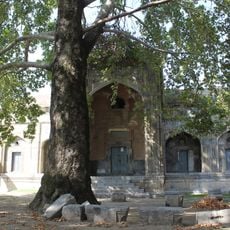
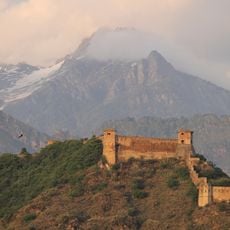
Burzahom archaeological site, Archaeological site in Kashmir Valley, India
Burzahom is an excavation site in the Kashmir Valley of India that preserves remains of settlements from several millennia. The grounds display dwelling pits, stone tools, pottery fragments, and hearth remains spread across an open field.
People settled here around 3000 BCE and dug dwelling pits into the ground to shelter from the cold climate. The settlement grew over centuries and changed from a stone age community into a society that worked metal.
In Kashmiri, 'Burz' means birch, and birch wood was found as roofing material in the excavated dwellings. The Hindi source records that dogs were buried with their owners, and that each household kept a dog; goat and other animals were interred with a dead owner. Bone tools, rectangular perforated stone knives, pottery and animal skeletons have come from the site.
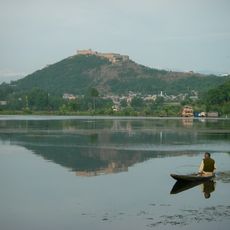
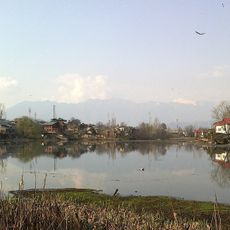
The site lies 16 kilometres (9.9 mi) northwest of Srinagar on the Naseem-Shalimar road, at 1,800 metres above sea level on a high Karewa terrace of the Jhelum floodplain. Dal Lake is about 2 kilometres away. The excavated area is open ground, so sturdy shoes help.
Archaeologists found bone needles here with engraved patterns that rank among the oldest evidence of textile production in South Asia. The needles show that the inhabitants stitched clothing and possibly wove simple fabrics.
The community of curious travelers
AroundUs brings together thousands of curated places, local tips, and hidden gems, enriched daily by 94,747 contributors worldwide.