History of Mount Hakone, Volcanic history site in Kanagawa Prefecture, Japan
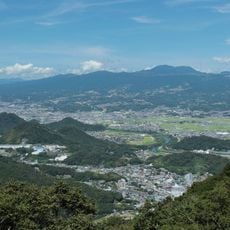
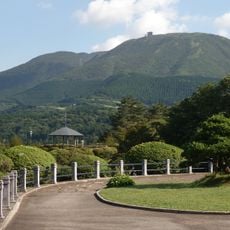
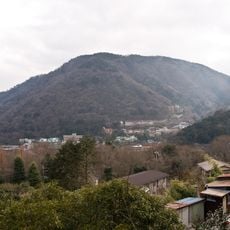
The History of Mount Hakone traces the formation of a volcano shaped by two major explosive events that created overlapping volcanic basins spanning several kilometers. The landscape shows steep ridges, collapsed depressions, and crater lakes that reveal the mountain's violent geological past.
The volcano formed over a span of several hundred thousand years through repeated eruptions. The last major magmatic activity occurred around 3,000 years ago, with smaller steam-driven eruptions happening in more recent times.
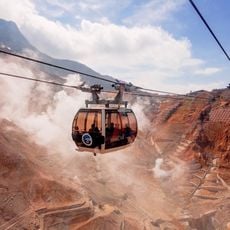
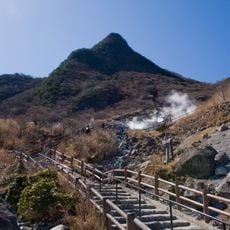
The hot springs and steaming vents have shaped this place as a healing destination for centuries. Visitors today still come to experience the warm waters and mineral-rich air as part of their wellness traditions.
A network of monitoring instruments allows visitors to explore the active volcanic areas safely today. Access to certain zones may vary depending on current activity levels, so checking conditions before visiting is helpful.
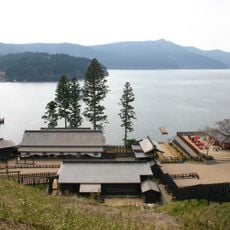
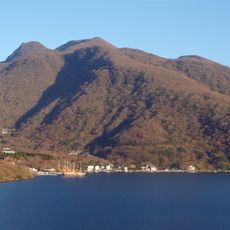
Lake Ashi fills a depression between the crater walls and volcanic domes, showing how water reshapes a dynamic volcanic landscape. This lake stands as a rare example of how nature transforms the aftermath of major geological upheaval.
The community of curious travelers
AroundUs brings together thousands of curated places, local tips, and hidden gems, enriched daily by 91,739 contributors worldwide.