Nozori Dam, Rock-fill dam in Nakanojō, Japan
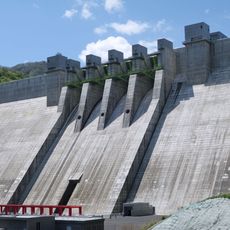
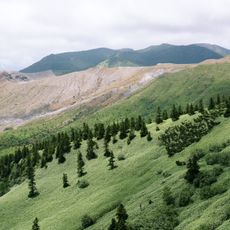
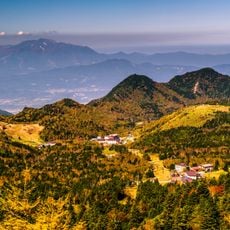
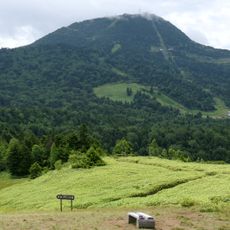
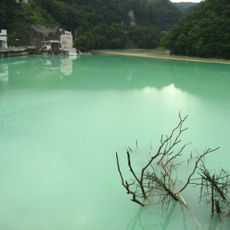
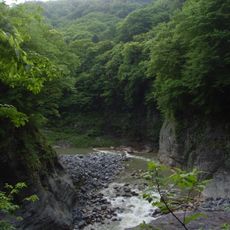
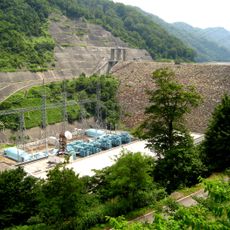
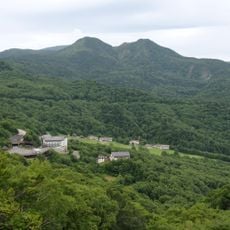
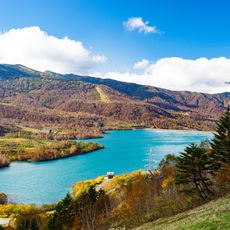
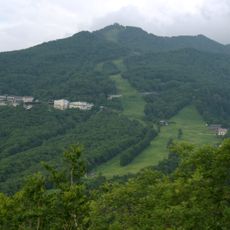
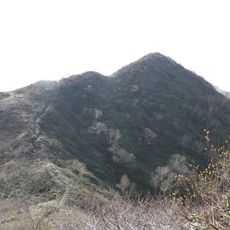
Nozori Dam is a rock-fill dam built across a mountain river in Gunma Prefecture at high elevation. The structure creates a lake surrounded by forested slopes within a national park area.
The site was originally a marsh with scattered ponds called Nozori Pond. In the 1910s the power company Shin'etsu Denki acquired water rights on the Nakatsu River, and after postwar mergers Tokyo Electric Power inherited them. It planned to store water at Nozori Pond to boost output at its downstream plants; work began in 1953 and finished in 1956. It was Japan's first rock-fill dam for power generation, built by dropping rock from above to compact it.
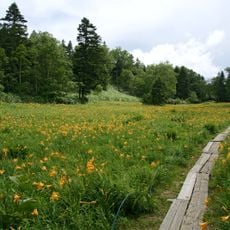
The lake's name, Nozori, comes from Nozori Pond, the marsh pool that occupied the site before the dam. The local name for the daylily blooming around the shore in summer is Nozori-kisuge. The lake was chosen as one of Japan's Dam Lake 100 in 2005 on the recommendation of the former Rokkō village, and its lakeside trail is listed among the 100 walking paths.
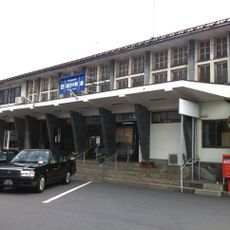
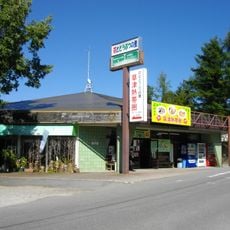
The dam crest carries a narrow paved road where cars take turns crossing, at an elevation of 1,517 m. A bus runs from Naganohara-Kusatsuguchi Station on the JR Agatsuma Line via the Michi-no-eki Kuni and Hanashiki Onsen stops, about 1 hour 15 minutes to the lakeside, only from 1 May to 20 October. National Route 405 is closed beyond the dam toward Kiriake Onsen in Akiyama-go.
Nozori Dam was Japan's first rock-fill dam for power generation, completed in 1956; rocks were dropped from above and compacted by impact. Its upstream face is paved entirely with reinforced concrete, a type found at only four Japanese dams, alongside Obuchi, Ishibuchi and Minase. The crest road sits at 1,517 m, Japan's highest dam crest until Minami-Aiki Dam (1,532 m) was finished.
The community of curious travelers
AroundUs brings together thousands of curated places, local tips, and hidden gems, enriched daily by 94,093 contributors worldwide.