Canal du Midi, Summit-level canal in Occitanie, France
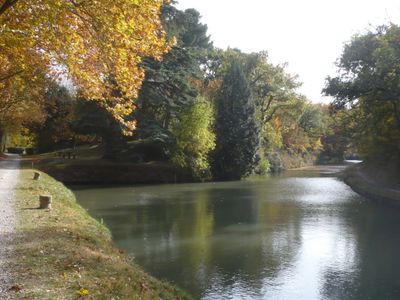
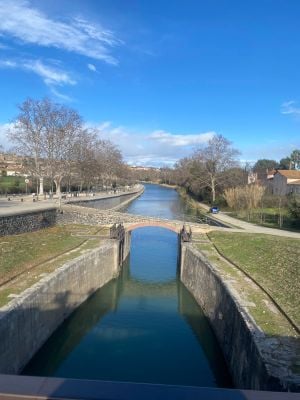
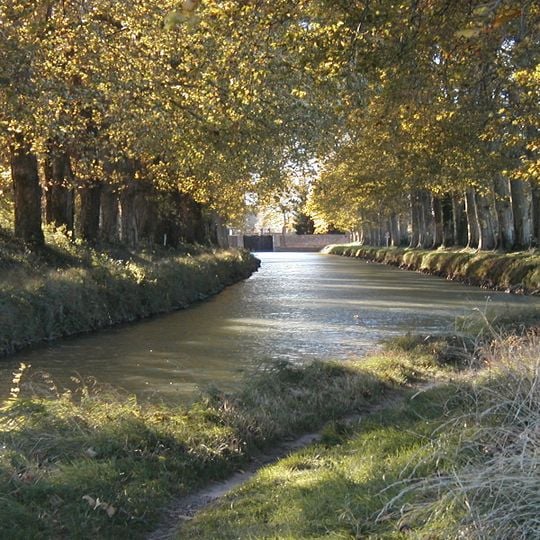
The Canal du Midi is a waterway in southern France linking Toulouse with the Mediterranean coast. The route passes through rolling hills and flat countryside, lined with trees and crossed by stone bridges that span the water.
Louis XIV authorised the work by royal edict in October 1666, and it was supervised by Pierre-Paul Riquet, a fermier général from Béziers, under Jean-Baptiste Colbert's control. The canal was built from 1666 to 1681, linking Toulouse to the Étang de Thau. Riquet's key challenge was carrying water from the Montagne Noire to the Seuil de Naurouze, the canal's highest point.
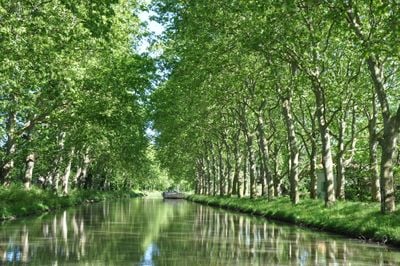
The name refers to the southern French region known for its mild climate and vineyards. Cyclists and boaters share the towpath beneath plane trees while anglers cast their lines along the banks.
Locks open at regular intervals during the season and it helps to start early in the day for longer trips by boat. The paved towpath works well for cycling and walking, with shade along most sections.
The canal's summit at the Seuil de Naurouze, 189.43 m above sea level, is fed by 82 km of feeder channels drawing water from the Montagne Noire, the problem Riquet solved. The longest pound runs 53.87 km between Argens Lock and the Fonserannes Locks.
The community of curious travelers
AroundUs brings together thousands of curated places, local tips, and hidden gems, enriched daily by 92,167 contributors worldwide.