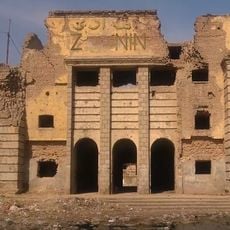
OMAR Mine Museum, Military museum in Kabul, Afghanistan.
The OMAR Mine Museum in Kabul holds 51 of the 53 types of land mines used in Afghanistan, alongside unexploded ordnance, cluster bombs and airdrop bombs. A display case shows a ribbed grey PFM canister and labelled cards for YRM plastic anti-personnel mines of the butterfly type, with green and brown ribbed mine bodies and small green and orange plastic wings. Outside are Soviet-made aircraft, artillery and surface-to-air missiles.
OMAR, the Organization for Mine Clearance and Afghan Rehabilitation, was formed in 1990 with the motto "Clear Mines Save Lives". The museum itself was founded in 1994 to educate visitors about the ongoing war in Afghanistan. It was seriously damaged in an attack on 1 July 2019, which also damaged some of the Soviet aircraft on display.
OMAR stands for the Organization for Mine Clearance and Afghan Rehabilitation, founded in 1990 with the motto "Clear Mines Save Lives". The museum, founded in 1994, teaches school groups to detect and avoid unexploded ordnance, including landmines and cluster bomblets, and tells the stories of people affected by landmines and of those who clear them.
The museum is not open to casual visitors for security reasons; all visits must be arranged in advance through the main OMAR office. OMAR, the Organization for Mine Clearance and Afghan Rehabilitation, formed in 1990 with the motto "Clear Mines Save Lives".
The museum's collection covers 51 of the 53 land mine types used in Afghanistan, alongside unexploded ordnance, cluster bombs and airdrop bombs. Outside are Soviet-built aircraft flown by the Afghan Air Force, among them Su-7, MiG-17, Mi-24, L-39, Yak-40 and An-2 airframes; some were damaged in the 1 July 2019 attack on the museum.
The community of curious travelers
AroundUs brings together thousands of curated places, local tips, and hidden gems, enriched daily by 92,734 contributors worldwide.