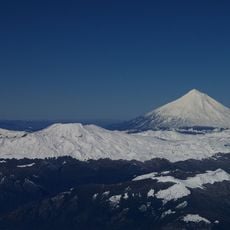
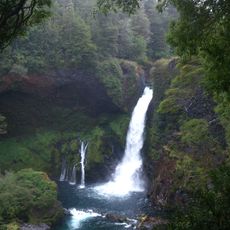
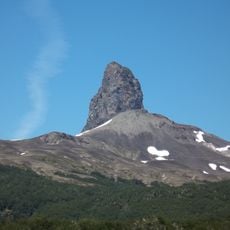
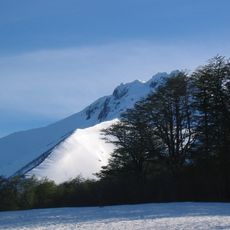
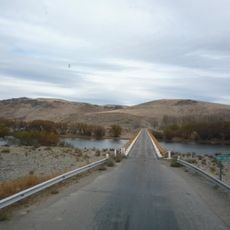
Lácar Lake, Glacial lake in Neuquén Province, Argentina.
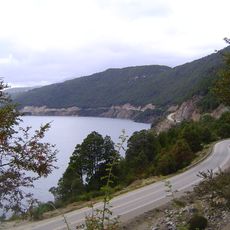
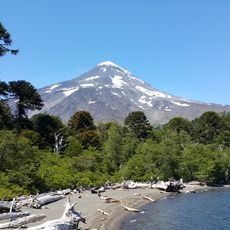
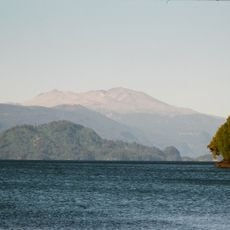
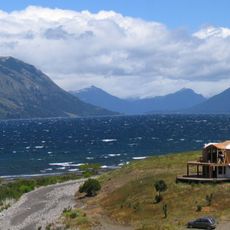
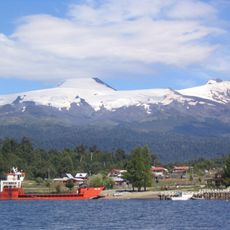
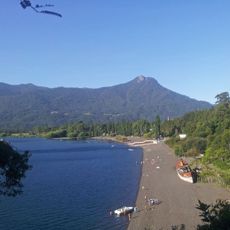
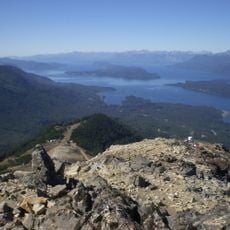
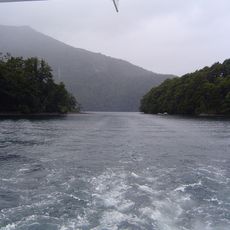
Lácar Lake is a glacial lake in the Andes of Neuquén Province, Argentina, about 25 km long and averaging 3 km wide, with a maximum depth of 277 m off Cerro Abanico. Its shores alternate between flat beaches and steep cliffs, and the western arm beyond a narrows is called Nonthué. San Martín de los Andes sits on the northeastern coast.
Chile and Argentina asked British King Edward VII to arbitrate their Patagonian boundary dispute in the early 20th century. His 1902 award assigned the Lácar basin to Argentina using the high-peaks criterion rather than the watershed divide. Chile accepted the decision, and the Hua-Hum has since been a binational river flowing to the Pacific.
The name Lácar comes from Mapudungun and may mean "dead wizard" (lai, calcu) or "collapsed cliffs" (lar, carcu). The lake and the smaller Lolog appear in Mapuche oral tradition as part of a creation myth, which gives both lakes a sacred character for the Mapuche people.
The western half of the southern shore is a strict reserve with no access, guarded by the national parks administration. Boats are regulated by the Argentine Naval Prefecture: jet skis, water skiing and wakeboarding are banned, while sailing and sea kayaks are allowed. A catamaran runs daily between Lácar and Nonthué in high season. Water is around 12 °C and reaches about 22 °C in February.
Lácar is the northernmost lake on the eastern side of the Andes that drains to the Pacific, which is why Chile claimed it and its catchment until 1902 under the 1881 Boundary Treaty. Its outflow runs through the Huahum Pass into Chile.
The community of curious travelers
AroundUs brings together thousands of curated places, local tips, and hidden gems, enriched daily by 94,535 contributors worldwide.