Motu Motiro Hiva Marine park, Marine protected area in Easter Island Province, Chile
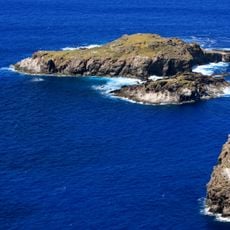
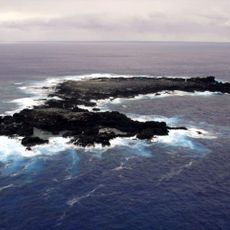
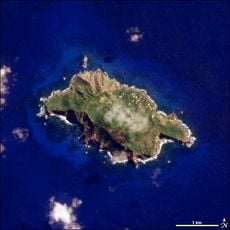
Motu Motiro Hiva Marine Park is Chile's largest marine park, covering 150,000 km² of sea around Salas y Gómez Island at the eastern end of Polynesia, about 3,500 km west of mainland Chile. Its seabed includes 23 sampled seamounts of the Nazca and Salas y Gómez ridges, where 208 invertebrate genera and 131 fish genera have been recorded.
The idea of protecting the Salas y Gómez and Nazca underwater ridges was first presented at the Deepsea Coral Symposium in Wellington in 2008. After a March 2010 expedition by Oceana, National Geographic and the Universidad Católica del Norte, the decree creating the park was signed on 18 November 2010 by Economy Minister Juan Andrés Fontaine, with Environment Minister María Ignacia Benítez and Pierre-Yves Cousteau present in Quintay. Greenpeace criticised it as a "paper park" because the decree did not close the area to trawling.
The park is administered jointly by Chile's state and the Rapa Nui people: six of the eleven members of the Koro Nui o Te Vaika, the sea council, are Rapa Nui chosen democratically for four-year terms, alongside representatives of several ministries and CODEIPA. The 2022-2026 council members are Felipe Nahoe, Arturo Tepano, Sebastián Yancovic Pakarati, Marcela Hey, Clemente Pate and Ricardo Hito.
This area is remote and can only be accessed through scientific expeditions with specialized equipment. Visitors should know that entry is restricted to research and conservation activities.
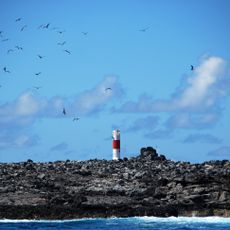
The 2010 Oceana expedition confirmed what Rapa Nui fishers already reported: the Galapagos shark is found in abundance at Salas y Gómez and practically nowhere else in Chilean waters. The park also shelters 12 of Chile's 93 identified seabird nesting sites, including the Pascua petrel and the red-tailed tropicbird.
The community of curious travelers
AroundUs brings together thousands of curated places, local tips, and hidden gems, enriched daily by 94,693 contributors worldwide.