Lake Junín, Andean lake in Junín, Peru
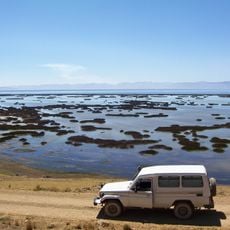
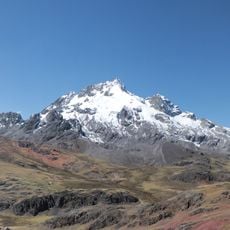
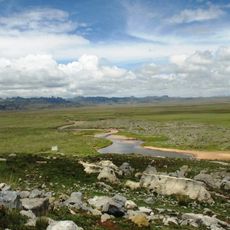
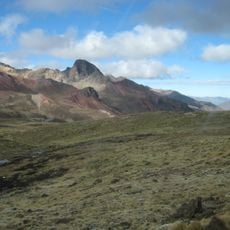
Lake Junín (Chinchaycocha) lies at 4,082.7 m in the Andean highlands, mostly in Junín Region with its northwestern tip in Pasco Region. It is the largest lake entirely within Peru, drained by the Mantaro River; the Upamayo Dam at the outflow regulates its level. Emergent vegetation fringes the shores, reaching up to 6 km wide in places, and the deepest point, about 10 km off Huayre, is 12 m.
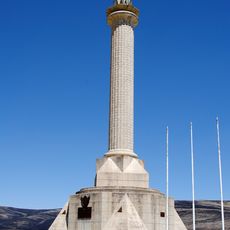
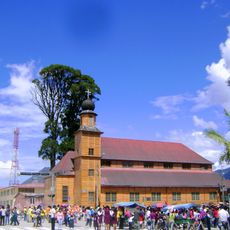
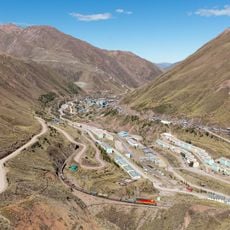
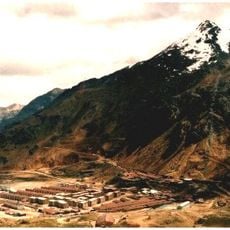
During the colonial era the lake was called Los Reyes, the same name as the viceregal capital. It later took the name Junín from the nearby town and the Pampa de Junín, where Simón Bolívar won the Battle of Junín during the independence struggle. Since 1933 mining residues have flowed into the lake, and sewage from Junín and Carhuamayo also pollutes it.
The name Chinchaycocha comes from Quechua, meaning "northern lake" or "ocelot lake"; during colonial times the lake was called Los Reyes, and it took its present name from the town of Junín after the Battle of Junín, where Simón Bolívar defeated Spanish troops. The lake lies within the Junín National Reserve, and its totora reed beds and marshes shelter Andean waterbirds, frogs and vizcachas.
Visitors can observe water birds at several points around the lake, especially between April and November. Walking paths around the shoreline allow you to explore the landscape and see different bird and plant species.
The lake is home to three bird species found nowhere else in the world: the Junín grebe, the Junín rail, and the white-tufted grebe. These rare species are adapted to the lake's specific ecosystem and can only be encountered in this location.
The community of curious travelers
AroundUs brings together thousands of curated places, local tips, and hidden gems, enriched daily by 92,719 contributors worldwide.