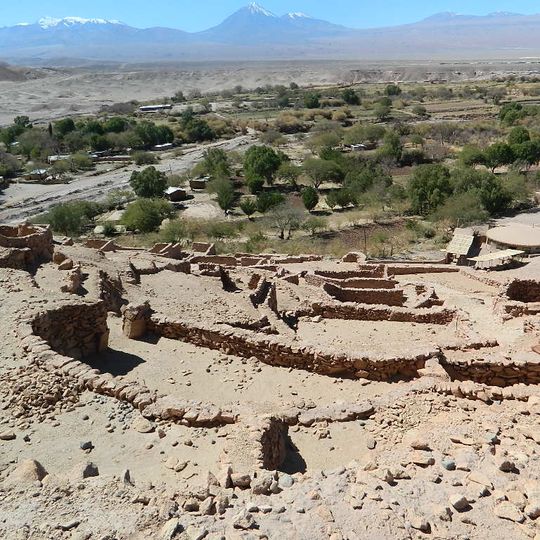
Pukará de Quitor, Pre-Hispanic fortress in San Pedro de Atacama, Chile
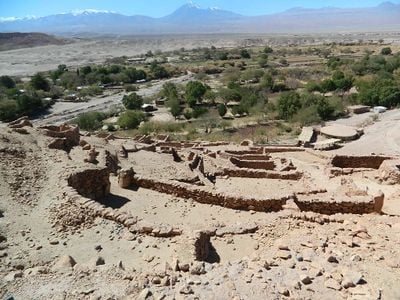
Pukará de Quitor is a stone fortress on the south slope of the Quebrada de Quitor, 3 km north of San Pedro de Atacama. Its roughly 160 circular and square structures, mostly single-room with attached silos, are built of unworked liparite stone and include a serpentine perimeter wall. The site covers 2.9 hectares and rises 80 meters above the cultivation fields at its base.
The Atacameño people built this fortress in the 12th century as a stronghold for their community. In the 16th century, Spanish forces under Francisco de Aguirre attacked the site with cannons, marking a major turning point when European military technology clashed with indigenous defenses.
The name comes from the Ayllu de Quitor, the pre-Hispanic farming community whose fields lay at the foot of the hill. In peacetime, Atacameño chiefs used pukarás like this one to assert authority over surrounding villages. Residents gathered chañar and algarrobo fruit and practised pottery, copper metallurgy, textiles and basketry.
The site sits about 3 kilometers north of San Pedro de Atacama on higher ground that opens up views of the valley and river below. Visiting involves climbing over rocky slopes, so sturdy footwear and reasonable physical fitness make the walk more comfortable.
The site's name comes from the Ayllu de Quitor, the pre-Hispanic farming community whose fields began at the foot of the hill. The Quechua word pukara means fortress. The roughly 160 structures include watchtowers and grain stores, and the roofs, where they survive, were built of chañar or algarrobo beams, branches, ichu straw and mud.
The community of curious travelers
AroundUs brings together thousands of curated places, local tips, and hidden gems, enriched daily by 93,882 contributors worldwide.