Songo Mnara, Archaeological site in southern Tanzania.
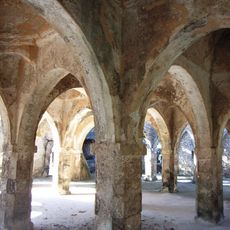
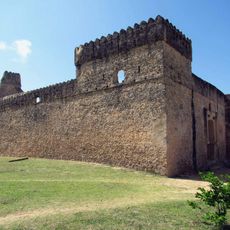
Songo Mnara is a ruined Swahili stone town on Songo Mnara Island in the Kilwa District of Tanzania's Lindi Region. Its walls, mosques and houses were built from rough coral and mortar between the 14th and 16th centuries. Archaeologists have recorded six mosques, four cemeteries, about two dozen house blocks and three enclosed open spaces, with more than 40 houses surrounding the town. A roughly 40 by 40 metre palace stood in the southwest.
The site emerged in the 14th century and flourished until the 16th century as a central trading junction connecting East Africa with merchants from Arabia, India, and China. It became a key meeting point for traders from different regions during this period.
The settlement shows traces of trade connections through spaces designed for merchants from distant regions. These areas allowed extended stays for visitors from across the Indian Ocean and encouraged exchange between different cultures.
The ruins lie on Songo Mnara Island, south of Kilwa Kisiwani, and are exposed to wind, weather and erosion. The site was on the UNESCO List of World Heritage in Danger from 2004 to 2014 because no measures were in place to halt the decay of the ruins. Visitors should avoid touching or moving historic objects and should not damage the coral-stone structures.
Songo Mnara's town wall is singled out by archaeologists as an unusual feature among Swahili stone towns. Excavations of more than 40 surrounding houses, including House 44 with its plaster floors and 15th-century ceramics, showed that domestic spaces were shared rather than occupied by single households.
The community of curious travelers
AroundUs brings together thousands of curated places, local tips, and hidden gems, enriched daily by 94,795 contributors worldwide.