Ruins of Kilwa Kisiwani and Ruins of Songo Mnara, Medieval trade port ruins in Kilwa District, Tanzania.
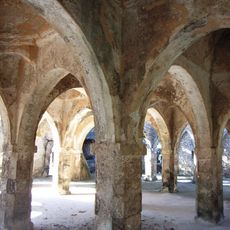
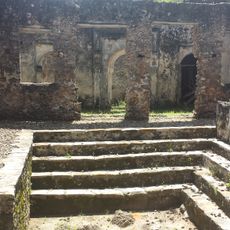
The Ruins of Kilwa Kisiwani and Ruins of Songo Mnara are the remains of two medieval trading settlements built from coral stone on separate islands off the Tanzanian coast. The two sites together cover mosques, palaces, warehouses, and houses, all showing how a prosperous port community was organized along the Indian Ocean trade routes.
Kilwa Kisiwani was founded around the 9th century by traders from the Persian Gulf and grew into a major hub for gold and ivory by the 13th century. Portuguese raids in the 16th century broke the city's strength, and both islands were gradually abandoned over the following generations.
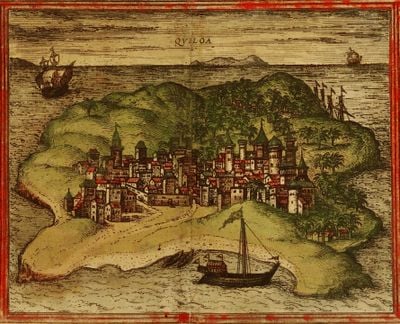
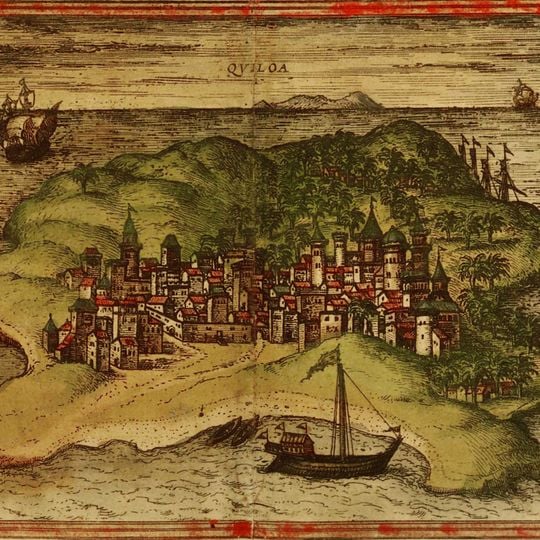
Kilwa Kisiwani appears in the writings of the Moroccan geographer Ibn Battuta, who visited in 1331 and described houses of coral stone with flat roofs supported by mangrove poles. The island's name was rendered as Quíloa in Portuguese chronicles, a form still used in some historical accounts. A Muslim community lives on the island today.
Both sites are only reachable by boat from the mainland town of Kilwa Masoko, and there are no fixed bridges or walkways connecting them to the shore. A local guide is worth hiring, since signage on the ruins is limited and many areas are easy to miss without some direction.
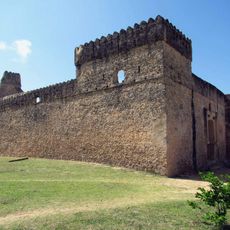
Portuguese masons under Tomás Fernandes began a stone-and-lime fort at Kilwa on 25 July 1505, the day after the conquest, and by February 1507 it held 73 firearms. It was given up in 1512, its role passing to the Torre Velha in Mozambique. The smaller square structure called the Gereza, 20 m a side with two corner towers, was long dated to the 19th century; some researchers now propose the 18th.
The community of curious travelers
AroundUs brings together thousands of curated places, local tips, and hidden gems, enriched daily by 94,083 contributors worldwide.