Great Mosque of Kilwa, Medieval mosque in Kilwa Kisiwani, Tanzania
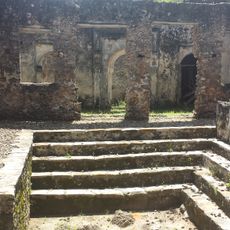
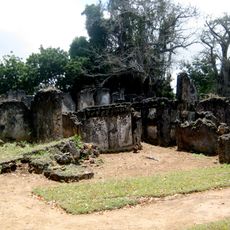
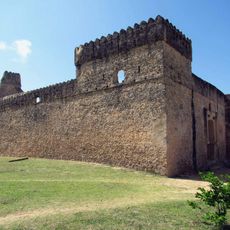
The Great Mosque of Kilwa is a medieval building on the coast with walls built from coral stone and high vaulted ceilings supported by stone columns. The interior is divided into multiple sections separated by pillars that hold up the roof.
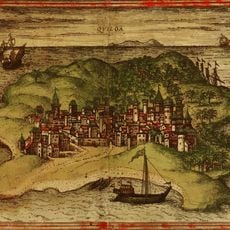
The mosque was likely founded in the 10th century, with its northern prayer hall built between 1131 and 1170. A southern extension with a great dome was added around 1300 under Sultan al-Hasan ibn Sulaiman, who also built the nearby Palace of Husuni Kubwa. An earthquake in 1331 destroyed much of the structure, though the dome survived; the mosque was abandoned in the 18th century.
The mosque's name in Swahili is Msikiti Mkuu wa Kilwa. Its mihrab has a pointed arch, capitals, pilasters and a fluted semi-dome unlike the original building, and protruding coral blocks mark where a wooden minbar stood. Traces of red paint suggest the mosque was once decorated in red and black.
The mosque is a ruin within the Kilwa Kisiwani UNESCO World Heritage Site, reached by boat from Kilwa Masoko; no guided tours of the mosque itself are offered. Coral-stone walls, fallen roof sections and uneven ground require sturdy footwear. The site lies on a small hill above the qibla, so allow time to walk between the northern prayer hall and the southern domed extension.
The building has an unusual layout with sixteen sections held up by nine pillars, which sets it apart from other mosques of its time. This special arrangement made it possible to build without a central courtyard.
The community of curious travelers
AroundUs brings together thousands of curated places, local tips, and hidden gems, enriched daily by 94,070 contributors worldwide.