Sukuh, Hindu temple in Karanganyar, Indonesia
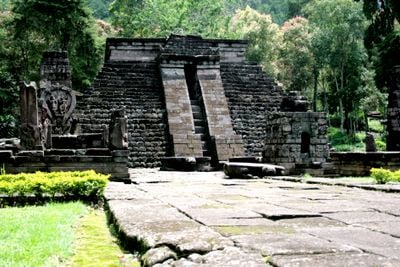
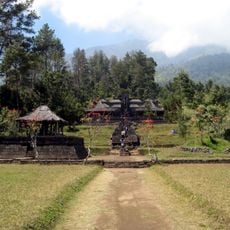
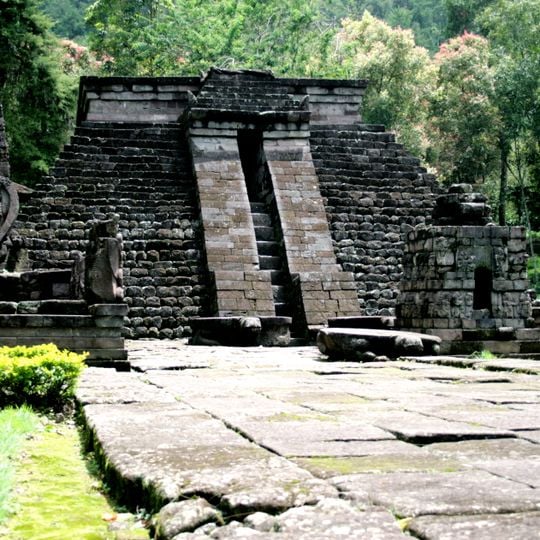
Sukuh is a 15th-century Hindu temple on the western slope of Mount Lawu in Berjo, Ngargoyoso, Karanganyar, Central Java. Its main monument is a truncated pyramid of dark grey and brownish andesite blocks, 8.7 metres high, with a steep central stairway flanked by smooth pale balustrades leading to a plain gateway. Three terraces rise behind one another, each entered through a stone gate.
A British resident of Surakarta named Johnson first reported this temple in 1815 while gathering material for Thomas Stamford Raffles' book The History of Java. His discovery brought this remote worship site into the attention of Western scholars for the first time.
Stone walls display carved scenes from the Sudamala tale of the Mahabharata, including the figure of Sahadewa and the transformation of goddess Durga. These reliefs form an important part of the religious symbolism visitors can still observe while walking through the terraces today.
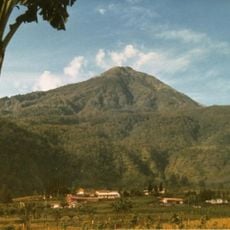
The temple sits roughly 20 kilometers from Karanganyar city and 36 kilometers from Surakarta in the mountains. The site continues to function as an active prayer location where worshippers bring incense as offerings.
The architecture resembles the building style of the Maya in Mexico and the Inca in Peru, which is uncommon for Javanese temples. This pyramid-shaped design clearly differs from the typical multi-tiered towers found on other Indonesian islands.
The community of curious travelers
AroundUs brings together thousands of curated places, local tips, and hidden gems, enriched daily by 94,233 contributors worldwide.