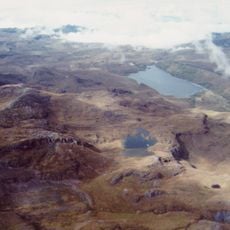
Lake Otún, High-altitude lake in Los Nevados National Park, Colombia.
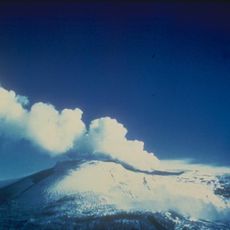
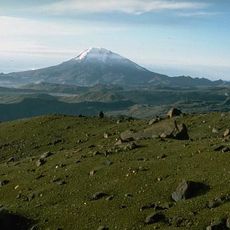
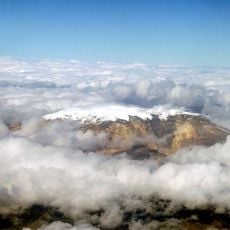
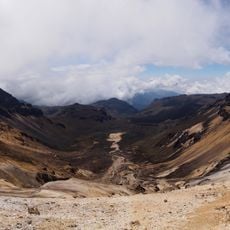
Lake Otún is a natural reservoir in Los Nevados National Natural Park, in the Risaralda department of Colombia, at about 3,950 m above sea level in páramo grassland. Formed by volcanic and glacial action, it covers roughly 1.5 km² to a depth of 70 m and is fed mainly by meltwater from the Nevado de Santa Isabel. Its waters seep beneath caves formed by volcanic flows and, with seepage from Laguna La Leona, give rise to the Otún River.
In 2008 the Laguna de Otún wetland complex was designated a Ramsar site, number 1781, covering 65.8 km² within Los Nevados National Natural Park on the Cordillera Central. A 2006 fire burned 3,000 hectares, nearly half of the wetland, which is still recovering. The lake itself formed in an extinct crater through volcanic and glacial action.
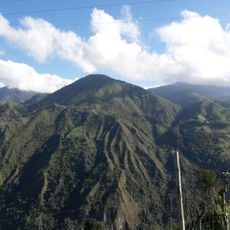
The lake's name is shared with the Otún River, which is not fed by surface outflow but by water filtering under volcanic caves; together with seepage from La Leona lagoon it forms the river that supplies Pereira's aqueduct. The surrounding páramo is home to frailejones (Espeletia) and the lake is a Ramsar site since 2008.
Reaching the lake on foot takes several hours from the nearest access point, and the high altitude means the body needs time to adjust before and during the hike. Warm, waterproof layers are a must, as cold wind and rain can arrive without warning at any point in the day.
The Ramsar designation, granted in 2008 as site no. 1781, covers 65.8 km², far more than the 1.5 km² lake surface. It protects a complex of interconnected lakes, marshes and peat bogs, including habitat for the Andean condor and the masked mountain-toucan. A 2006 fire burned 3,000 hectares, nearly half the wetland, which is still recovering.
The community of curious travelers
AroundUs brings together thousands of curated places, local tips, and hidden gems, enriched daily by 92,729 contributors worldwide.