Ocetá Páramo, High-altitude ecosystem in Boyacá, Colombia.
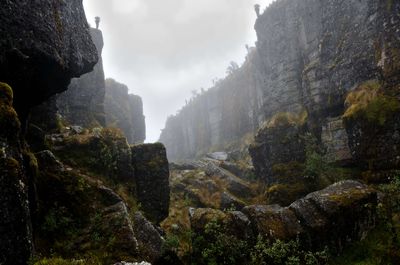
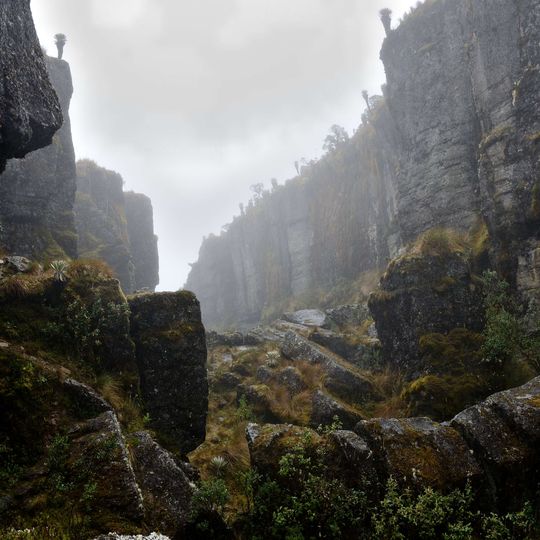
Ocetá Páramo spans 5,771 hectares between 2,950 and 3,950 metres in the Eastern Ranges of the Colombian Andes, across Monguí, Mongua and Tópaga. Its upper reaches hold marshes and small lakes, including Laguna Negra, fed by the Penagos waterfall. The rock formation known as the Ciudad de Piedra forms a moss-covered corridor about 100 metres long with walls up to 15 metres high.
Before the Spanish conquest, the Muisca of the Altiplano Cundiboyacense held the páramo sacred; the Monguí region was populated by the Sanoa tribe, loyal to the iraca of Suamox. In the lower part of the páramo, Muisca women gave birth in small man-made pools called Tortolitas, oval depressions still visible today. Myths and legends from pre-Columbian and colonial times survive around the site.
The frailejones of Ocetá belong to the genus Espeletia, with Espeletia barclayana, E. jaramilloi, E. congestiflora and E. argentea at lower altitudes and E. grandiflora across a wider range. The Muisca considered the páramo sacred and gave birth in oval pools called Tortolitas in its lower part. The white-tailed deer, their main food, was hunted here over centuries.
Weather in the páramo changes fast, so visitors should bring warm and waterproof clothing even if the morning starts clear. Starting early gives the best chance of good visibility before clouds gather in the afternoon.
The Ciudad de Piedra is a rock formation whose fallen blocks have created alleys about 100 metres long, with walls up to 15 metres high, their surfaces covered in moss. The name comes from the resemblance of these passages to streets between buildings.
The community of curious travelers
AroundUs brings together thousands of curated places, local tips, and hidden gems, enriched daily by 93,802 contributors worldwide.