Painted Hills, Geologic site in Wheeler County, Oregon, United States
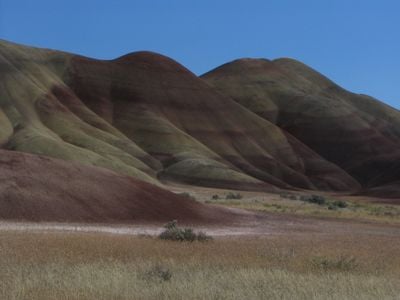
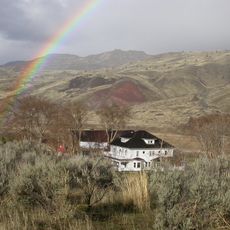
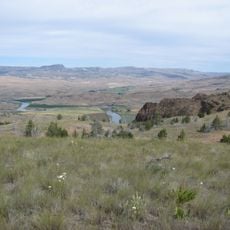
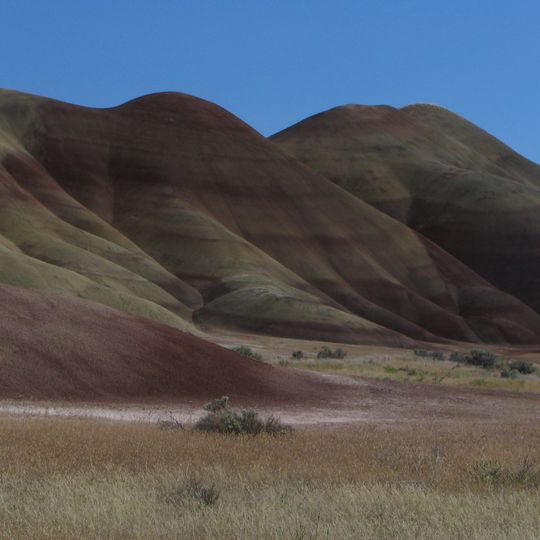
Painted Hills are part of the John Day Fossil Beds National Monument and show bands of red, beige and orange sediment stretching across several elevations. The colors appear in horizontal and wavy stripes on the surface of the hills, which are made of weathered volcanic rock.
The deposits formed around 35 million years ago when eruptions from the Cascade Range carried ash and pumice eastward. The layers preserved remains of plants and animals that lived in a wetter climate.
The name refers to the colorful claystone layers that look like brushstrokes on the rounded hills. Visitors follow wooden boardwalks to different viewing points where they can observe the folds and colors.
The trails are short and lead on paved or raised boardwalks to different points along the edge of the colored areas. Late afternoon offers the best light to see the contrasts between the colors.
The black marks on the hills are not basalt but manganese oxide, and the dark soil is lignite formed from vegetation that grew along the ancient floodplain. Leaf fossils from old lake beds include redwood, cinnamon, fig and alder, plants of a warmer, wetter climate.
The community of curious travelers
AroundUs brings together thousands of curated places, local tips, and hidden gems, enriched daily by 92,876 contributors worldwide.