Cape Kiwanda State Natural Area, Coastal park in Pacific City, Oregon, United States
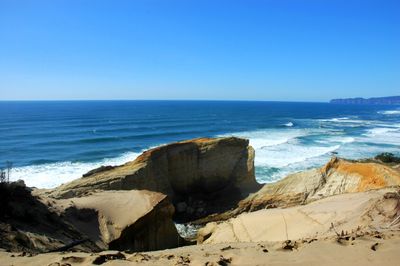
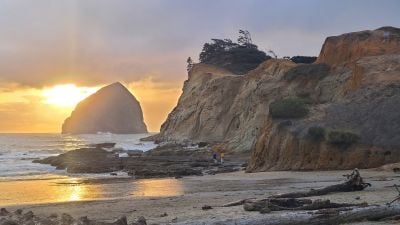
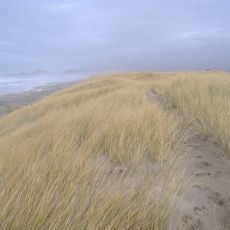
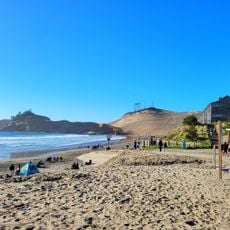
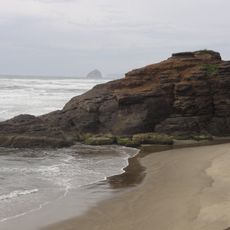
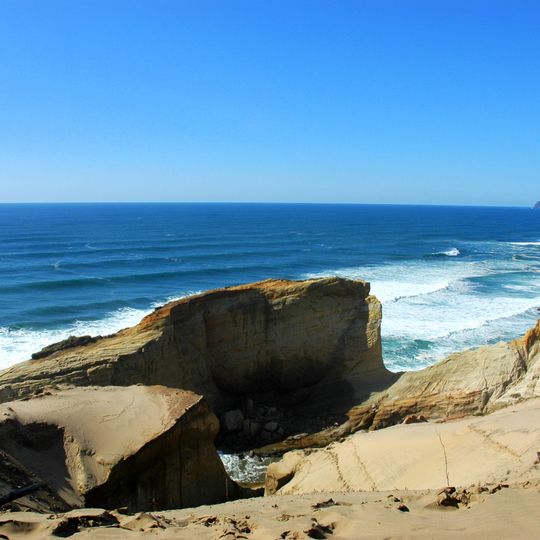
Cape Kiwanda is a sandstone headland in Pacific City, Oregon, part of the Astoria Formation, with a sea cave hollowed at its base and layered tan, ochre, and pale grey rock. Chief Kiwanda Rock, a basalt sea stack, stands about half a mile southwest. Holocene parabolic dunes cover the highest parts, and the cape is on the Three Capes Scenic Route.
Cape Kiwanda became an Oregon state natural area in 1973. The designation protected a sandstone promontory of the Astoria Formation, including Holocene parabolic dunes on its highest parts. The cape was once joined to Chief Kiwanda Rock, a Miocene basalt sea stack about half a mile southwest; a basalt dike on the south side shielded the softer sandstone until erosion separated the two.
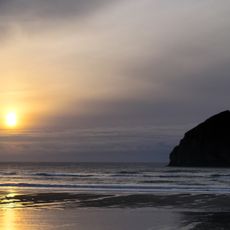
Pacific City's beach is a launch point for dory boats, flat-bottomed craft that fishermen push off the sand into the surf. The cape's name is often linked to Chief Kiwanda Rock, the basalt sea stack half a mile southwest, one of three Oregon coast features called Haystack Rock.
The park lies just north of Pacific City, reached from the end of the beach road; the sandstone headland is climbed on foot, and the upper paths run close to cliff edges that erode and fall away. The beach below is sand, used by dory boats launching and landing, so keep clear of vehicles and cables. Expect wind, spray and soft sand; sturdy shoes help on the dunes and the climb to the top.
The sandstone cape continuously erodes from wave and wind action, reshaping its surface and creating new patterns regularly. Visitors can witness these natural processes at work, observing how the landscape transforms with each visit.
The community of curious travelers
AroundUs brings together thousands of curated places, local tips, and hidden gems, enriched daily by 92,792 contributors worldwide.