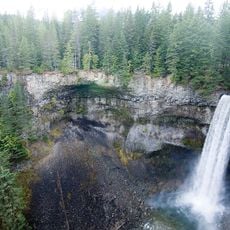
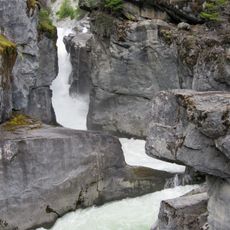
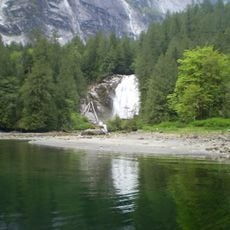
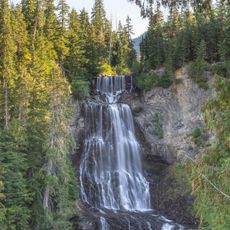
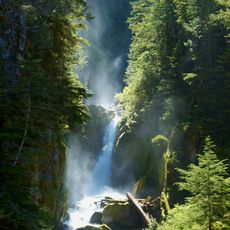
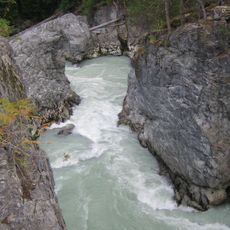
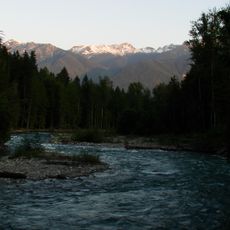
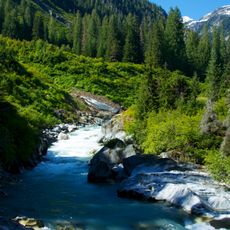
Keyhole Falls, Punchbowl waterfall in Lillooet River, British Columbia, Canada.
Keyhole Falls is the largest waterfall on the Lillooet River in British Columbia, Canada, dropping 35 metres in a punchbowl form. The river pours over an undercut cliff into a basin, and the opening resembles an old-fashioned keyhole. The falls are unofficial and have no developed trail to a clear view.
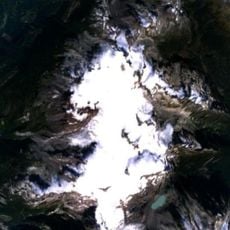
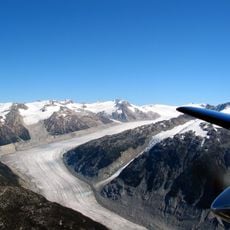
Keyhole Falls formed when a Plinian eruption of the Mount Meager massif about 2,350 years ago dammed the Lillooet River with breccia. Water later eroded the thick breccia until it broke through, and the resulting flood was strong enough to carry away house-sized blocks of the rock. The river then cut the undercut cliff that gives the falls their keyhole form.
The falls take their name from their outline: the Lillooet River pours through a notch in the breccia and the opening, seen from the rim, looks like an old-fashioned keyhole. The name is unofficial, and the Hebrew source notes the area is sometimes closed to hikers because of grizzly bear activity.
No developed trails lead to a clear view of the falls, and the undercut cliff means looking down into the canyon from its edge does not reveal them. The area around the falls is sometimes closed to hikers because of grizzly bear activity.
The waterfall is fed by the Lillooet River, which was dammed by breccia from a Plinian eruption of the Mount Meager massif about 2,350 years ago. When the water first broke through the barrier, the flood was large enough to carry away house-sized blocks of breccia.
The community of curious travelers
AroundUs brings together thousands of curated places, local tips, and hidden gems, enriched daily by 93,668 contributors worldwide.