Carpenter Lake, lake in British Columbia, Canada
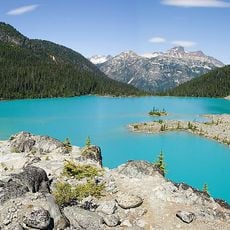
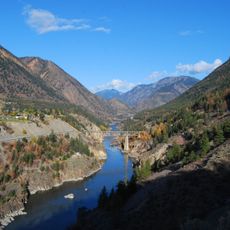
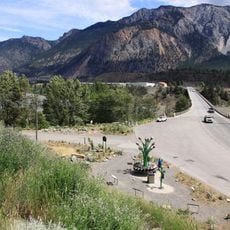
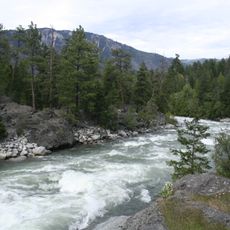
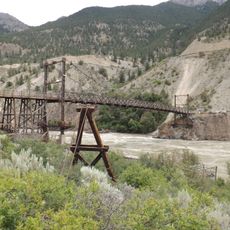
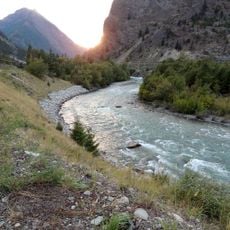
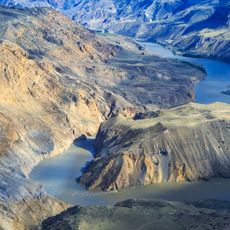
Carpenter Lake, officially Carpenter Lake Reservoir, is the largest of the three reservoirs of the Bridge River Power Project, in the mountains west of Lillooet, British Columbia. It was formed in 1951 when the Bridge River was diverted by Terzaghi Dam through a tunnel in Mission Mountain into Seton Lake. The reservoir is about 50 kilometres long and covers nearly 50 square kilometres; its upper reaches beyond the flooded gold-mining town of Minto City often become mudflats as the water level fluctuates.
Carpenter Lake was created in 1951 when the Bridge River was diverted by Terzaghi Dam through a tunnel in Mission Mountain into Seton Lake, part of the Bridge River Power Project. The flooding submerged ranches, homesteads and the gold mining town of Minto City, changing the upper Bridge River valley permanently.
The lake is named after a Mr. Carpenter, an engineer who moved to Canada in 1909 and did much of the early design work on the power project for the firm Sanderson and Porter. He supervised construction of the first tunnels through Mission Ridge from 1927 to 1931 and retired in 1944.
Carpenter Lake stretches about 50 km along the upper Bridge River, and the section beyond the flooded Minto City often turns to mudflat when reservoir levels drop. Plan around these fluctuations, and note that the lake lies roughly 185 km north of Vancouver in mountainous country west of Lillooet.
The reservoir takes its name not from the dam but from a Mr. Carpenter, an engineer who moved to Canada in 1909, did early design work on the power project for Sanderson and Porter, and supervised the first tunnels through Mission Ridge from 1927 to 1931. He retired in 1944.
The community of curious travelers
AroundUs brings together thousands of curated places, local tips, and hidden gems, enriched daily by 94,097 contributors worldwide.