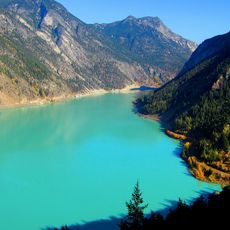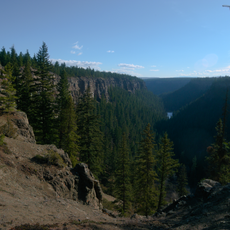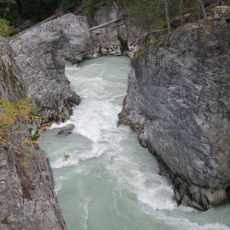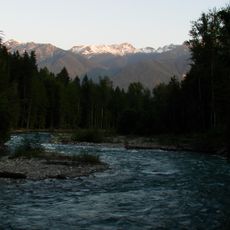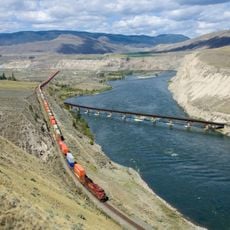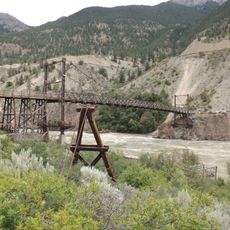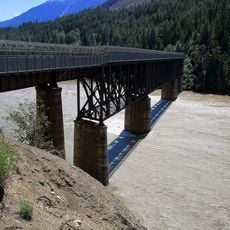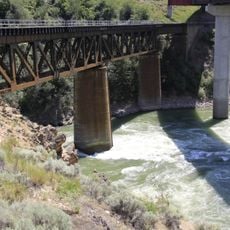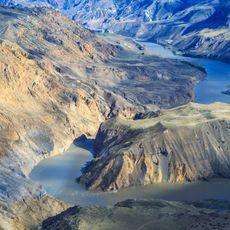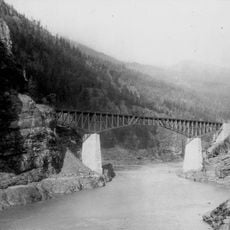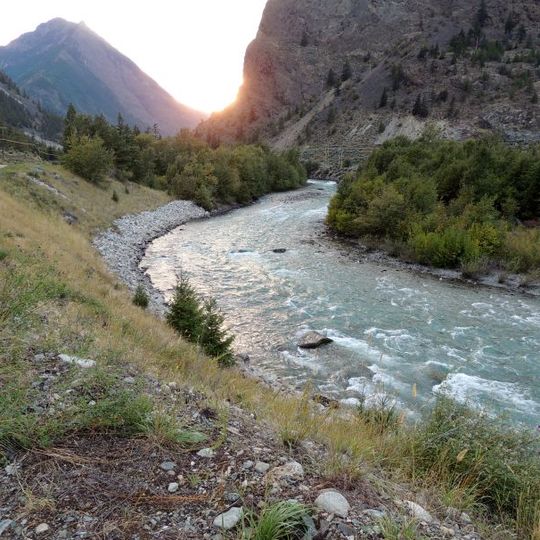
Seton River, Mountain brook in British Columbia, Canada.
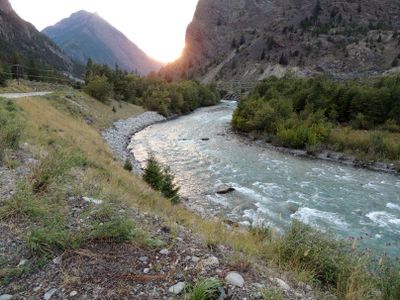
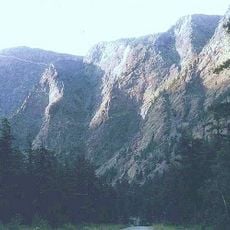
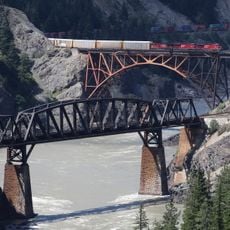
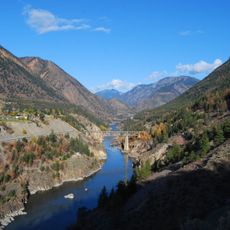
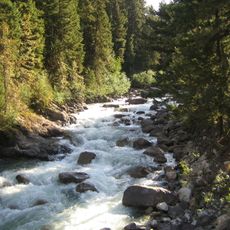
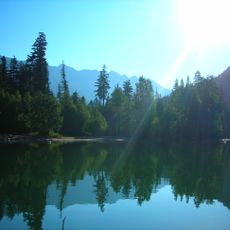
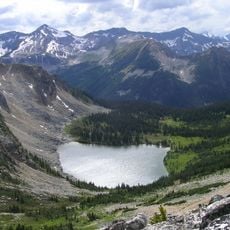
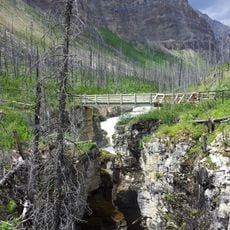
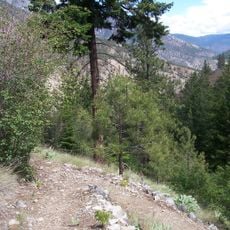
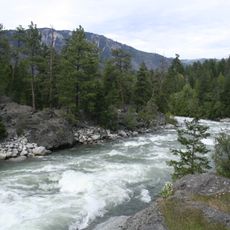
Seton River is a mountain brook in British Columbia that flows eastward from Anderson Lake through Seton Lake before joining the Fraser River at Lillooet after traveling roughly 8 kilometers. The water moves through a narrow valley between forested hillsides, with sections ranging from calm pools to swifter rapids.
The river received its official name in 1950 from the Canadian Geographic Names Board, replacing earlier names like Seton Portage River and Portage Creek. The construction of a dam the following year transformed how the waterway was used and shaped its long-term character.
The river held deep significance for the St'at'imc Nation, and traces of their traditional underground winter dwellings called kekulis can still be found near the water. These structures reflect a long connection between the people and this landscape.
The easiest access to the river is from nearby Lillooet, where several short trails lead down to the water's edge. The best time to see salmon migrations is in autumn, when fish move upstream in large numbers.
A concrete dam about 18 meters high was built in 1956 and includes a fish ladder alongside a diversion canal that carries water to the nearby Seton Powerhouse. This combination allows salmon to move upstream while simultaneously generating electricity.
The community of curious travelers
AroundUs brings together thousands of curated places, local tips, and hidden gems, enriched daily by 90,828 contributors worldwide.