Toling Monastery, Buddhist monastery in Zanda County, Tibet, China
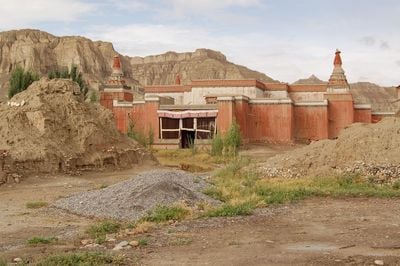
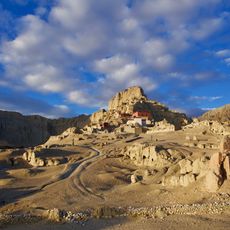
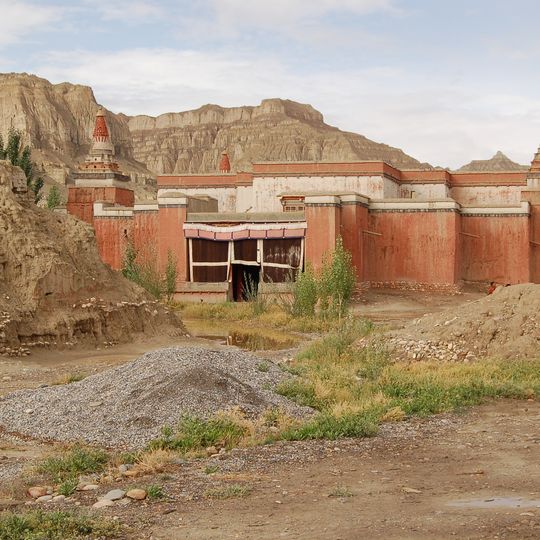
Toling Monastery is a Tibetan Buddhist monastery in western Tibet, sitting on a high plateau at around 3,800 meters (12,500 ft) above sea level. The complex is made up of several main halls and is flanked by a row of roughly 108 earth-built stupas that follow the course of a nearby river.
The monastery was founded in 996 by a king of the Guge Kingdom and quickly became the main center for translating Buddhist texts into Tibetan in the west of the region. This work attracted scholars from India and neighboring areas, giving the site a role that went far beyond its own walls.
The monastery holds ancient murals spread across several halls, showing religious figures and scenes rooted in Tibetan Buddhist tradition. The style of these paintings reflects a moment when western Tibet was a crossroads for artistic ideas coming from neighboring regions.
The site sits at high altitude, so it is wise to give yourself time to adjust before walking around the full complex. The stupas along the river are easy to reach on foot and can be explored without needing to enter any buildings.
The great translator Rinchen Zangpo, one of the most important figures in bringing Buddhism back to Tibet in the 10th century, was closely associated with this monastery. His work here helped shape how Buddhist practice developed across a much wider part of the region.
The community of curious travelers
AroundUs brings together thousands of curated places, local tips, and hidden gems, enriched daily by 91,384 contributors worldwide.