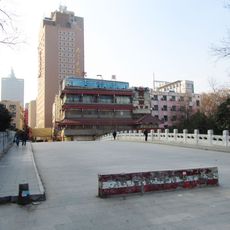
Purple Mountain, Mountain park in Nanjing, China.
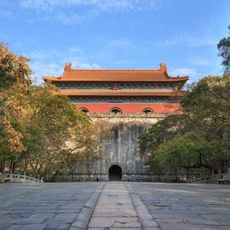
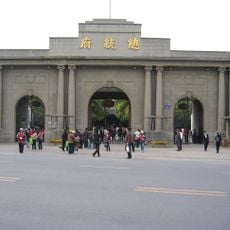
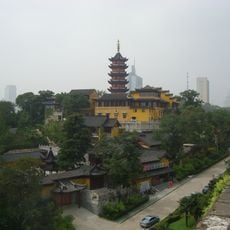
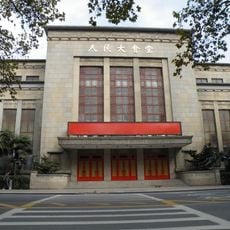
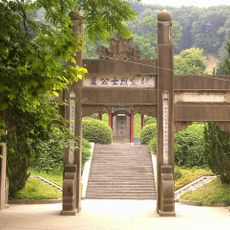
Purple Mountain (Zijin Shan) is a ridge about 7 km east-west and 3 km north-south, covering roughly 20 square kilometres east of Nanjing, with its main peak, Beigaofeng, at about 448 metres. Its slopes hold the Xiao Mausoleum of the Hongwu Emperor, the Sun Yat-sen Mausoleum, Meiling Palace and Linggu Temple, alongside some 200 heritage and scenic sites and about a dozen research institutes and universities.
Originally called Bell Mountain (Zhongshan), it was renamed Mount Jiang after Sun Quan proclaimed the spirit of the Eastern Han official Jiang Ziwen its god during the Three Kingdoms era. In 1531, during the Ming Jiajing reign, it became Mount Shenlie because the Xiaoling tomb of the Hongwu Emperor lay on its slopes. Sun Yat-sen's mausoleum was later built at its foot.
The mountain holds several temples and memorial sites where visitors can see traditional architecture and incense offerings. These places shape daily life for many people who come here to meditate or pay respects to the deceased.
The mountain is accessible on foot, but a cable car service takes visitors to the summit more quickly. Good footwear and plenty of water are important, especially on warmer days.
The mountain houses an observatory with ancient astronomical instruments on display and ongoing scientific research. It stands as one of China's oldest and most important sites for astronomical observation.
The community of curious travelers
AroundUs brings together thousands of curated places, local tips, and hidden gems, enriched daily by 92,793 contributors worldwide.