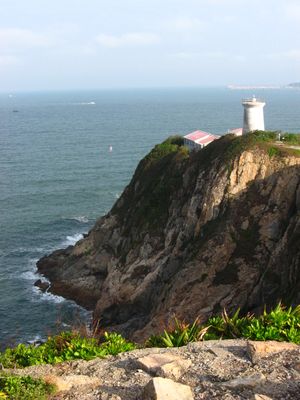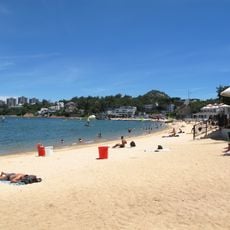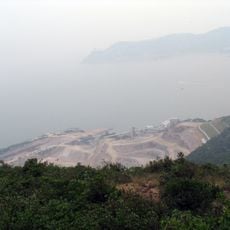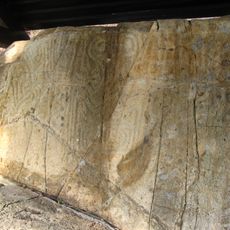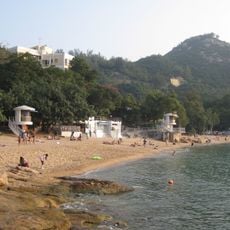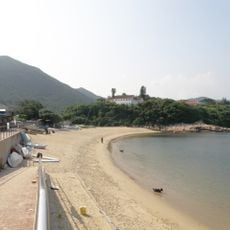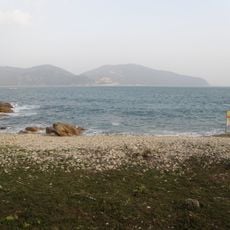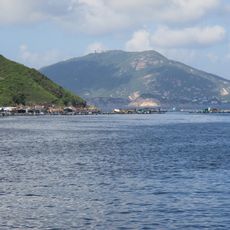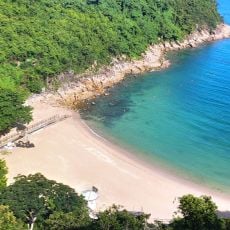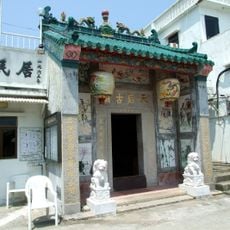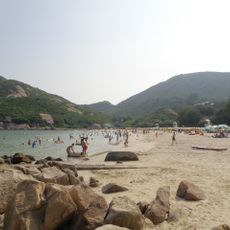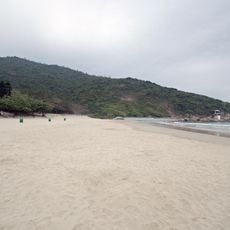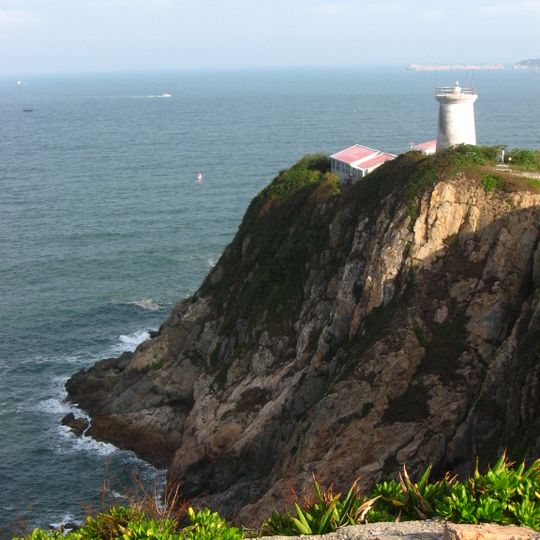
Cape D'Aguilar, Marine reserve and lighthouse at Southern District, Hong Kong.
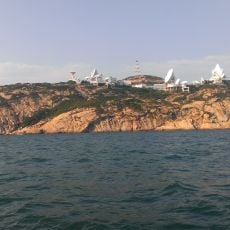
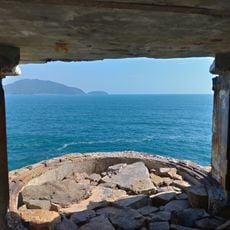
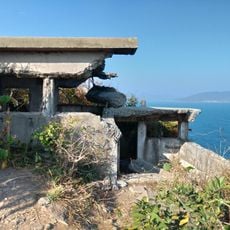
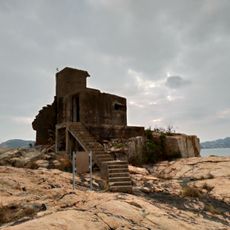
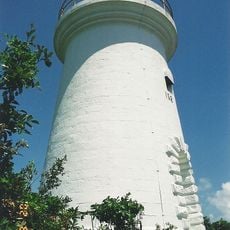
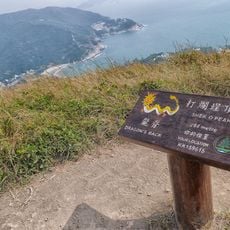
Cape D'Aguilar is a headland at the southeastern end of the D'Aguilar Peninsula on Hong Kong Island. It faces the Kau Pei Chau islets and the Sheung Sze Mun channel. The cape holds a marine reserve, the 1875 Cape D'Aguilar Lighthouse, the Bones of Miss Willy whale skeleton at the Swire Institute of Marine Science, the Crab's Eye sea cave linked to Thunder Cave, and the Bokhara Battery remains.
The name Cape D'Aguilar first appeared on a map in 1845 surveyed by Lieutenant Collinson and Sir John Francis Davis, honouring Major-General George Charles d'Aguilar. Earlier maps often called it Tylong Head, a translation of the Chinese 大浪頭. The lighthouse, Hong Kong's oldest surviving, began service on 6 April 1875; its first-order Fresnel lens was removed in 1905 after the Waglan Island light opened in 1896.
The cape's English name honours Major-General George Charles d'Aguilar, while the Chinese name Hok Tsui comes from the nearby village of Hoktsuewan. Early maps also called it Tylong Head, a translation of the Chinese Tai Long Tau, meaning Big Wave Head. The name Cape D'Aguilar was confirmed by the Hong Kong Government Gazette on 12 April 1935.
A walking path follows the coastline to viewpoints and caves, so wear sturdy shoes and bring water for the journey. Visit during calm weather since rough seas and strong winds can make the visit unsafe or uncomfortable.
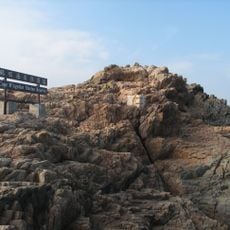
Thunder Cave generates a deep, booming echo when waves crash against its walls, creating a distinctive sound experience. Crab Cave displays a rock formation that happens to resemble open crustacean claws.
The community of curious travelers
AroundUs brings together thousands of curated places, local tips, and hidden gems, enriched daily by 95,757 contributors worldwide.