Xiadu, Archaeological site in Hebei, China.
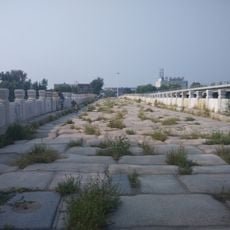
Xiadu, the Lower Capital of Yan, is a 30 km² archaeological site in Yi County, Hebei, enclosed by a rammed-earth wall whose base reached 40 m wide and a moat. A surviving wall section stands up to 6.8 m high. A north–south wall and canal split the city into eastern and western halves; the eastern half held the palace, royal cemeteries and workshops for iron, bronze, coins, weapons, pottery and bone objects.
Xiadu was the lower capital of the state of Yan during the Warring States period, built in the 4th century BC under King Zhao of Yan, with his successor Prince Dan continuing the work. It lay at the northwest end of Yan's long wall, against the Taihang Mountains and the Yi River, as a military secondary capital to Ji. Peking University archaeologists began excavating the ruins in 1929.
Xiadu's name means "Lower Capital", the secondary seat of the state of Yan, built for military defence against attack from the west. Its workshops cast iron and bronze, minted coins and made weapons, pottery and bone objects, all in the eastern half of the city. The palace and two royal cemeteries, with 13 and 10 tombs under pyramidal tumuli, also stood there.
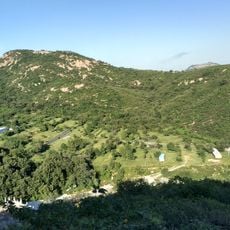
The ruins lie in Yi County, Baoding, Hebei, with the Beiyi River to the north and the Zhongyi River to the south. The site covers 30 km2, so plan for long distances between the eastern and western halves. A stretch of the rammed earth wall, up to 6.8 m high, can still be seen on the ground.
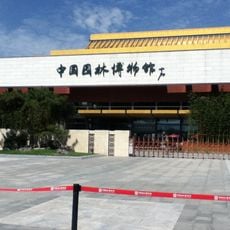
Two cemeteries lie in the eastern city, holding 13 and 10 tombs, each covered by a pyramidal tumulus. Finds from the excavations were gathered into a museum built in Beijing, so objects from Xiadu are displayed far from the ruins.
The community of curious travelers
AroundUs brings together thousands of curated places, local tips, and hidden gems, enriched daily by 94,232 contributors worldwide.