Nantou, Shenzhen, Ancient walled settlement in Nanshan District, China.
Nantou is a walled historic settlement in Shenzhen, China, made up of narrow lanes, old stone houses, and fortification walls dating to the Ming Dynasty. It sits in the Nantou Subdistrict and is one of the few remaining historic urban cores in the area.
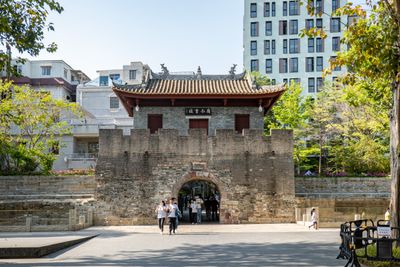
Nantou's recorded history begins in 331 CE, when it was the seat of Dongguan Prefecture and of Bao'an County, covering today's Shenzhen, Hong Kong and Dongguan. In 736 Tang troops fortified it as Tunmen. The present walls were built in 1394, when the Ming revived coastal defence, and in 1573 the government moved 7,608 families (33,971 people) into the town, establishing Xin'an County. The county seat moved to Shenzhen in 1953.
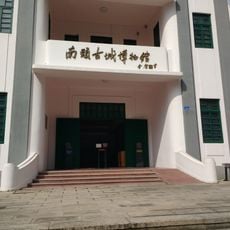
The town was renamed Xin'an Ancient City (新安故城) by the Shenzhen government, which opened the Nantou Ancient City Museum inside it. Around 40 buildings from the Qing dynasty or the first half of the 20th century survive among more than 900 unplanned townhouses. The name Nantou was later given to Nantou District (1983–1990) and to Nantou Subdistrict.
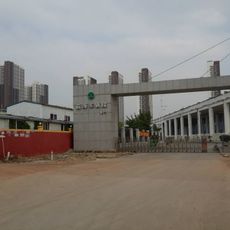
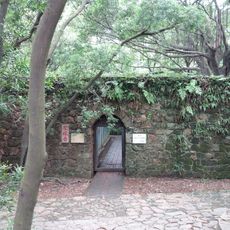
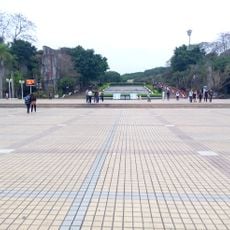
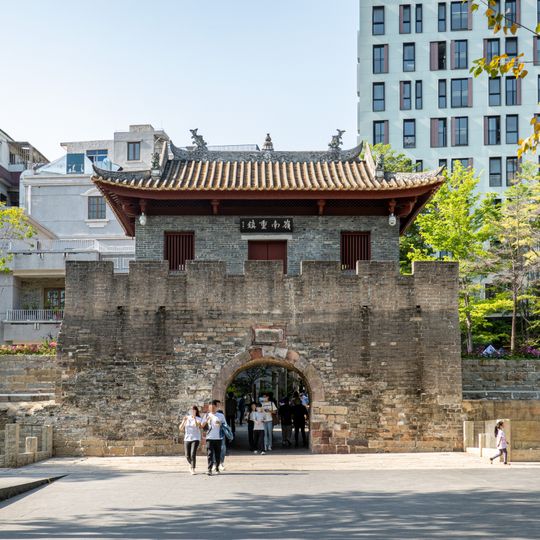
The walled town covers about 70,000 m², roughly 680 m east to west and 500 m north to south, and eight of its nine original streets survive. Only the south gate, the east gate and a few wall sections inside Zhongshan Park remain, so enter from the south gate to follow the old grid. The south gate is 10 m wide and 4.5 m tall.
The town's name survives in local administration: Nantou District was the official name of today's Nanshan District from 1983 to 1990, and Nantou Subdistrict, the largest town of that district, took its name from the walled city. More than 20,000 people now live inside and around the old walls.
The community of curious travelers
AroundUs brings together thousands of curated places, local tips, and hidden gems, enriched daily by 93,896 contributors worldwide.