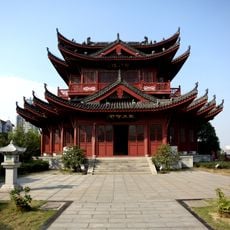
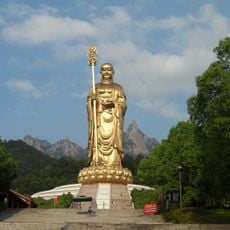
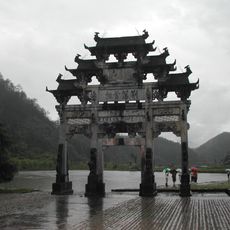
Yingjiang Temple, Buddhist temple in Yingjiang District, China.
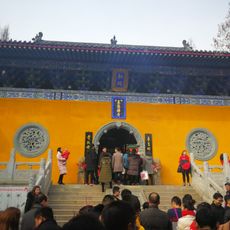
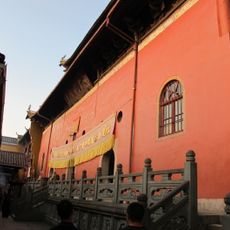
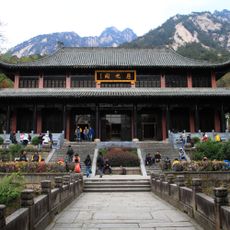
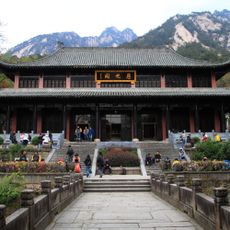
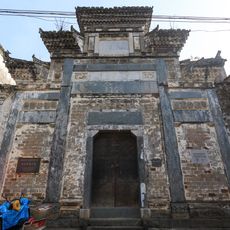
Yingjiang Temple is a Buddhist temple featuring traditional Chinese architecture with multiple interconnected halls arranged around a central courtyard. The Mahavira Hall serves as the main prayer space, distinguished by its substantial size and structural prominence within the complex.
The temple was founded in 974 during the Song dynasty as a Buddhist center. It was destroyed during warfare and then reconstructed in 1862, establishing the structure that visitors see today.
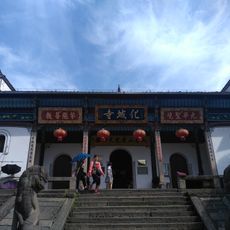
The temple gate bears a plaque in the calligraphy of the Guangxu Emperor, and the character for "temple" is missing its dot. On either side of the gate stand heavy iron anchors, a local symbol meaning the city is a boat and the pagoda its mast. Inside the Mahavira Hall hang golden plaques bestowed by the Qianlong Emperor and Empress Dowager Cixi, inscribed "Lion's Roar of Goodness" and "Mirror of Wondrous Enlightenment".
The temple welcomes visitors year-round and is located in Anqing City within Anhui Province. Public transportation connects the site to the city center, making access straightforward without a private vehicle.
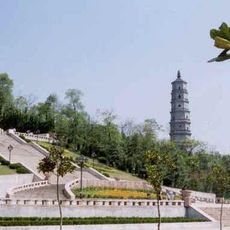
The Zhenfeng Pagoda was first built in the Song dynasty and rebuilt in 1570 under the Longqing Emperor, when it was called the Ten Thousand Buddha Pagoda. Its brick-and-wood structure rises 64.8 metres over seven storeys and eight sides, and more than 1,200 Buddha statues are enshrined inside.
The community of curious travelers
AroundUs brings together thousands of curated places, local tips, and hidden gems, enriched daily by 93,807 contributors worldwide.