Suojiang Tower, Taoist pagoda and tower on the Yangtze in Jiujiang, China
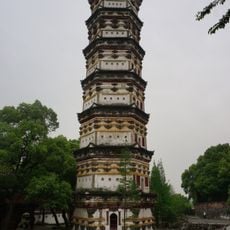
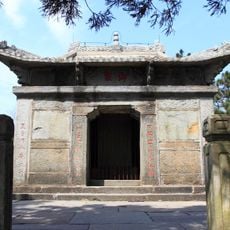
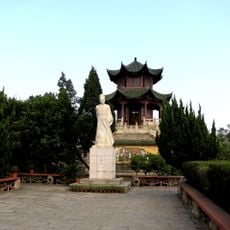
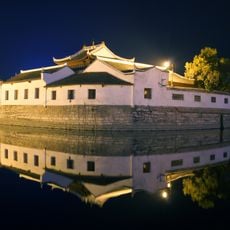
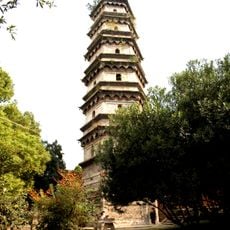
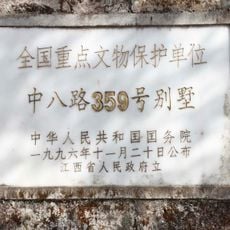
Suojiang Tower is a three-storey building on the south bank of the Yangtze in Jiujiang, with four inner levels and a large blue-and-white porcelain mural of the Eight Views of Xunyang inside. Beside it stands the 35-metre, seven-storey stone Suojiang Tower Pagoda, a Taoist religious tower. The pair are listed as a major national cultural heritage site since March 2013.
Wu Xiu, prefect of Jiujiang, founded Suojiang Tower in 1558 (the 13th year of the Wanli era) on the south bank of the Yangtze, with a seven-storey, 35-metre stone pagoda built just south of it. An earthquake in 1606 brought the tower down into the river, but the pagoda survived. The tower was rebuilt under the Qianlong emperor and repaired together with the pagoda, then destroyed at the end of the Qing dynasty; it was reconstructed in 2003.
The name Suojiang means "locking the river", referring to the tower's role guarding the Yangtze passage at Huilongji. The wooden tower served as a gathering place for eating and drinking, while the older stone pagoda beside it was a Taoist religious tower. A large blue-and-white porcelain mural, "Eight Scenic Spots of Xunyang", hangs inside the rebuilt tower.
The pagoda and the rebuilt tower stand together on the south bank of the Yangtze in Jiujiang's northeastern outskirts, on the rock called Huilongji. The pagoda is a 35-metre, seven-storey stone structure; the tower rebuilt in 2003 has three outer and four inner levels, so expect stairs rather than lifts.
The 1606 earthquake toppled the wooden Suojiang Tower into the Yangtze, but the 35-meter, seven-story stone pagoda beside it survived. The pagoda was later straightened in 1998 to correct its lean, and in 2013 the site was listed as a major national cultural heritage site.
The community of curious travelers
AroundUs brings together thousands of curated places, local tips, and hidden gems, enriched daily by 93,249 contributors worldwide.