Pipating, Chinese pavilion in Jiujiang, China
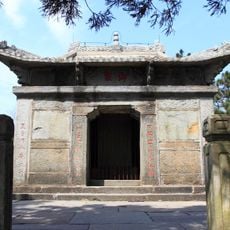
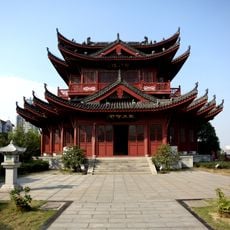
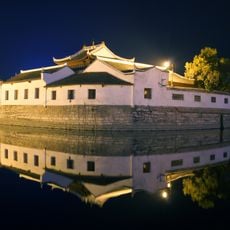
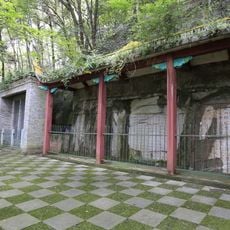
Pipating is a riverside pavilion with curved roofs and intricate wooden detailing in traditional Chinese architectural style. The structure sits directly along the Yangtze, blending the building with the natural water landscape.
Pipating takes its name from Bai Juyi's poem "Pipa Xing". Its construction date is unknown, but it existed by the reign of Emperor Renzong of the Northern Song, when Xia Song wrote a poem about it. The pavilion was repeatedly destroyed and rebuilt, and its original site and form changed over time. In 1988 the Jiujiang municipal government rebuilt it east of the Jiujiang Yangtze River Bridge.
The pavilion takes its name from Bai Juyi's poem 'Pipa Xing' (Song of the Pipa), written after he heard a pipa player in Jiujiang. A large marble stele at the entrance bears Mao Zedong's calligraphy of the poem, and a statue of Bai Juyi stands on the central axis.
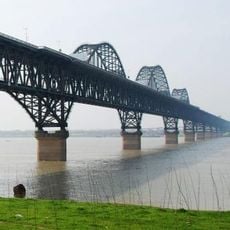
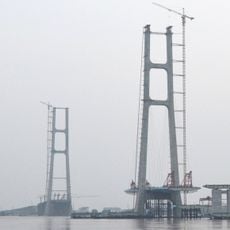
The pavilion stands on the east side of the Jiujiang Yangtze River Bridge, on a granite platform seven metres high reached by a front staircase. The tiled picture Xunyang Yanbie faces the steps, and the second floor looks out over the bridge. The site covers about 3,000 square metres.
The pavilion's name comes from Bai Juyi's poem "Song of the Pipa," written after he heard a pipa player by the Yangtze. A large marble stele at the entrance reproduces the poem in Mao Zedong's own calligraphy, and the pavilion was rebuilt by the Jiujiang government in 1988 east of the Yangtze River Bridge.
The community of curious travelers
AroundUs brings together thousands of curated places, local tips, and hidden gems, enriched daily by 94,458 contributors worldwide.