Xilin Temple, Buddhist temple on Mount Lu in Jiujiang, China
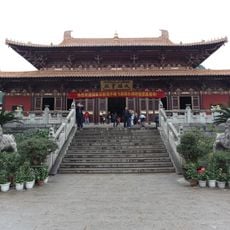
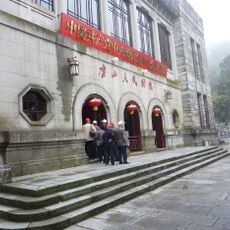
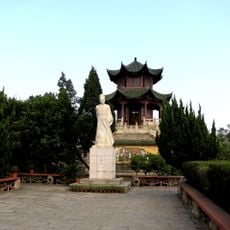
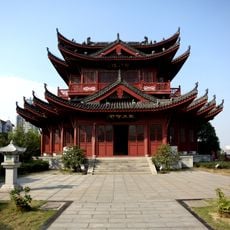
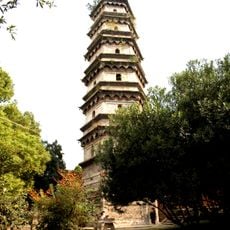
Xilin Temple is a Buddhist sanctuary on Mount Lu with several key structures including the Four Heavenly Kings Hall and a seven-story pagoda that rises more than 40 meters tall. The buildings form a connected complex set on mountainous terrain, with the pagoda serving as the main focal point.
The temple was completely destroyed in 1854 during the Taiping Rebellion and remained abandoned for over a century. Reconstruction efforts began in 1989 to restore the site to active use.
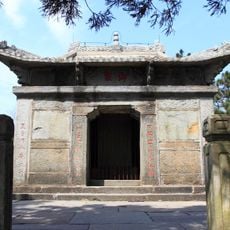
The Song dynasty poet Su Shi wrote "Written on the Wall of Xilin Temple" (题西林壁) after visiting; the poem is included in Chinese primary school textbooks. The temple is also called Xilin or Xilin Si (西琳寺). Its name is linked to the Thousand Buddha Pagoda, whose south-facing doors carry plaques reading, from bottom to top, Qianfo Ta, Yushi Cai, Jingang Chuang, Ling Jiu Lai, Wu Shang Fa, Cong Yu Hua and Wu Ming Zang.
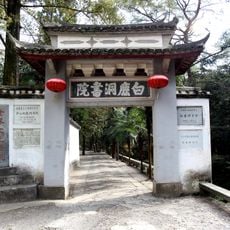
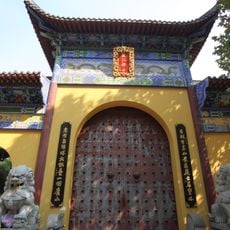
The temple stands on the northwest slope of Mount Lu, a few hundred paces west of Donglin Temple, and the rebuilt halls lie along a single axis: a three-bay gateway, the Hall of the Four Heavenly Kings, the Mahavira Hall, then the Thousand Buddha Pagoda. The pagoda's south face carries an inscribed plaque on each of its seven storeys, so climb with the names in view.
The pagoda's south face carries a different inscribed name on each of its seven storeys, from Qianfo Ta at the bottom to Wuming Zang at the top. The brick tower leans, and between 2005 and 2006 it was straightened by a deep-well soil-extraction method, with its terrace and staircases repaired.
The community of curious travelers
AroundUs brings together thousands of curated places, local tips, and hidden gems, enriched daily by 93,916 contributors worldwide.