Shrine of Living Buddha, Buddhist temple at Divine Light Summit of Mount Jiuhua, China
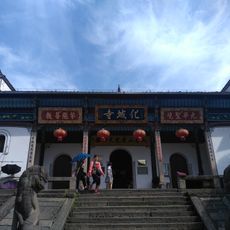
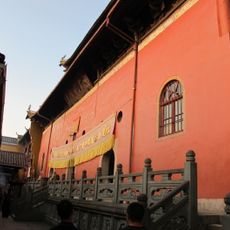
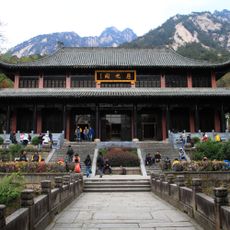
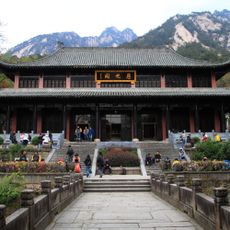
The Shrine of Living Buddha, also called the Body Hall, faces north toward Korea, the homeland of Kim Gyo-gak, rather than the usual south. Its stone pillars, red walls and iron-tile roof enclose a seven-storey octagonal wooden pagoda on a white marble base, itself containing a three-tier stone pagoda. A huabiao column stands in front, and the eaves plaque reads "The First Mountain in Southeastern China".
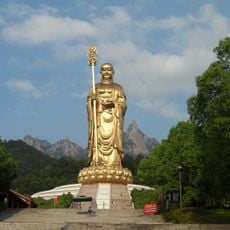
The temple traces its origin to the Silla prince Kim Gyo-gak, who came to Tang China in the early 8th century and cultivated himself in a cave on Mount Jiuhua. He died in 794 aged 99; three years later his body was found with life-like colour and soft skin, so monks built a stone pagoda for it and called him Golden Kṣitigarbha. A temple, the Body Hall, was later founded on the pagoda's foundation. In 1983 the State Council designated it a National Key Buddhist Temple in Han Chinese Area.
The hall faces north toward Korea, the homeland of the Silla prince Kim Gyo-gak, rather than the usual south. A huabiao pillar stands in front, marking his royal rank. Inside, the seven-story wooden pagoda holds over 100 small Kṣitigarbha statues, with the golden Kṣitigarbha flanked by Buddhas and the Ten Kings of Hell.
Visitors should wear appropriate clothing and behave respectfully since the site remains an active place of worship. Access requires attention to temple rules and consideration for those engaged in prayer.
The shrine houses the naturally preserved body of a Silla prince, discovered three years after his death with life-like features still visible. This unusual mummification gave the place its special religious significance.
The community of curious travelers
AroundUs brings together thousands of curated places, local tips, and hidden gems, enriched daily by 93,419 contributors worldwide.