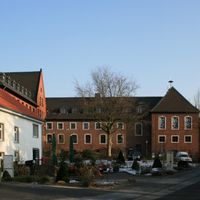
Heinsberg, Rural district in western North Rhine-Westphalia, Germany
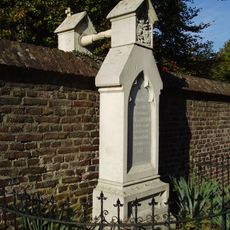
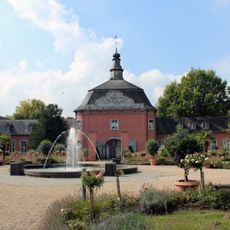
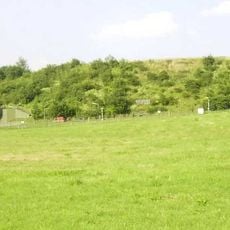
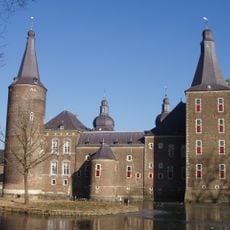
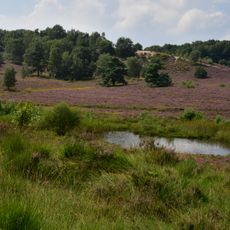
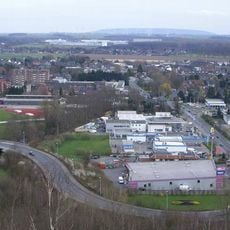
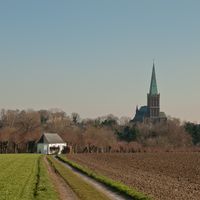
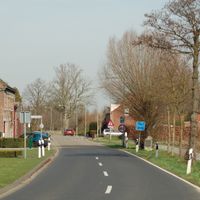
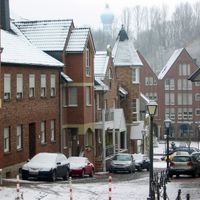
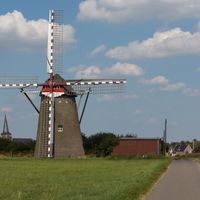
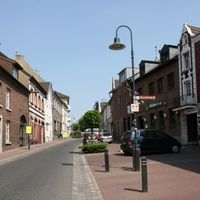
Heinsberg is a rural district in western North Rhine-Westphalia, covering lowland farmland between the Rur and Wurm rivers up to the Dutch border. Ten municipalities make up the district area of 627 square kilometers (242 square miles), where villages and small towns alternate with open fields.
Three separate administrative regions merged in 1972 to form this single district from the former territories of Heinsberg, Geilenkirchen, and Erkelenz. These areas belonged to Prussia since 1815 and served for centuries as border zones between different territories.
Coats of arms from the old ducal houses appear on flags and official buildings throughout the area. Local breweries and farm shops still use flax motifs on their signs, connecting modern life to the crop that once dominated these fields.
The district capital connects by rail to Aachen, and buses run from there to all ten municipalities across the area. Most destinations within the district can be reached by public transport or car along country roads.
In 2020, the Robert Koch Institute chose this district as a main research site for studies on infection spread. Scientists used the local municipality of Gangelt to track patterns that later shaped national health responses.
The community of curious travelers
AroundUs brings together thousands of curated places, local tips, and hidden gems, enriched daily by 91,998 contributors worldwide.