Rhön Biosphere Reserve, Biosphere reserve in central Germany
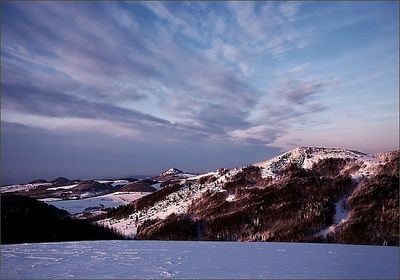
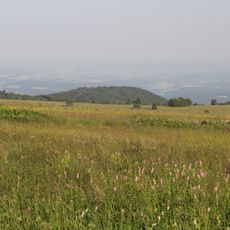
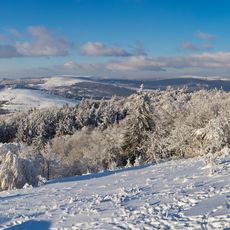
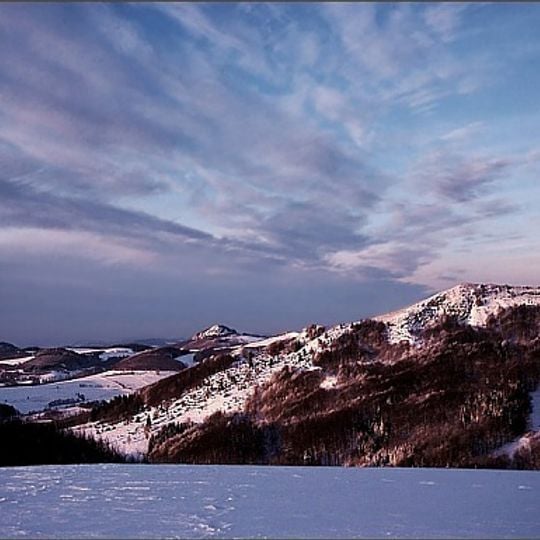
The Rhön Biosphere Reserve covers the central Rhön Mountains across Bavaria, Hesse and Thuringia. Its 243,323 hectares include the Hohe Rhön, Vorder- und Kuppenrhön and Südrhön, with sandstone, limestone and volcanic basalt. The photograph shows a snow-covered ridge: dark leafless trees below, white slopes above, and the highest peak on the right.
The area received UNESCO recognition as a biosphere reserve in 1991, while the Thuringian section gained protection status during East Germany's final months. This made the Rhön an early example of cross-border nature conservation cooperation in reunified Germany.
The reserve's open grasslands are maintained by local farms, and the three state administrations coordinate this work from offices in Oberelsbach, Hilders and Zella/Rhön. The "Haus der Langen Rhön" in Oberelsbach and the "Haus der Schwarzen Berge" in Oberbach serve as information centres where visitors can learn about the Rhön's farming and conservation.
The area can be explored through marked hiking trails, including the Hochrhöner path that guides visitors past major landmarks like Wasserkuppe. Sturdy footwear and waterproof clothing are essential since the highlands experience changeable weather.
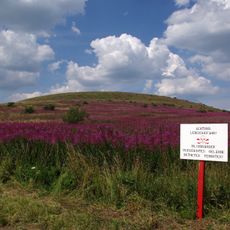
The Rhön was designated an International Dark Sky Reserve, a status that obliges municipalities to limit artificial light. Its core zones, covering 4,199 hectares, exclude agriculture and forestry entirely. Visitors can look for the boundary markers between core, buffer and cooperation zones, which show how protection and village life are separated across the three states.
The community of curious travelers
AroundUs brings together thousands of curated places, local tips, and hidden gems, enriched daily by 93,413 contributors worldwide.