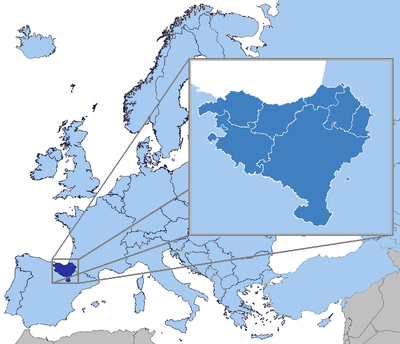
Basque Country, Cultural region in northern Spain and southwestern France.
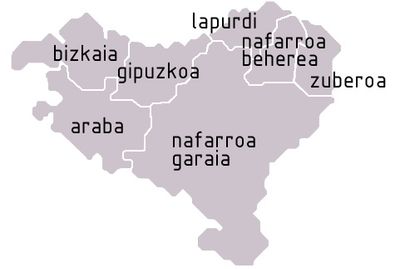
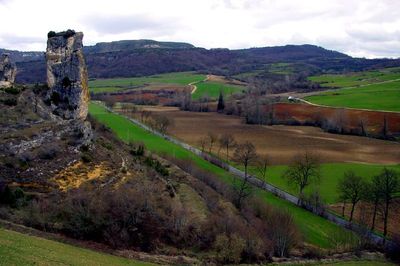
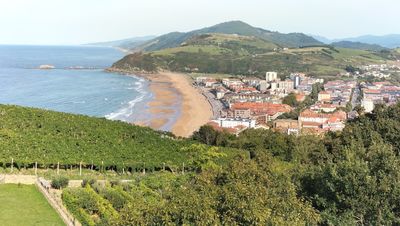
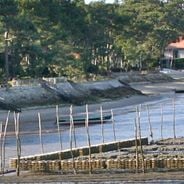
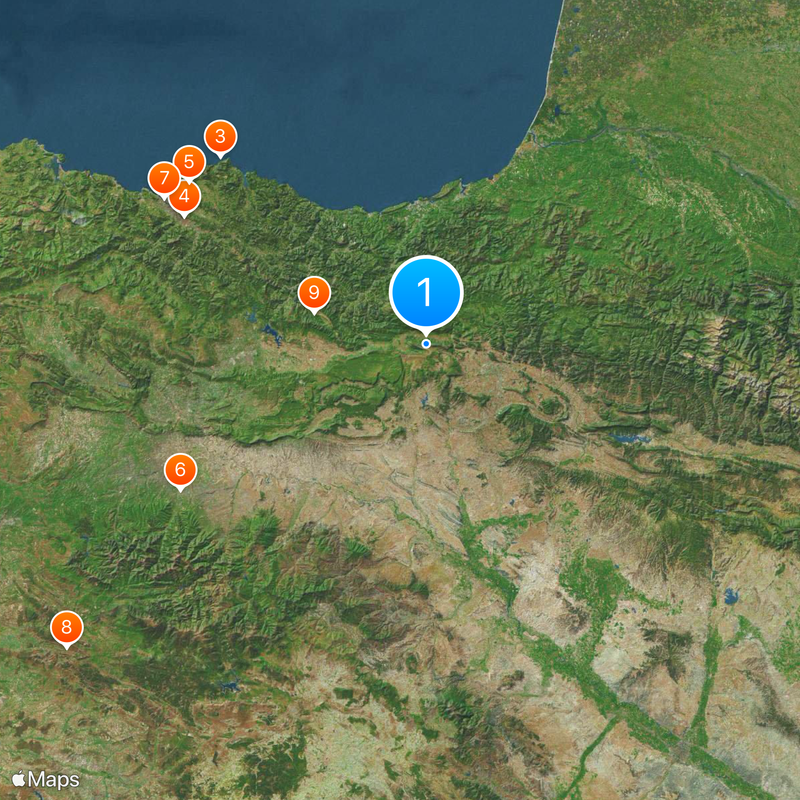
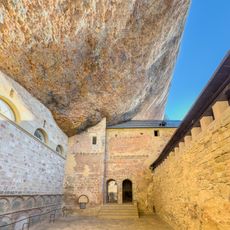
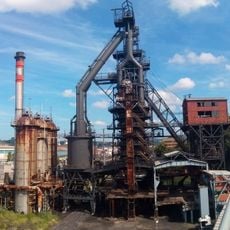
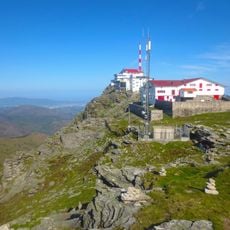
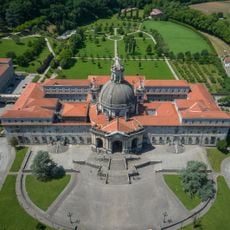
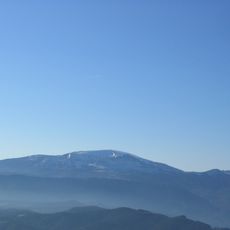
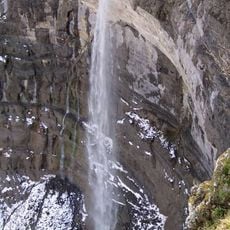
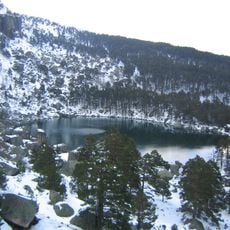
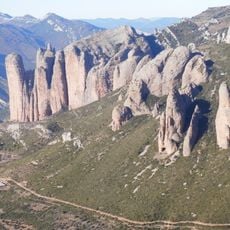
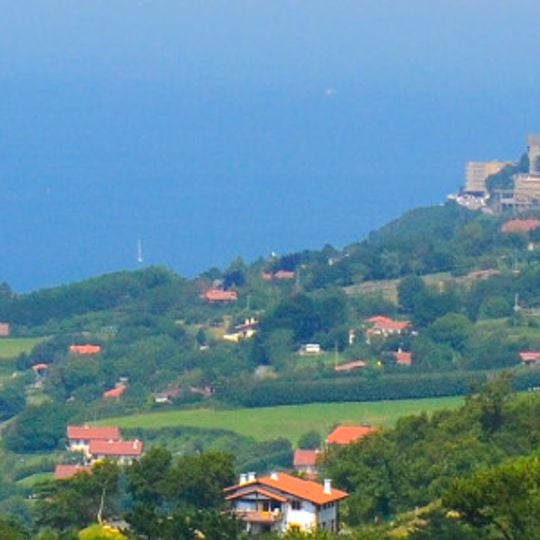
The territory is a cultural region spanning northern Spain and southwestern France, stretching from the western Pyrenees to the Atlantic coast and covering three Spanish provinces and part of the French Pyrénées-Atlantiques department. The landscape shifts between coastal fishing towns, green valleys, and mountain ranges where villages and small cities sit scattered across the slopes.
Archaeological findings show continuous settlement since the Paleolithic era, with early inhabitants maintaining their own cultural practices even during Roman rule. In medieval times, the area gave rise to kingdoms such as Navarre, which played a political role in the region for centuries.
The language appears on street signs, in schools, and in everyday conversation alongside Spanish or French, shaping the rhythm of daily life. Traditional festivals such as Carnaval Rural and dances like the aurresku take place throughout the year in towns and villages.
The area straddles two countries with separate administrative systems, and travelers should be prepared to encounter signage in multiple languages and minor differences in local customs on either side of the border. The Spanish side divides into the Autonomous Community and Navarre, each with its own approach to regional identity.
Rural sporting events such as stone lifting, wood chopping, and rowing races grew out of daily work done by farmers and fishermen and are still practiced today. These contests require strength and endurance, and they draw crowds at village festivals throughout the year.
The community of curious travelers
AroundUs brings together thousands of curated places, local tips, and hidden gems, enriched daily by 90,800 contributors worldwide.