Khirbet Beit Lei, Archaeological site in Southern District, Israel
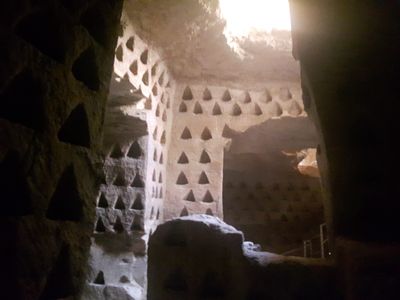
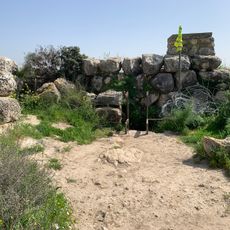
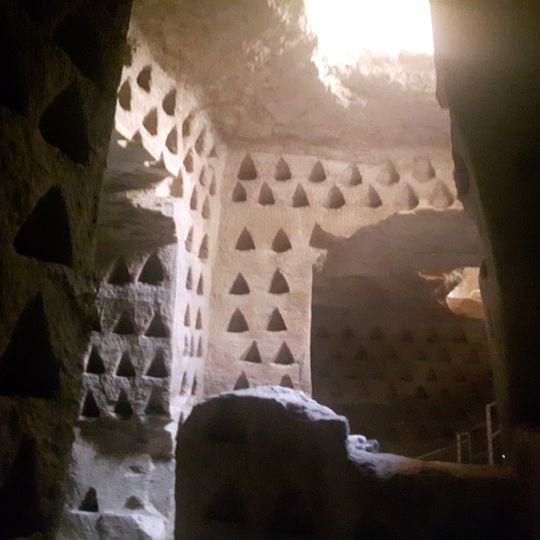
Khirbet Beit Lei is an archaeological site in the southern region containing burial chambers and religious structures carved into rock. The caves hold ancient Hebrew inscriptions and show evidence of occupation spanning from Hellenistic times through the Byzantine period.
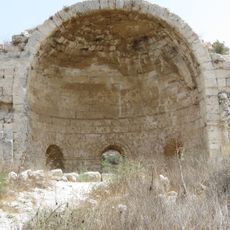
Two Iron Age II burial caves were exposed in 1961 during road construction by the Jewish National Fund and excavated in 1963 under Joseph Naveh. The hill was later occupied by an Idumaean village in the 3rd–2nd centuries BCE, destroyed by fire, then resettled by a Jewish population with ritual baths and olive presses. A Byzantine church was built around 500 CE, and building remains date to the Mamluk period.
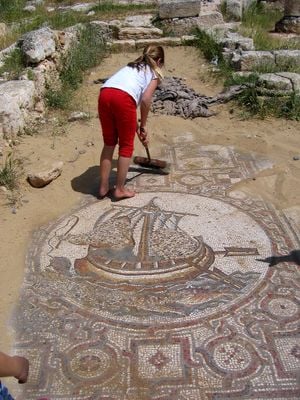
The Arabic name of the site was linked by Latter-day Saint tradition to the prophet Lehi, and Mormons funded excavations here in 2008. The Byzantine church, built around 500 CE, has a mosaic floor showing a fishing boat with two fishermen, one holding a fish on a line, and baskets of fruit; most human and animal figures were later damaged during iconoclasm and filled with mosaic stones.
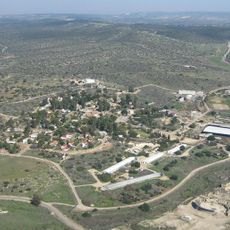
Khirbet Beit Lei lies inside a military firing zone, so entry requires prior coordination. The usual approach is the red-marked patrol road, reached from Route 35 about 6 km east of Beit Guvrin junction, or from Route 358 about 0.5 km east of Moshav Amatzia. A high-clearance vehicle is advisable, and there is parking near the excavation on the hilltop. Many caves and cisterns are unmarked or open.
Two sailing vessels sketched on a wall of the burial cave are unexpected in a Judean hill-country tomb; excavator Joseph Naveh suggested a symbolic or religious meaning. He also cautiously proposed the cave belonged to a family of Levite singers, based on a lyre-playing figure, prayer gestures and distinctive headgear. The longest inscription, carved at eye level, was read by Naveh as a declaration of Yahweh's sovereignty.
The community of curious travelers
AroundUs brings together thousands of curated places, local tips, and hidden gems, enriched daily by 93,009 contributors worldwide.